
Reviewed · VALENCIA OLD TOWN & HISTORIC CENTRE TOURS
Valencia Old Town Guided Tour
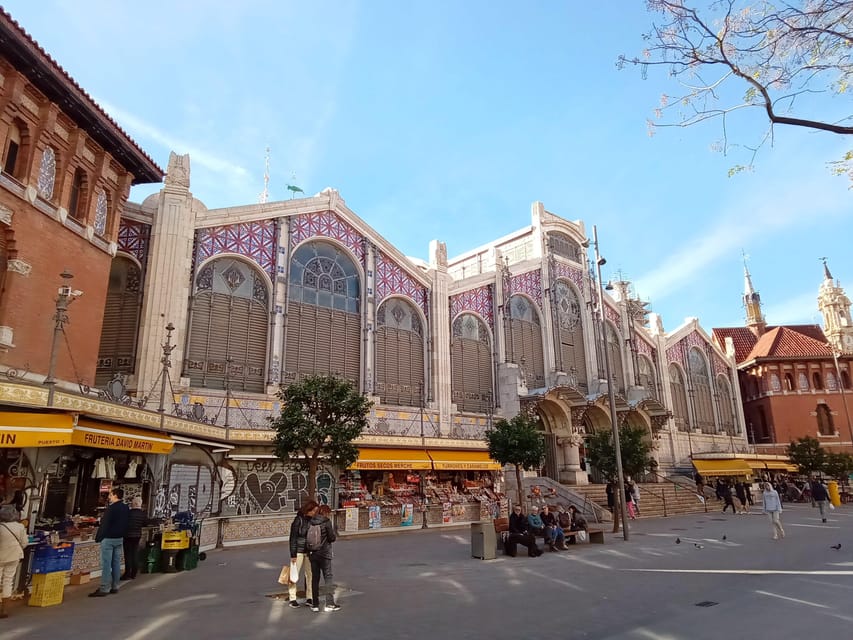
Valencia’s Old Town is best understood on foot, where a grand train station, food market, Gothic trading hall, Roman remains, Fallas landmarks, and elegant shopping streets all sit within a compact route. This tour gives you that useful overview, with old photographs and videos that show how the city changed over time.
I like the small group limit of 10, which should make it easier to hear the guide and ask questions. I also like the route’s mix of major sights and everyday Valencia, from Central Market and La Lonja de la Seda to traditional clothing shops and a final horchata stop near Colón Market.
The main point to consider is that admission to La Lonja, l’Almoina Archaeological Center, and the Palace of the Marquis of Dos Aguas is not included. The timing also needs checking: the details describe a two-hour walk, a 2.33-hour itinerary, and an odd one-minute duration field.
In This Review
- Key points
- Starting under Valencia’s Art Nouveau train station
- Town Hall Square and the city’s Fallas stage
- Traditional clothing shops along pedestrian streets
- Central Market and La Lonja, Valencia’s commercial heart
- The three small squares of the Old Town
- Queen Square, Virgin Square, and Roman Valentia
- Serranos Street and the old city gateway
- l’Almoina and the birthplace of the city
- Paz Street and the Marquis of Dos Aguas
- Ending at Colón Market and Valencia’s shopping streets
- What the $28 price gets you
- Who will get the most from this walk
- Should you book the Valencia Old Town Guided Tour?
- FAQ
- Where does the Valencia Old Town Guided Tour start?
- How long does the tour last?
- What languages are available?
- Is the tour wheelchair accessible?
- Are entrance tickets included?
- Does the tour operate during Fallas?
Key points
- Start beneath the flags at Estació del Nord, a central meeting point beside Valencia’s bullring and Xàtiva transport links.
- Follow a compact route through the Old Town, including Central Market, La Lonja, Queen Square, Virgin Square, Serranos Towers, and Colón Market.
- Use old pictures and videos to see how Valencia’s streets, buildings, and public life have changed.
- Expect a guide-led history lesson with personality, with Enrique singled out for friendly and interesting explanations when he leads.
- Finish among shops and cafés, where you can stop for coffee or traditional Valencian horchata.
- Plan around Fallas dates, since the tour does not operate on March 17 or 18.
Starting under Valencia’s Art Nouveau train station
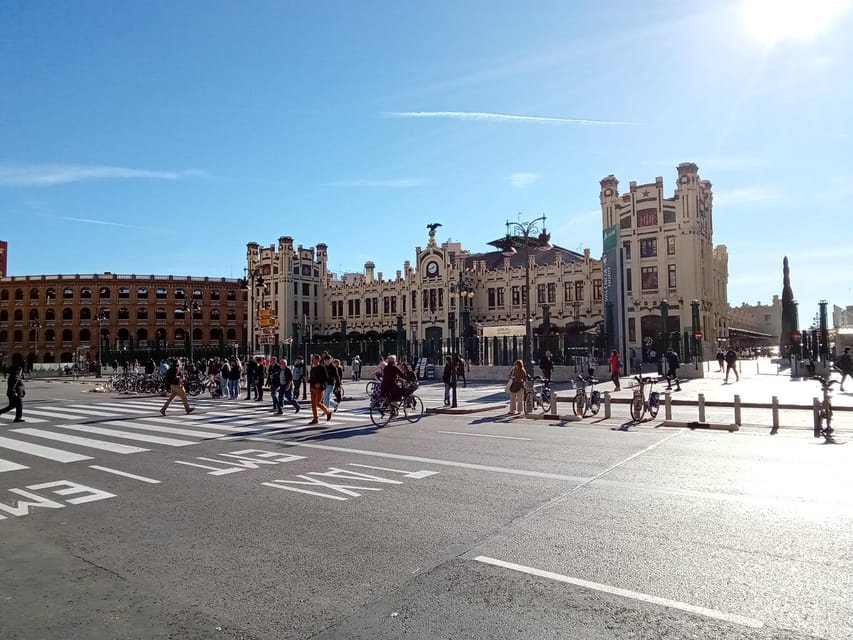
Your meeting point is the central tower of Estació del Nord, under the Valencian, Spanish, and European flags. This is a sensible place to begin. The station is close to the bullring, and you can reach it at Xàtiva-Renfe by metro or bus.
Estació del Nord is not just a place to gather. Its Art Nouveau design gives you an immediate introduction to Valencia’s love of color, ceramics, and decorative detail. Look up before the group sets off. The station’s exterior and interior decoration help explain why Valencia’s architecture can feel theatrical without being heavy.
The exact meeting point matters in a large city center, so arrive with time to spare. The instructions identify the central tower rather than a general station entrance. That should save you from wandering around the platforms looking for a guide.
The tour is offered in English, Spanish, German, and Italian. A live guide leads the walk, and the group is limited to 10 people. That is a useful size for narrow streets and busy squares. It also gives you a better chance to ask about Fallas, local customs, or a building that catches your eye.
More of the Valencia old town:
- Valencia Old Town Tour with Wine & Tapas in 11th Century Historic Monument
★ 5.0 · 3,234 reviews - Valencia: Old Town Tour, Wine & Tapas in an 11th c. Monument
★ 4.9 · 1,797 reviews - Valencia: Medieval Old Town Segway Tour
★ 4.8 · 251 reviews
Town Hall Square and the city’s Fallas stage
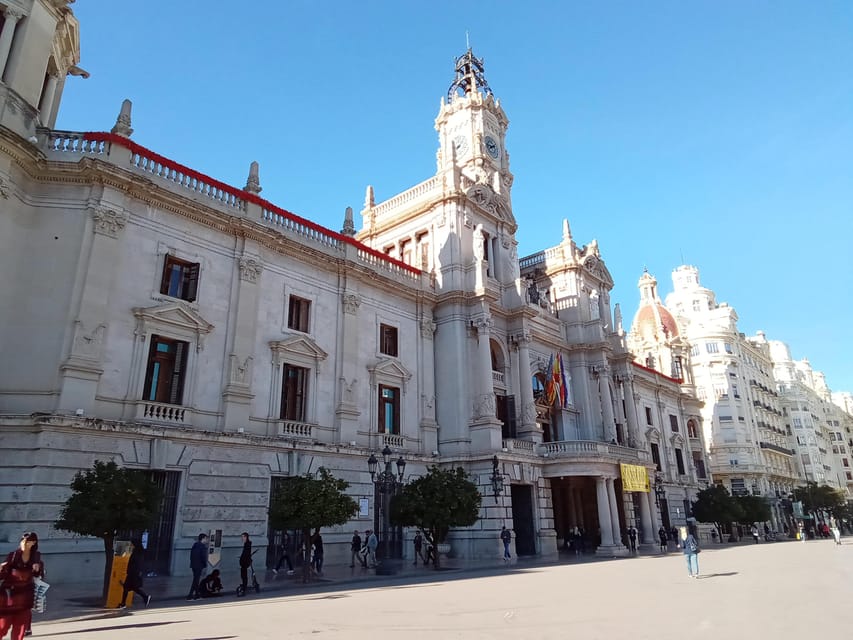
The first part of the route takes you through Town Hall Square and past the Post Office façade. This area becomes a major public stage during Las Fallas, Valencia’s famous festival held from March 15 to 19.
The tour connects the square to that annual event instead of treating the building as a silent photo stop. You learn why this part of the city matters every March, when temporary monuments, fireworks, and public celebrations change the feel of the center.
The tour is not available on March 17 or 18, so keep those dates in mind if your visit overlaps with Fallas. The restriction may be linked to the festival’s crowds and street activity, but the supplied details do not give a reason. The practical point is simple: do not count on booking this walk on either date.
Old photographs and videos are used along the way. I find that especially helpful in a city where the present-day streets can hide earlier layers. A picture of a square before a major change can make the guide’s explanation easier to follow than a long list of dates.
Traditional clothing shops along pedestrian streets
The route moves through pedestrian streets lined with shops selling traditional Valencian clothing. This is one of the more personal parts of the tour because it connects local dress with living tradition, fashion, and family celebrations.
You are not simply looking at old buildings from the outside. You also see how regional customs remain part of modern commerce. The clothing shops add a human scale to the tour and give you a chance to browse instead of moving from monument to monument.
Shopping is not included as a formal part of the ticket, so think of this as a guided look at local culture rather than a shopping excursion. If you want to buy something, you will need to manage your own time and budget.
This section should suit you if you like seeing how heritage appears in daily life. If you want a fast tour focused only on major monuments, the shopfronts may feel like a slower detour. For most people, though, they break up the architecture in a useful way.
Central Market and La Lonja, Valencia’s commercial heart
Central Market is one of the route’s strongest stops. The market brings food, shopping, and local routine into the middle of the sightseeing walk. Even if you do not plan to buy anything, the building gives you a sense of how Valencia’s food culture fits into city life.
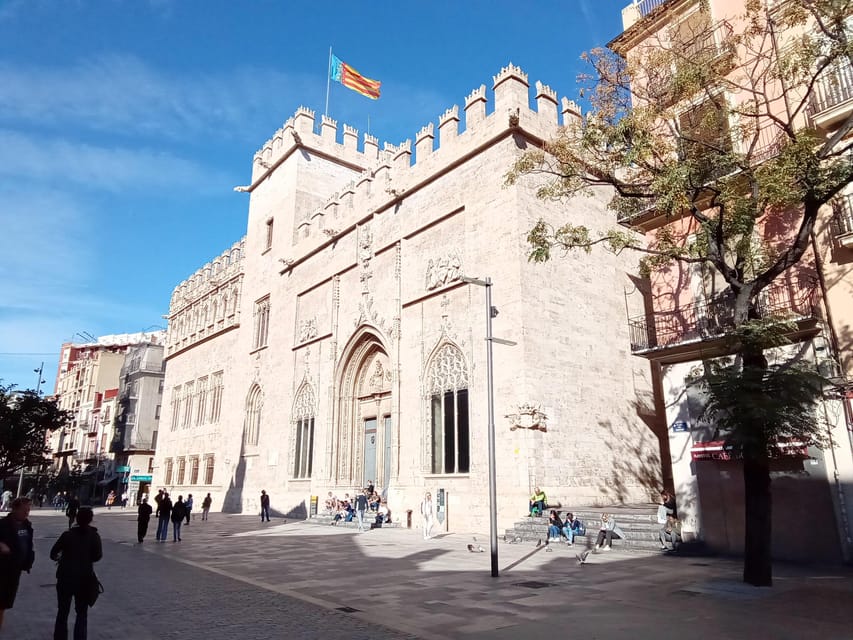
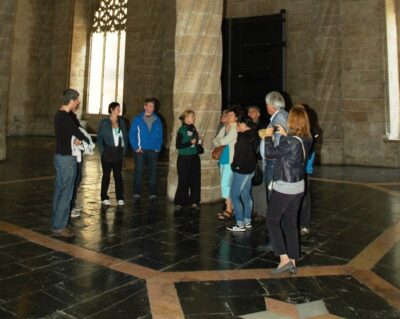
The tour pairs the market with La Lonja de la Seda, the Silk Stock Exchange. Together, they show two sides of the city’s commercial past and present. One is a working market, while the other recalls the trading power of earlier centuries.
Admission to La Lonja is not included. The same applies to the l’Almoina Archaeological Center and the Palace of the Marquis of Dos Aguas later in the walk. The tour can still explain their importance from outside, but you should not expect to enter automatically.
This is a good place to ask the guide how the market and silk exchange relate to Valencia’s growth. The stated route describes La Lonja as one of the city’s key buildings from the 15th century, while Central Market represents a later phase of the city’s commercial life. The contrast helps you read Valencia as a working city rather than an open-air museum.
A few more Valencia tours worth weighing up
- Valencia: City Highlights Guided Bike Tour
★ 4.7 · 2,373 reviews - From Valencia: Montanejos Guided Hike with Natural Pools
★ 4.5 · 1,741 reviews - From Valencia: Caves of San José Guided Excursion and Ticket
★ 4.6 · 1,717 reviews - San Jose Caves Guided Tour from Valencia
★ 4.5 · 732 reviews
The three small squares of the Old Town
Doctor Collado Square, Lope de Vega Square, and Round Square form another part of the walk. Round Square is also called the Three Diamonds, a nickname that gives the stop a bit of local character.
These smaller squares matter because they show how the Old Town changes scale. After large civic spaces and major buildings, you move into tighter urban rooms where cafés, shopfronts, and façades create a more intimate setting.
The walk does not treat every stop as a grand monument. That is a strength. You get a better feel for the center when the route includes places that are attractive because of their shape, connections, and daily use, not just their official importance.
I would pay attention to the guide’s old images here. A square can look settled and permanent today, while earlier photos may show different traffic patterns, shop signs, or building uses. That visual comparison is one of the tour’s most useful teaching tools.
Queen Square, Virgin Square, and Roman Valentia
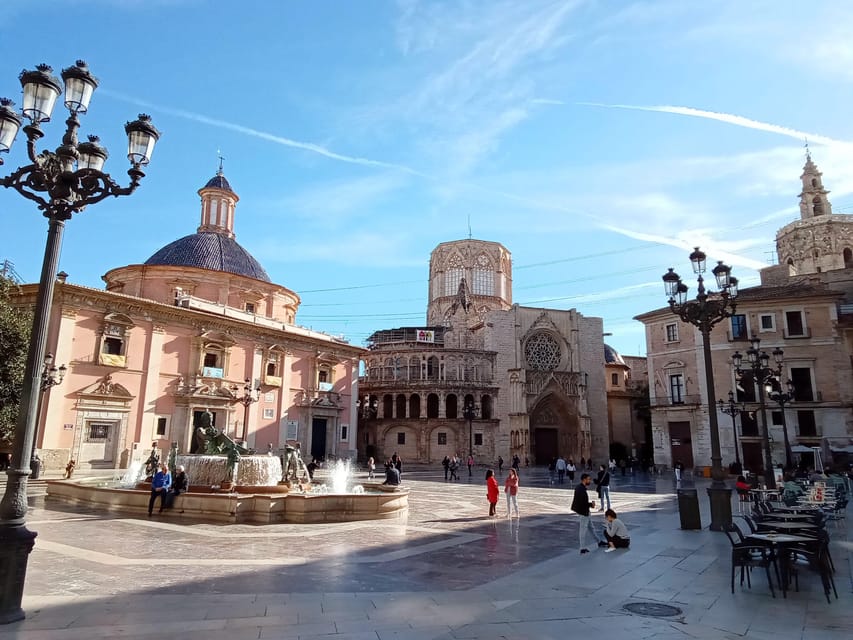
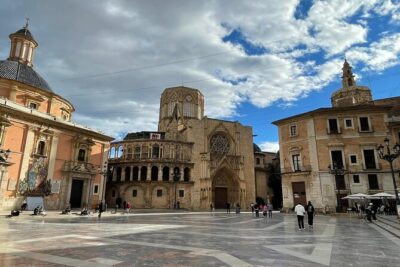
Queen Square and Virgin Square are presented as key points in the city’s origins. The route connects them with Roman Valentia and the Water Tribunal, giving you a short introduction to Valencia’s earliest foundations and one of its best-known civic traditions.
This part of the walk provides the historical backbone for everything that came before. Streets and squares become easier to understand once you know that modern Valencia grew over earlier Roman settlements and later civic centers.
The Water Tribunal is especially useful as a reminder that Valencia’s history is tied to water management and agriculture, not only trade and grand architecture. The supplied tour details do not promise a separate formal session of the tribunal, so treat it as a point of explanation rather than a scheduled event.
Virgin Square is also one of the places where the city’s ceremonial side comes into view. If you like seeing how public spaces carry several roles at once, this section should be rewarding. If your main goal is indoor sightseeing, note that the walk spends much of its time outside.
Serranos Street and the old city gateway
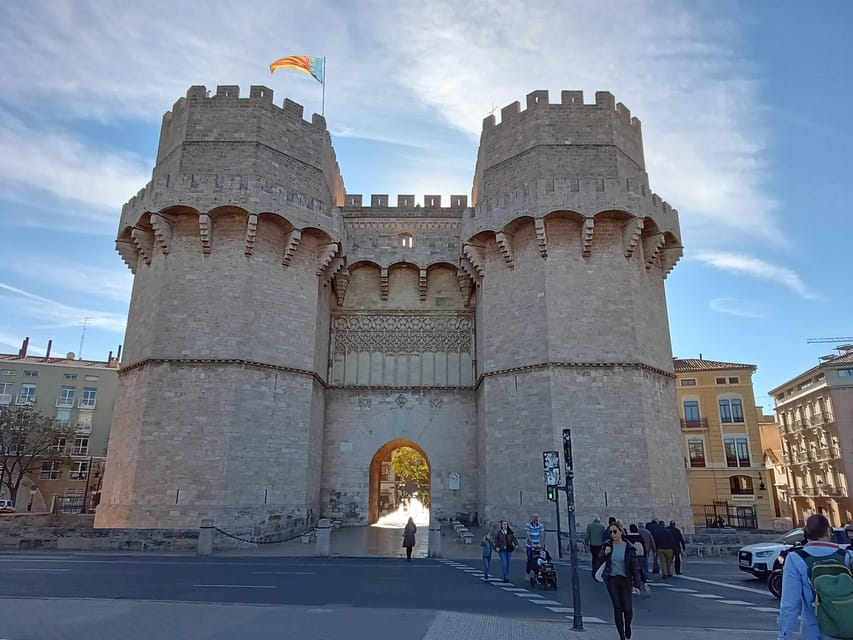
Serranos Street leads toward the Serranos Towers, described as the old entrance to Valencia. The towers also serve as a welcome point for the Fallas festivities, linking medieval defenses with one of the city’s modern celebrations.
That pairing is a good example of the tour’s approach. You are not asked to choose between old Valencia and present-day Valencia. The route shows how a medieval gate can still take part in the city’s public life.
The towers are also a clear marker of how the Old Town once worked. Gates controlled movement, announced arrival, and helped define the city’s edge. Today, the streets are easier to cross, but the towers still give you a strong sense of entering a historic district.
No entry ticket to the towers is listed, and they are not named among the included admissions. Ask the guide if you want to know about visiting inside after the walk.
l’Almoina and the birthplace of the city
The Archaeological Center l’Almoina marks the location described as the birthplace of Valencia. Its importance comes from what lies beneath the modern city: remains that help connect the current streets to earlier settlements.
The tour includes the center as a stop, but entry is not included. That distinction is important. You can hear the guide set the site in context during the walk, then decide if you want to return and pay for admission separately.
This is one of the places where the old pictures and videos can help. Archaeology is not always easy to read from street level. A guide’s visual material can show you how the site developed and why this corner matters.
I would not book this tour expecting a full archaeological visit. Book it for the orientation and explanation, then add l’Almoina on your own if you want more time with the remains.
Paz Street and the Marquis of Dos Aguas
Paz Street brings you to the baroque Palace of the Marquis of Dos Aguas. The palace is known for its display of power, art, and ceramic heritage, and its façade is one of the route’s most decorative sights.
This is a sharp change from the market and the medieval towers. Instead of military strength or commercial purpose, the palace presents wealth through ornament. The outside alone gives you plenty to examine, with an elaborate design that rewards a slow look.
Admission is not included, so the guide’s exterior explanation will be your standard tour experience. If you want to see the inside, confirm the separate ticket details and opening arrangements before planning your day. The supplied information does not state the admission price or visit hours.
The palace is a good reason to bring a phone or camera, but do not let photographs replace looking closely. The tour’s focus on ceramic heritage makes this more than a quick façade stop. Ask how the building’s decoration reflects the people who commissioned it and the artistic traditions used to create it.
Ending at Colón Market and Valencia’s shopping streets
The final stretch follows Don Juan de Austria Street and Colón Street toward Colón Market. This is the city’s shopping area and a practical place to finish a walking tour.
The stated route suggests stopping for coffee or a traditional Valencian horchata, a sweet drink made from tiger nuts. That is a pleasant way to end, especially after two hours on foot. The tour does not include a drink or a café visit, so you pay for anything you choose to order.
Colón Market also gives you a chance to continue independently. You can relax, browse, or use the area as a base for more shopping. The finish is less formal than ending at a single monument, but that makes it useful for the rest of your day.
There is a small inconsistency in the meeting information. The itinerary names Mercado de Colón as the finish, while another note says the activity ends back at the meeting point. Confirm the final endpoint when you book, especially if you have a timed reservation afterward.
What the $28 price gets you
At $28 per person, the tour is priced as an affordable introduction to Valencia’s center. You are paying for a two-hour guided walk, a live guide, a small group, and a route that covers many of the city’s main Old Town sights.
The value depends on how much explanation you want. If you are happy to read signs and walk between monuments alone, the fee may not seem necessary. If you want the city’s streets connected into a clear story, the cost is reasonable, especially with a group capped at 10.
The included visual material adds value because it helps explain change over time. The guide’s role is not just to point at buildings. It is to show you how markets, squares, gates, archaeological sites, shopping streets, and festivals fit into one city.
You should budget extra if you want to enter La Lonja, l’Almoina, or the Palace of the Marquis of Dos Aguas. None of those admission tickets is included, and no separate prices are provided.
Who will get the most from this walk
I would recommend this tour to a first-time visitor who wants a clear introduction without spending half a day indoors. The route covers enough ground to help you plan later visits, meals, shopping, and independent walks.
It also suits people who enjoy architecture but want more than a parade of façades. Central Market, traditional clothing shops, the Water Tribunal, Roman Valentia, and Fallas connections give the walk a broader local focus.
Families and older visitors should note the two-hour walking format. The activity is listed as wheelchair accessible, but the route includes pedestrian streets and historic areas, so ask the provider for current route details if you need specific access information. It is not considered suitable for people over 95 years old.
The tour is also a good fit if you prefer a small group. The limit of 10 should feel more personal than a large city walk. Guide Enrique is specifically praised for being friendly and for giving interesting explanations. If he is assigned to your departure, you can expect a guide with a warm, clear style, though guide assignments can vary.
You can cancel up to 24 hours in advance for a full refund, and you can reserve now and pay later. Alcohol and drugs are not allowed. Those are minor details, but they make the booking flexible for a changing Spain itinerary.
Should you book the Valencia Old Town Guided Tour?
Book it if you want a well-rounded first look at Valencia, especially one that connects architecture with food markets, Fallas, Roman beginnings, local dress, and shopping streets. The route is broad, the group is small, and the visual material should make the city easier to understand.
Skip it if you want long interior visits or a specialist tour devoted to one subject. Entry fees are extra, the walk is mostly outdoors, and the duration information needs clarification before booking.
For most first visits, I would choose this as an opening activity, then return to La Lonja, l’Almoina, or the Palace of Dos Aguas if one of them catches your interest. That gives you both the helpful overview and the freedom to spend more time where you like.
FAQ
Where does the Valencia Old Town Guided Tour start?
The meeting point is beneath the central tower of Estació del Nord, under the Valencian, Spanish, and European flags. The station is near the bullring and can be reached at the Xàtiva-Renfe bus and metro stop.
How long does the tour last?
The included service is described as a two-hour walking tour, and the itinerary gives a guided tour duration of 2.33 hours. Another booking field displays one minute, so check the available departure details before reserving.
What languages are available?
The live guide service is available in English, Spanish, German, and Italian.
Is the tour wheelchair accessible?
Yes, the activity is listed as wheelchair accessible. If you need specific information about the historic streets or individual stops, confirm the current route with the provider.
Are entrance tickets included?
No. Tickets for La Lonja de la Seda, l’Almoina Archaeological Center, and the Palace of the Marquis of Dos Aguas are not included.
Does the tour operate during Fallas?
The activity is not available on March 17 or 18. The route includes Fallas-related locations such as Town Hall Square, the Post Office façade, and Serranos Towers.
Just added around Valencia
- e-Bike Rental in Valencia★ 3.5 · 3 reviews
- Valencia: Tuk Tuk Historical Tour★ 5.0 · 3 reviews
- Authentic Paella Dinner in Valencia★ 5.0 · 3 reviews
- Valencia: Horchata Bike Tour★ 4.8 · 3 reviews
- Valencia: Guided City Walking Tour with Tapas Tastings★ 3.8 · 3 reviews
- One-way Valencia Airport To/From Benicàssim (FIB)★ 5.0 · 3 reviews
- Rent Boat Valencia Yatch Polonova with capitan and drinks★ 4.0 · 3 reviews
- In Love with Valencia: A Self-Guided Tour of its Landmarks★ 5.0 · 3 reviews
Valencia Old Town & Historic Centre Tours, compared.

Valencia Old Town Tour with Wine & Tapas in 11th Century Historic Monument
Read our review →
Old Town Tour, Wine & Tapas in an 11th c. Monument
Read our review →
Valencia all in one: beaches, old town & city arts by E-bike
Read our review →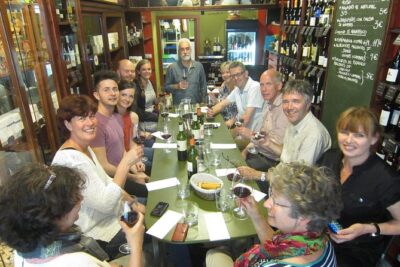
Private premium wine tasting with snacks in Valencia’s old town
Read our review →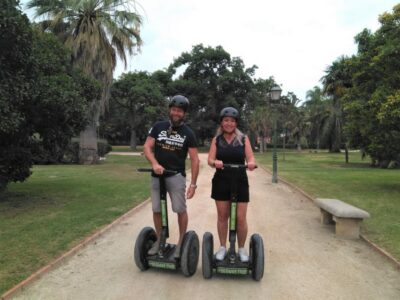
Browse the lists this tour appears in