
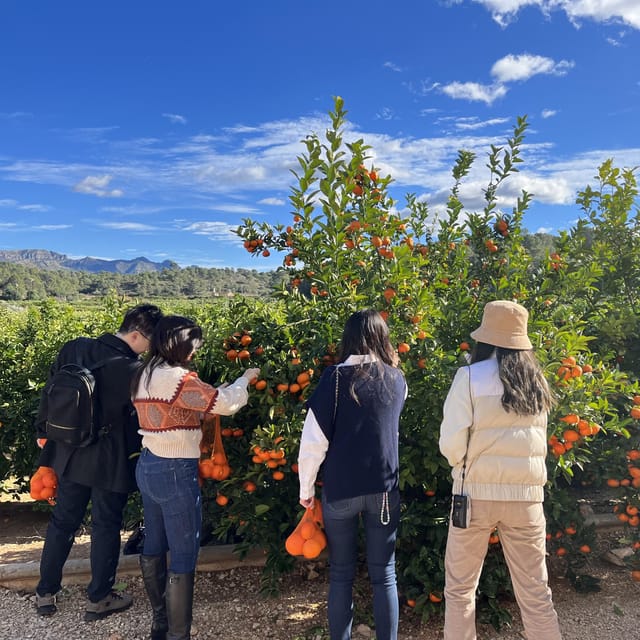
Reviewed · VALENCIA
Citrus Treasures: Exploring Valencia’s Orange Grove
La Ribera’s orange country is the real attraction here. You spend four hours at an 1870 estate, moving from a Modernist house to old gardens and working citrus fields, with fruit tasting along the way. It is a pleasant change from Valencia’s city streets and beach crowds.
I like the mix of local history and hands-on farm work. You are not only shown an orchard, you also learn how oranges are sorted and packed. I also like the unusual produce: Buddha’s hand, citrus caviar, avocados, tangerines, and several citrus varieties make this more interesting than a standard orange tasting.
The main drawback is access. The experience is not suitable for wheelchair users, and the meeting point can change with the option you book. At $82 per person, it makes the most sense if you value a small group, transport, a guide, and a full tasting rather than simply wanting to walk through orange trees.
In This Review
- Key points
- Why La Ribera is the right place for an orange experience
- A first look at the 1870 Modernist house
- Walking through gardens and working citrus fields
- The citrus tasting: juice, jam, honey, and liqueur
- Sorting and packing your own Valencia oranges
- The story behind Valencia’s famous fruit
- What a four-hour visit feels like
- Is $82 per person fair value?
- Who will enjoy this estate visit most?
- Practical points before you reserve
- Should you book Citrus Treasures?
- FAQ
- Where does the Citrus Treasures experience take place?
- How long does the experience last?
- What is included in the price?
- Which languages are available?
- How large is the group?
- Can I cancel or book without paying immediately?
Key points
- A 1870 Modernist house gives the visit a strong architectural and historical starting point.
- The tasting goes beyond oranges, with fresh juice, homemade jams, orange blossom honey, and Valencian liqueurs.
- Hands-on packing work lets you calibrate oranges and prepare a box of your own choices.
- Rare citrus varieties include Buddha’s hand and citrus caviar, along with oranges, tangerines, and avocados.
- Small groups of up to 15 people keep the visit more personal than a large coach excursion.
- The four-hour format leaves enough time for the house, gardens, orchard, tasting, and agricultural story.
Why La Ribera is the right place for an orange experience
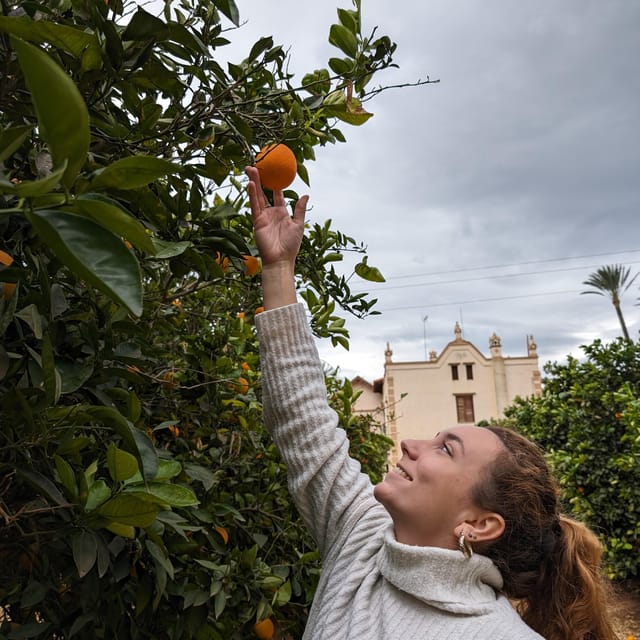
Valencia is closely tied to citrus farming, but a city visit alone does not show you how much agriculture shapes the region. La Ribera takes you into the countryside south of the capital, where orange trees, farm estates, irrigation, and seasonal work form part of daily life.
This outing gives that rural setting a clear focus. Instead of trying to cover several unrelated sights, you spend your time with one estate and its produce. That makes the experience easier to follow and more relaxing than a packed sightseeing day.
You should come expecting an educational visit, not a strenuous outdoor activity. The word adventure in the description is best understood as a family-friendly change of scene. The appeal lies in seeing, smelling, tasting, and handling the fruit rather than in physical challenge.
Other Valencia tours people book alongside this one:
- Valencia: Oceanogràfic Entry Ticket
★ 4.7 · 9,893 reviews - Valencia: 24 or 48-Hour Hop-on Hop-off Bus Ticket
★ 3.9 · 5,611 reviews - Valencia: Palosanto Flamenco Show Ticket
★ 4.8 · 3,876 reviews
A first look at the 1870 Modernist house
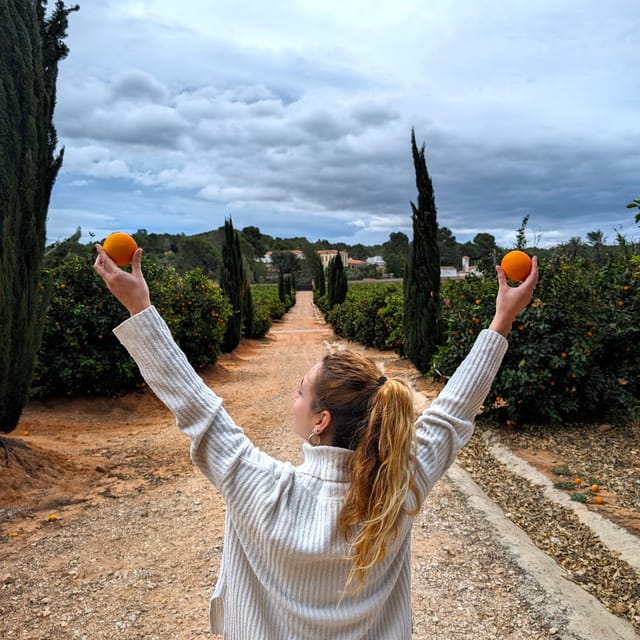
The tour begins with the estate’s 1870 Modernist house, described as an eclectic architectural work. This matters because the property is not just a field with rows of trees. The building gives you a sense of the people, money, design, and farming culture connected with an old Valencian agricultural estate.
You will want to pay attention to the contrast between the formal house and the productive land around it. One part reflects style and status. The other depends on soil, water, pruning, picking, sorting, and timing.
The information provided does not give the house’s architect, room count, or a detailed list of interiors, so do not book this as a full architecture tour. Its role is to set the scene and add a cultural layer to the orchard visit. If you enjoy historic buildings but need extensive architectural detail, the citrus and farming sections will likely be more important to you than the house itself.
Walking through gardens and working citrus fields
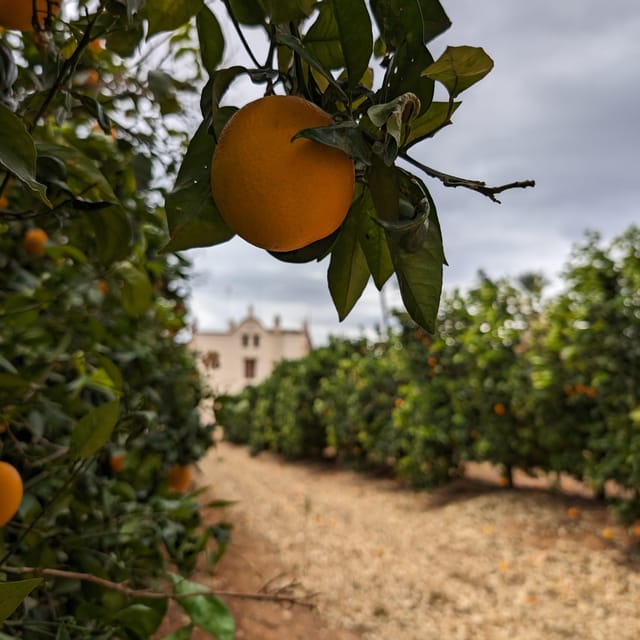
After the house, the visit moves into the estate’s gardens and orchards. The setting is meant to be calm and scenic, with romantic gardens and cultivated fields rather than a formal city park.
Here, the guide explains how different citrus fruits are grown and how they fit into Valencian agriculture. You may see oranges and tangerines alongside avocados, Buddha’s hand, citrus caviar, and other varieties. These less familiar fruits are a useful reason to choose this experience over a simple market tour.
Buddha’s hand is especially distinctive because of its finger-like shape. Citrus caviar is also unusual, with small bead-like pieces inside the fruit. The supplied details do not promise that every variety will be fruiting or available in every season, so treat the list as what the estate grows rather than a guarantee of a particular tasting on your date.
The walk should appeal to children because there is plenty to look at and smell. Still, the experience is not described as wheelchair accessible. If anyone in your party has limited mobility, you should check the route and meeting arrangements before paying.
The citrus tasting: juice, jam, honey, and liqueur
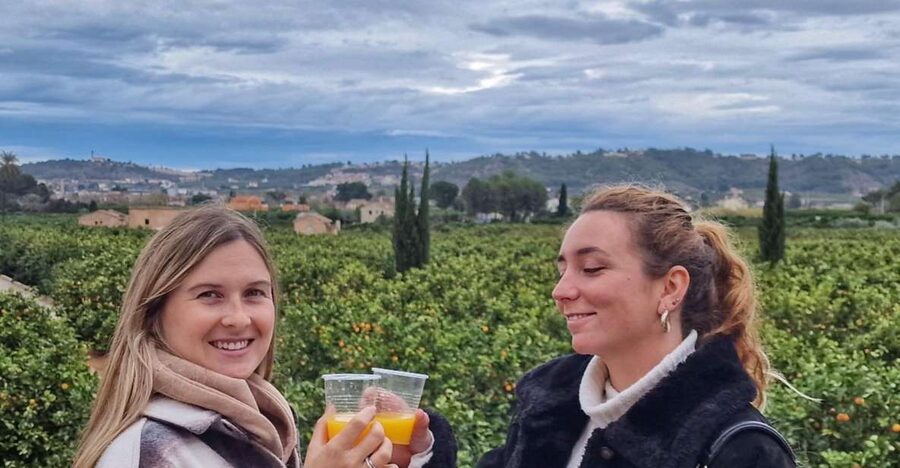
The tasting is the most obvious reward for making the trip outside Valencia. You sample natural citrus juice, homemade jams, orange blossom honey, and Valencian liqueurs.
That range gives you several ways to understand the fruit. Juice shows its freshness. Jam brings out sweetness and texture. Orange blossom honey connects the citrus trees with the bees that pollinate them. The liqueurs add a local drink tradition, though the information does not specify the brands, recipes, or alcohol content.
The tasting also helps explain why this is more than a photo stop. You are comparing products made from the same agricultural setting in different forms. I would take notes on the flavors you like, especially if you plan to shop for Valencian food later in your trip.
Because liqueurs are included, families should keep the tasting in perspective. Children can enjoy the fruit, juice, jam, and honey, but the alcoholic samples are for adults. The details do not state whether nonalcoholic alternatives are available beyond the juice, so ask the guide if that matters to your group.
The clearest overall impression is interesting, easygoing, and tasty. That combination is useful after several museum visits, when you want an outing with more senses involved.
A different way to spend a day in Valencia:
- Valencia: Catamaran Cruise with Sunset Option
★ 4.0 · 3,566 reviews - Valencia Old Town Tour with Wine & Tapas in 11th Century Historic Monument
★ 5.0 · 3,234 reviews - Valencia: Oceanogràfic, Hemisfèric & Science Museum Combo
★ 4.4 · 2,959 reviews - Valencia: City Highlights Guided Bike Tour
★ 4.7 · 2,373 reviews
Sorting and packing your own Valencia oranges
One of the best parts is the chance to join the calibration and packaging of orange boxes. Calibration means sorting fruit by size and quality, then preparing it for sale or transport.
This small task gives you a better feel for the work behind the produce you see in Spanish markets. A supermarket orange looks simple on the shelf. At the orchard, you see that someone has selected it, graded it, packed it, and moved it through a farming system.
You choose your favorite oranges and take them home. That makes the outing more memorable than a tasting that ends when the last sample disappears. It also gives you a practical souvenir, though you should consider how you will carry the box for the rest of your trip.
The experience description calls these the finest Valencia oranges, but the important point for you is the personal selection. You have a direct connection to what you take home instead of receiving an anonymous gift bag.
The story behind Valencia’s famous fruit
The guide also tells the story of the Valencian orange. The available details do not provide a full timeline or specific historical names, so I would not book this expecting a specialist lecture on Spanish agriculture.
What you do get is a regional story tied to place. The orange is not just a symbol printed on a souvenir. It is connected with land, orchards, farm labor, food production, gardens, and the identity of Valencia’s hinterland.
This kind of explanation is valuable because it helps you read the countryside after the tour. Orange groves become more than attractive scenery. You begin to notice varieties, planting patterns, fruit at different stages, and the practical side of maintaining an estate.
For history enthusiasts, the combination of the 1870 house and the agricultural story should be more satisfying than a visit focused only on tasting. For serious horticulture fans, the tour may feel introductory because no detailed technical schedule or specialist farming workshop is promised.
What a four-hour visit feels like
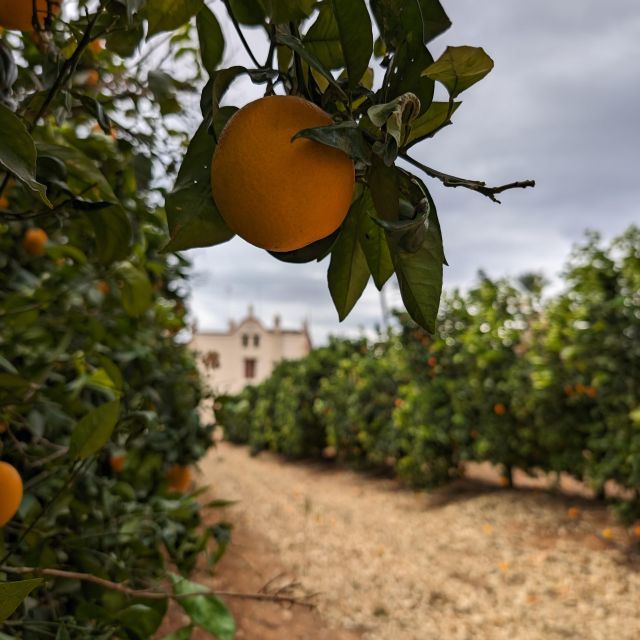
Four hours is long enough to give the orchard its due without turning the outing into a full-day commitment. You have time for the house, gardens, citrus collection, guide’s explanation, tasting, and packing activity.
That duration is useful if you are planning a broader Valencia itinerary. You can fit the experience into a half-day and still keep time for the city later. It is less suitable if you want a quick one-hour stop between major attractions.
Transportation is included, which improves the value and removes one major planning problem. The exact meeting point may vary depending on the option booked, so read that detail carefully before setting out. Do not assume every departure begins at the same place.
The group is limited to 15 people. That is a good middle ground. You get more room for questions than on a large bus tour, but it may not feel as private as a custom visit for just your family or friends.
Guiding is available in English and Spanish. Since no guide names are supplied, you should focus on the language offered when selecting your option rather than expecting a particular person.
Is $82 per person fair value?
At $82 per person, this is not the cheapest way to see orange trees. You are paying for a four-hour visit with transportation, an official guide, a guided orchard tour, a tasting, and the chance to take home selected oranges.
The price looks more reasonable if you would otherwise need to arrange transport to La Ribera, find a farm willing to receive visitors, and organize a tasting on your own. The small group also adds value, especially if you want to ask questions about the fruit or the estate.
The value is weaker if your only goal is to buy oranges. Valencia’s markets and shops may offer fruit without the cost of a half-day excursion. This outing earns its price through the combined experience: architecture, gardens, agriculture, tasting, and participation.
I would also compare it with your interest level. If oranges, food production, and regional history sound like side topics, $82 may feel high. If you enjoy food experiences that explain where products come from, the price is easier to justify.
Who will enjoy this estate visit most?
I would recommend it most strongly to:
- Families seeking a low-pressure countryside outing
- Food lovers who like tastings with a local connection
- History fans interested in old estates and Valencian agriculture
- Visitors who want a break from museums and city streets
- Small groups who prefer an English or Spanish guide
- Citrus enthusiasts curious about unusual varieties
Children should have enough variety to stay interested, especially during the orchard walk and packing activity. The experience has a playful side, but it is still guided and educational, so it may not suit children who need constant high-energy entertainment.
Couples and solo visitors can enjoy it too, particularly if they like taking home regional food. If you are mainly seeking dramatic scenery, remember that this is a cultivated agricultural setting. The pleasure comes from the trees, gardens, house, and food rather than from grand mountain views or a major historic monument.
Practical points before you reserve
You can cancel up to 24 hours before the activity for a full refund, and the reserve-now, pay-later option keeps your plans flexible. That is useful when your Valencia schedule is still changing.
Check the starting time and meeting point for the exact option you choose. Transportation is included, but the supplied information does not give a single fixed meeting location.
Wear something comfortable for walking through gardens and orchard areas. The details do not list a dress code or walking distance, so simple practical clothing is the safest choice.
The activity is not suitable for wheelchair users. If accessibility is important to you, ask for exact route information before booking rather than relying on the general description.
The published rating is 5 out of 5 from four verified bookings, and the short German assessment translates roughly as interesting, entertaining, and delicious. That matches the structure of the outing: it is designed to keep the pace varied, with architecture, a walk, food, and a hands-on task instead of one long talk.
Should you book Citrus Treasures?
Book it if you want to understand Valencia through its food and countryside, not just its cathedral, market, and beaches. The strongest reasons are the small group, the unusual citrus varieties, and the chance to sort and pack oranges you choose yourself.
Skip it if you only have a few hours in Valencia and prefer major city sights, or if mobility limits make an orchard route difficult. At $82, the visit needs to be more than an orange purchase to feel worthwhile.
For the right person, this is a gentle, good-humored half-day in La Ribera. You leave with a better sense of the Valencian orange, a range of flavors to remember, and fruit selected by your own hands.
FAQ
Where does the Citrus Treasures experience take place?
It takes place in La Ribera, in the Valencian Community of Spain, at an orange estate dating from 1870.
How long does the experience last?
The activity lasts four hours. Starting times depend on availability and the option you book.
What is included in the price?
Transportation, an official guide, a guided visit in the orange garden, and a tasting are included.
Which languages are available?
The live guide is available in English and Spanish.
How large is the group?
The experience is offered as a small-group tour with no more than 15 participants.
Can I cancel or book without paying immediately?
You can cancel up to 24 hours in advance for a full refund. A reserve-now, pay-later option is also available.
Just added around Valencia
- e-Bike Rental in Valencia★ 3.5 · 3 reviews
- Valencia: Tuk Tuk Historical Tour★ 5.0 · 3 reviews
- Authentic Paella Dinner in Valencia★ 5.0 · 3 reviews
- Valencia: Horchata Bike Tour★ 4.8 · 3 reviews
- Valencia: Guided City Walking Tour with Tapas Tastings★ 3.8 · 3 reviews
- One-way Valencia Airport To/From Benicàssim (FIB)★ 5.0 · 3 reviews
- Rent Boat Valencia Yatch Polonova with capitan and drinks★ 4.0 · 3 reviews
- In Love with Valencia: A Self-Guided Tour of its Landmarks★ 5.0 · 3 reviews