
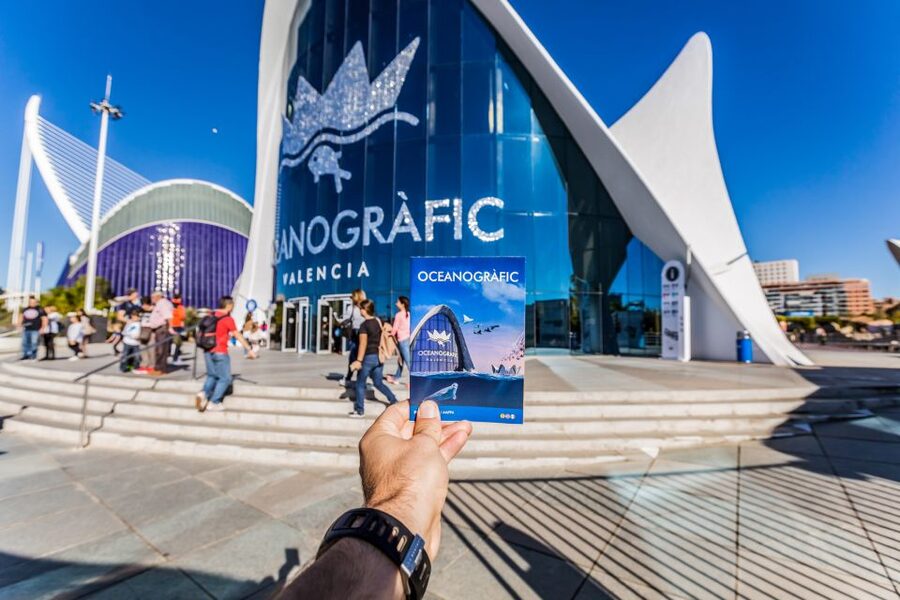
Reviewed · CITY OF ARTS AND SCIENCES TOURS
Valencia: Oceanogràfic Entry Ticket
Europe’s largest aquarium is less a quick indoor stop than a full half-day or full-day outing. Oceanogràfic spreads across two levels and covers major marine regions, with more than 45,000 creatures from over 500 species. The shark tunnel, beluga whales, penguins, jellyfish, and dolphin area are the big draws.
I like the clear journey through different aquatic environments, and I like that the lower galleries offer a cool break on hot Valencia days. The grounds are spacious and well maintained, with ramps and lifts that make the route manageable. The main catch is cost: at $44 per person, food and drinks extra, this needs several hours to feel worthwhile.
In This Review
- Key points to know before you go
- What your $44 ticket gets you
- Start with the City of Arts and Sciences setting
- The underwater tunnel and major aquariums
- Belugas, penguins, walruses, and sea lions
- The dolphin show: worth planning around
- Outdoor birds and the freshwater lake
- How long to stay and when to visit
- Food, drinks, and practical comfort
- Who will enjoy Oceanogràfic most
- Should you book the Oceanogràfic ticket?
- FAQ
- How much does Oceanogràfic admission cost?
- How long should I plan for Oceanogràfic?
- Can I enter at any time on the day I book?
- What are Oceanogràfic’s normal opening hours?
- Does Oceanogràfic have extended summer hours?
- Is Oceanogràfic wheelchair accessible?
- Is the dolphin show included in the ticket?
Key points to know before you go
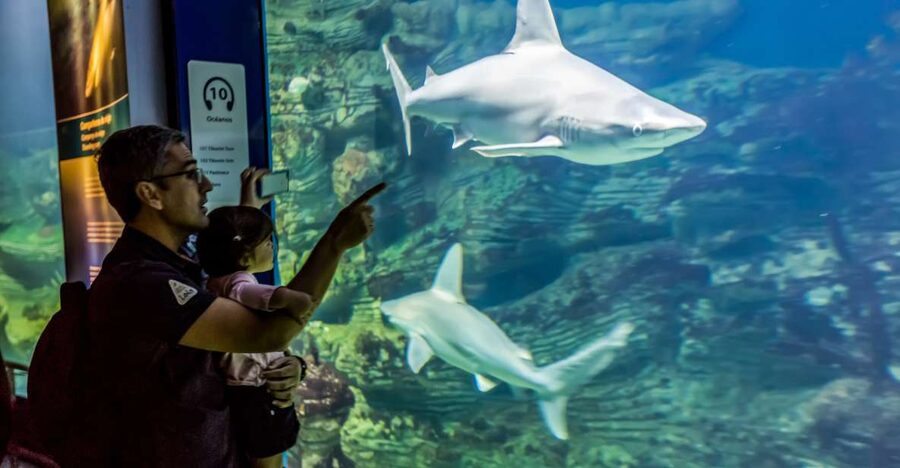
- The shark tunnel is the signature stop: Walk beneath one of Europe’s longest underwater tunnels and watch sharks, rays, and other fish pass overhead.
- Belugas are a major highlight: The white whales attract plenty of attention, alongside walruses, penguins, sea lions, and turtles.
- Plan more than three hours: Many people finish in four hours, but a slower visit with the dolphin show, lunch, and outdoor areas can take five or six.
- The complex works in hot or wet weather: Underground aquariums provide shade and cooler air, while many outdoor paths remain open to the elements.
- Food costs extra and can be pricey: Cafeterias and vending machines are available, but budget carefully and use the water fountains.
- Your entry time matters: You may enter only during the booked time slot, so do not arrive casually late.
What your $44 ticket gets you

For $44, your general admission ticket covers all Oceanogràfic exhibits for one day. That matters because this is not an aquarium you can sensibly rush through in an hour.
You are paying for a large, carefully organized complex rather than one giant tank. The route moves through marine zones linked to the Mediterranean, Antarctic, Arctic, Red Sea, and other major water environments. You will also see outdoor habitats around a freshwater lake, where pelicans, cormorants, and flamingos add birds to the usual fish-and-mammal lineup.
I see the price as fair if you spend four to six hours inside. It is harder to justify for a short visit, especially since meals, drinks, and any extras are not part of admission. Families can get solid value because children and adults have plenty to see, while aquarium fans may find the scale alone worth the cost.
The strongest value comes from the variety. You are not simply looking at rows of tanks. The setting changes from warm Mediterranean waters to colder polar habitats, then to large shark displays and open-air bird areas. That gives the visit a sense of movement and keeps it from feeling repetitive.
More of the City of Arts and Sciences:
- Valencia: Oceanogràfic, Hemisfèric & Science Museum Combo
★ 4.4 · 2,959 reviews - Valencia: City of Arts and Science 3D Movie at Hemisfèric
★ 4.1 · 455 reviews - City of Arts and Sciences Private Segway Tour
★ 5.0 · 196 reviews
Start with the City of Arts and Sciences setting
Oceanogràfic sits within Valencia’s City of Arts and Sciences complex, one of the city’s most recognizable modern developments. Even before entering the aquarium, you are in a broad, striking setting with water, curved buildings, and open paths.
The aquarium itself is built on two levels. The upper level includes outdoor exhibitions and the freshwater lake. The lower level contains the biggest aquariums and the main underwater displays.
I suggest treating the venue as a route, not a checklist. The outdoor areas can be bright and hot in summer, while the lower galleries offer cooler, darker rooms where you can slow down. A visit feels easier when you alternate indoor and outdoor sections instead of trying to cover every exhibit in one fast circuit.
The scale can also make navigation slightly confusing. Some sections are spread out, and one person found the Mediterranean animal displays harder to locate. Give yourself time to read the signs and check the posted maps rather than assuming every habitat follows a straight line.
The underwater tunnel and major aquariums
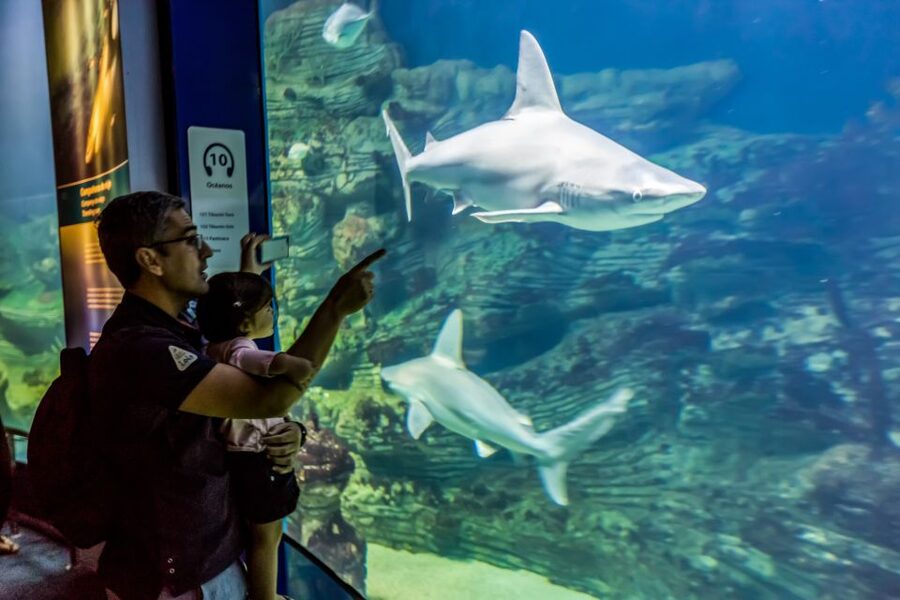
The shark tunnel is the visual centerpiece. You walk through a long underwater passage while sharks and other marine life move around you. It is an easy place to linger, and the changing angle gives you views that ordinary glass-fronted tanks cannot provide.
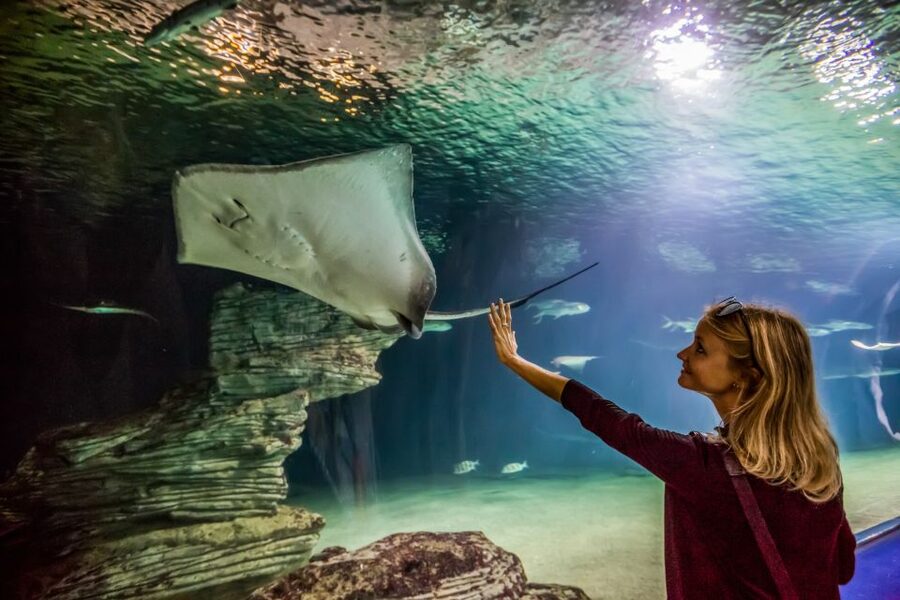
The tunnel is especially effective for children, but adults tend to stop here too. Sharks, rays, and large fish overhead create the sort of simple, memorable scene that makes the admission price easier to accept.
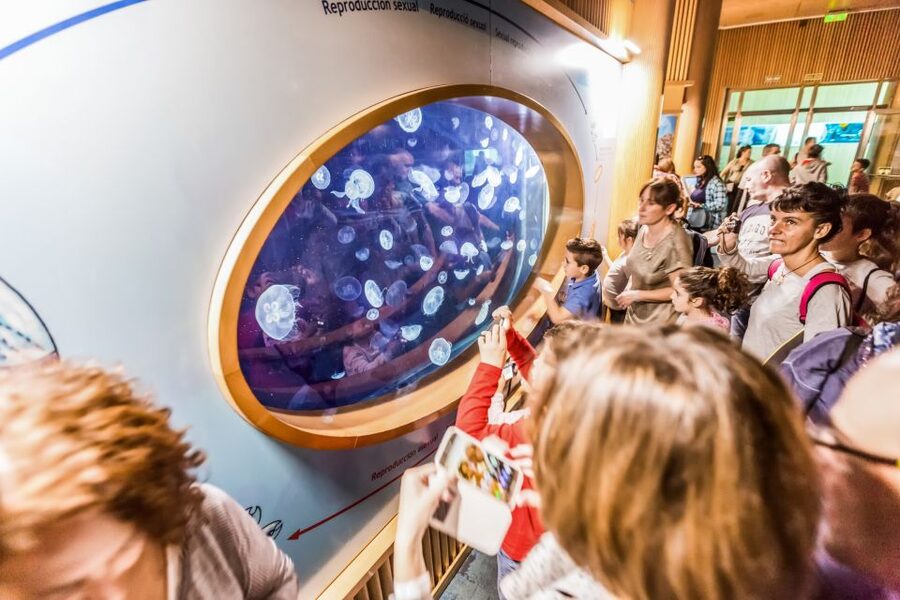
The wider aquarium halls cover the world’s main marine regions. You will find fish from the Mediterranean, polar animals from the Antarctic and Arctic, jellyfish, sea lions, turtles, and other species. The jellyfish displays can be a quieter change of pace, with slow-moving animals set against cool lighting.
I like this mix because it gives you both spectacle and education. The large tanks draw you in, while the smaller displays help explain where the animals live and how human activity affects those places. Signs and learning points address issues such as climate change and the impact people have on the sea.
The exhibits are clean and thoughtfully arranged, according to the condition you can expect from the venue’s well-kept public areas. Still, this is a major attraction, not a quiet research center. On busy days, you may need to wait for a clear view at the most popular tanks.
Belugas, penguins, walruses, and sea lions

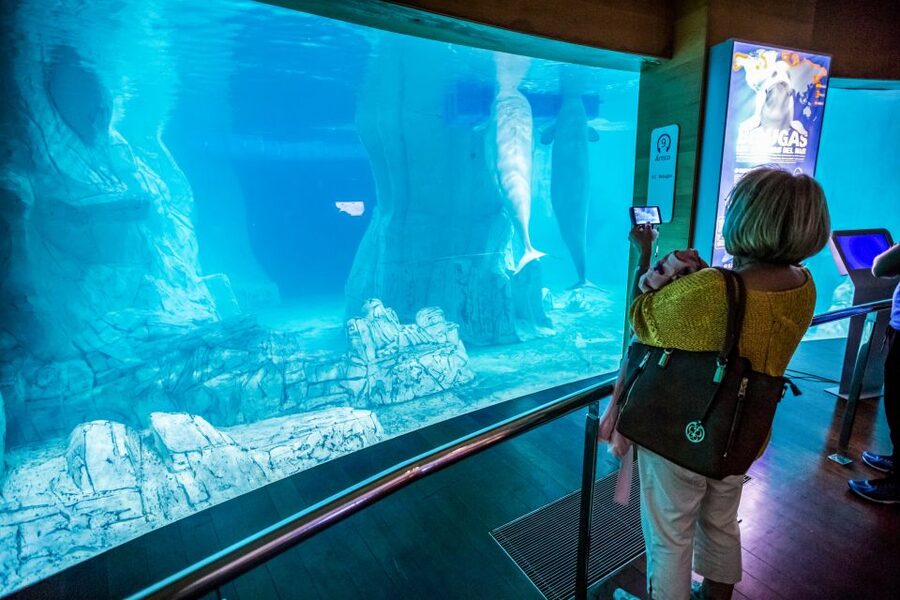
The beluga whales are among Oceanogràfic’s most memorable animals. Their pale color and expressive faces make them easy to watch for a long time, and they are a clear favorite for many families.
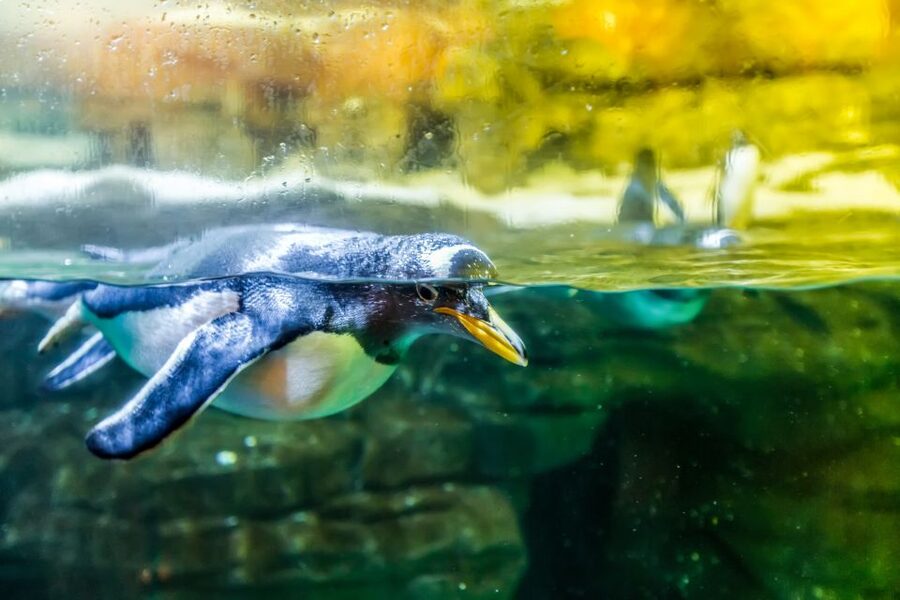
The penguin and beluga areas can feel smaller than you expect from an aquarium of this size, especially when a crowd gathers at the glass. You may not see every part of an enclosure from one viewing point, so move around before deciding you have seen it all.
Walruses, sea lions, turtles, and other marine animals add variety. These exhibits help break up the fish displays and give you chances to see animals with very different ways of moving. Sea lions are lively, while the belugas offer a calmer, more reflective stop.
The attraction also places attention on animal care and environmental responsibility. You can expect information about conservation and modern threats to marine life, rather than a visit focused only on entertainment. That gives the aquarium more value for children and adults who want context along with the photographs.
A few more Valencia tours worth weighing up
- Valencia: 24 or 48-Hour Hop-on Hop-off Bus Ticket
★ 3.9 · 5,611 reviews - Valencia: Palosanto Flamenco Show Ticket
★ 4.8 · 3,876 reviews - From Valencia: Caves of San José Guided Excursion and Ticket
★ 4.6 · 1,717 reviews - Valencia: Authentic Flamenco Show Entry Ticket
★ 4.9 · 1,305 reviews
The dolphin show: worth planning around

The dolphin show receives strong praise and is one of the main reasons people allow extra time. The dolphins perform jumps and other trained behaviors in a large arena, creating a lively break from the slower rhythm of the aquarium halls.
If you want a good seat, arrive early. Seating can fill up, especially during summer and school holidays. The ticket information describes access to all exhibits, and the dolphin show is widely treated as part of the Oceanogràfic visit, but show times are not provided here. Check the schedule when you arrive so you can plan the rest of your route around it.
I would set expectations sensibly. Many people find the show enjoyable and instructive, while one visitor who had seen other dolphin shows found it less impressive by comparison. If you have strong feelings about animal performances, you may prefer to focus on the habitats and educational displays.
For families, the show can be a useful anchor point. Instead of wandering without a plan, you can choose a performance time, visit the nearby exhibits before it, and then continue through the complex afterward.
Outdoor birds and the freshwater lake
Do not spend the entire visit underground. The upper level surrounds a freshwater lake inhabited by pelicans, cormorants, and flamingos. The bird area gives you a welcome change from glass tanks and artificial lighting.
The outdoor sections are pleasant for a slow walk, but weather matters. On hot days, the sun can make this part tiring, particularly for young children or anyone who needs frequent rest. On wet days, some paths can be less comfortable, although much of the aquarium route remains sheltered.
The bird displays are also a good reason to pause rather than hurry from one named habitat to the next. You can watch the animals at a more natural distance and take a break from crowded viewing windows.
Seating is not abundant everywhere. There are places to rest, including a seating area near the penguins, but you may need to plan breaks rather than assume a bench will be beside every major exhibit.
How long to stay and when to visit
The official duration is one day, but that does not mean you need to remain from opening until closing. For a brisk visit, allow at least three hours. Four hours is a safer target if you want to read information and see the main areas. Five or six hours makes sense if you include the dolphin show, outdoor bird areas, a meal, and slower stops at the belugas and sharks.
Oceanogràfic is open daily from 10:00 AM to 6:00 PM Sunday through Friday, and from 10:00 AM to 8:00 PM on Saturday. From July 15 through August 31, it extends its hours daily until 9:00 PM.
There are also special schedules. From December 6 through December 9, it is open from 10:00 AM to 8:00 PM. On December 24 and 31, it closes at 4:00 PM. On December 25, it opens at noon and closes at 6:00 PM.
Your booked time slot controls entry, so choose an early start if you want a quieter beginning. Arriving around opening gives you a better chance of seeing the popular exhibits before the crowds build. Summer afternoons can be very busy, and narrow viewing spots may become uncomfortable when people stop shoulder to shoulder.
A rainy day can work well here. The indoor galleries give you a substantial activity when outdoor sightseeing is unpleasant. In hot weather, the lower-level aquariums are cooler, making them a practical refuge as well as an attraction.
Food, drinks, and practical comfort
Food and drinks are not included. There is an underwater restaurant, along with cafeterias and vending machines around the complex, but prices can feel high for a family meal. One practical issue is that vending machines may not always work, so do not rely on a single machine for water or snacks.
Water fountains are available. The venue also has bathrooms and areas for children, which makes a long family visit easier. Picnic rules are restrictive, so check the current policy before planning to bring a full meal. Small snacks may be useful, but do not assume you can spread out a picnic inside.
Wear comfortable shoes. The site is large, with indoor galleries, outdoor paths, ramps, and multiple levels. Lifts and ramps are available instead of stairs, and the attraction is wheelchair accessible.
If you need a rest, use the penguin seating area or pause beside the larger tanks. Sitting quietly in front of an aquarium is part of the experience, not wasted time. It also helps if the crowds or heat begin to wear you down.
Who will enjoy Oceanogràfic most
I would recommend this for families, aquarium enthusiasts, and anyone planning a full day around the City of Arts and Sciences. Children have large animals, tunnels, birds, and a dolphin show to keep their attention, while adults get useful information about marine environments and conservation.
It also suits mixed-age groups because the visit does not depend on a guide, a fixed walking pace, or advanced knowledge. You can move quickly through familiar sections and spend longer at the animals that interest you.
The attraction is less suited to someone looking for a cheap, quick stop. At $44, admission is a serious part of a day’s budget. It is also not ideal if you dislike crowds, large modern attractions, or animal shows. The venue is spacious, but popular areas can still feel packed during school holidays and summer weekends.
If you care strongly about animal welfare, pay attention to the educational and care information as you go. The exhibits present conservation themes, but the dolphin show may not appeal to every person for ethical reasons. You can still get a worthwhile visit from the aquariums, birds, and educational displays.
Should you book the Oceanogràfic ticket?
Book it if you can give it at least four hours and want a major attraction rather than a quick museum stop. The sharks, belugas, jellyfish, penguins, outdoor birds, and dolphin show create a broad experience with enough variety for a full morning or afternoon.
Choose an early time slot for a calmer start, and arrive early for the dolphin show if you want a better seat. Bring patience for busy periods, budget extra for food, and use the cooler lower galleries when Valencia turns hot.
Skip it if $44 feels too steep for one attraction or if you only have an hour. For everyone else, Oceanogràfic is a strong Valencia choice, especially when you combine it with the rest of the City of Arts and Sciences and make a real day of it.
FAQ
How much does Oceanogràfic admission cost?
The listed price is $44 per person. The ticket includes general admission and access to all exhibits, but food and drinks cost extra.
How long should I plan for Oceanogràfic?
Plan on at least three to four hours for the main exhibits. A visit can take five or six hours if you include the dolphin show, outdoor areas, breaks, and a meal.
Can I enter at any time on the day I book?
No. You can enter only during the time slot you booked.
What are Oceanogràfic’s normal opening hours?
From Sunday through Friday, it is open from 10:00 AM to 6:00 PM. On Saturdays, it is open from 10:00 AM to 8:00 PM.
Does Oceanogràfic have extended summer hours?
Yes. From July 15 through August 31, it is open daily from 10:00 AM to 9:00 PM.
Is Oceanogràfic wheelchair accessible?
Yes. The attraction is wheelchair accessible, with lifts and ramps available instead of stairs.
Is the dolphin show included in the ticket?
The ticket provides access to all exhibits, and the dolphin show is part of the Oceanogràfic visit. Show times are not provided with the available ticket details, so check the schedule when you arrive.
Just added around Valencia
- e-Bike Rental in Valencia★ 3.5 · 3 reviews
- Valencia: Horchata Bike Tour★ 4.8 · 3 reviews
- Valencia: Tuk Tuk Historical Tour★ 5.0 · 3 reviews
- Authentic Paella Dinner in Valencia★ 5.0 · 3 reviews
- Valencia: Guided City Walking Tour with Tapas Tastings★ 3.8 · 3 reviews
- One-way Valencia Airport To/From Benicàssim (FIB)★ 5.0 · 3 reviews
- Rent Boat Valencia Yatch Polonova with capitan and drinks★ 4.0 · 3 reviews
- In Love with Valencia: A Self-Guided Tour of its Landmarks★ 5.0 · 3 reviews
City of Arts and Sciences Tours, compared.

Oceanogràfic, Hemisfèric & Science Museum Combo
Read our review →
City of Arts and Science 3D Movie at Hemisfèric
Read our review →



City of Arts & Sciences Tour with Rooftop Tapas & Wine
Read our review →
City of Arts and Sciences & Oceanografic 2-Hour Guided Tour
Read our review →Browse the lists this tour appears in