
Reviewed · VALENCIA
Johnny Madge Olive Oil Tastings
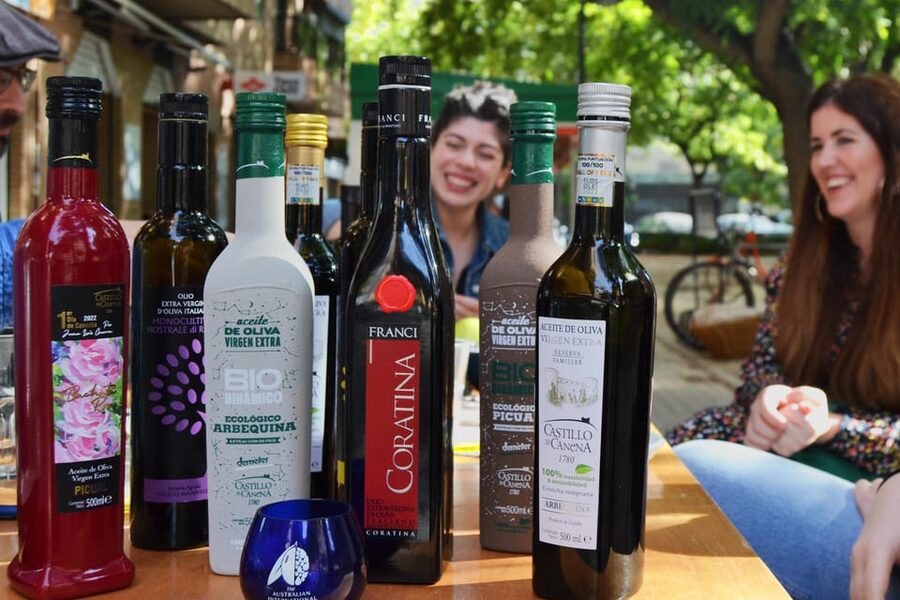
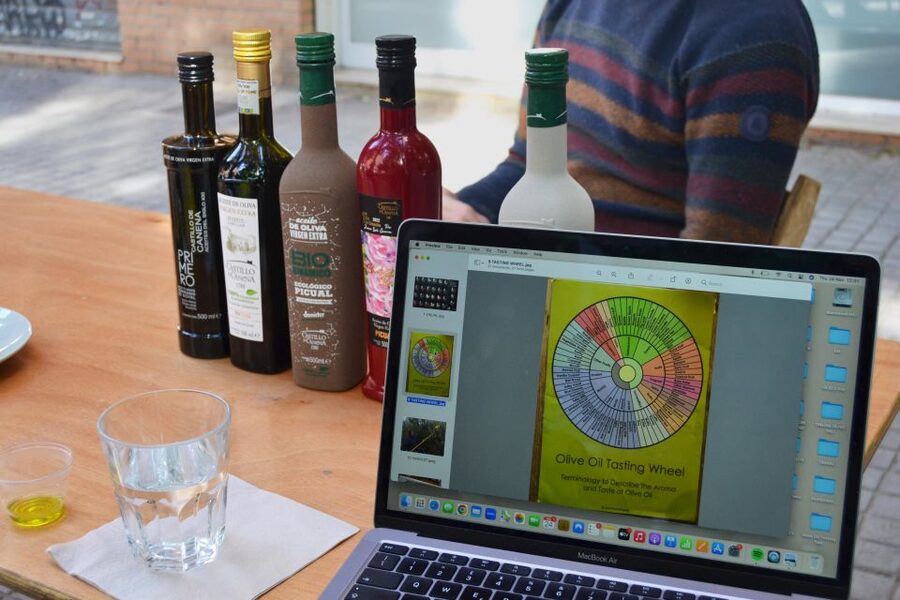
Johnny Madge does not simply hand you a plate of bread and a bottle of oil. He shows you how international judges assess olive oil, using at least three carefully chosen oils from Spain and beyond. I like the professional tasting method and the way the hour can shift from light and social to full-on oil-mill detail, depending on your questions.
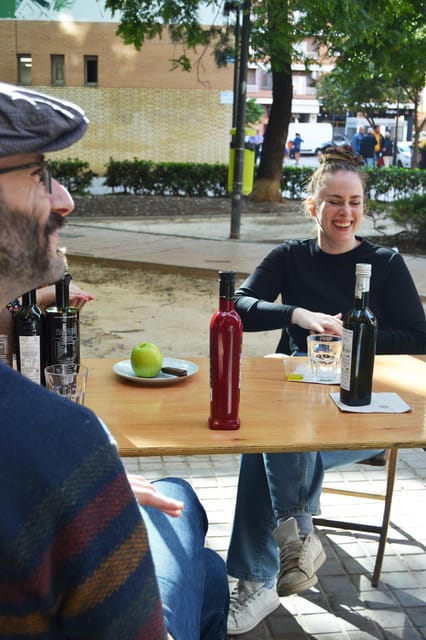
I also like the friendly setting at La Ola Fresca, a cafe on a leafy square in Benimaclet, away from passing traffic. The main consideration is simple: this is a focused one-hour tasting, not a visit to an olive farm or a working mill. You learn a great deal about oil, but you will not see olives being harvested or pressed.
In This Review
- Key points about Johnny Madge’s olive oil tasting
- Why this Valencia tasting is different
- Arriving at La Ola Fresca in Benimaclet
- The first step: learning to smell the oil
- Tasting at least three of the world’s best oils
- The useful olive oil lessons packed into one hour
- A relaxed host with room for serious oil fans
- What the $23 price gets you
- Who will enjoy this most
- Timing, languages, and booking flexibility
- Is Johnny Madge’s olive oil tasting worth booking?
- FAQ
- Where does Johnny Madge’s olive oil tasting take place?
- How long does the olive oil tasting last?
- How much does the tasting cost?
- How many olive oils will I taste?
- Is bread included?
- Can I taste the oil directly?
- What languages are offered?
- Is the activity wheelchair accessible?
- Can I cancel or pay later?
Key points about Johnny Madge’s olive oil tasting
- Taste oils selected by an international judge: Johnny chooses oils from several countries, rather than presenting only one producer’s products.
- Use competition tasting methods: You smell oils in special biodegradable corn cups and learn how judges assess aroma and flavor.
- Try at least three high-quality oils: Bread is available for dipping, including sourdough and gluten-free bread.
- Ask practical questions: Johnny covers cooking, health, milling technology, extra virgin standards, and the confusing phrase first cold pressed.
- Choose your level of detail: You can keep the session relaxed or ask for technical information, photographs, and oil-mill facts.
- Meet in Benimaclet for $23: The one-hour price is modest for a specialist-led food experience in Valencia.
Why this Valencia tasting is different
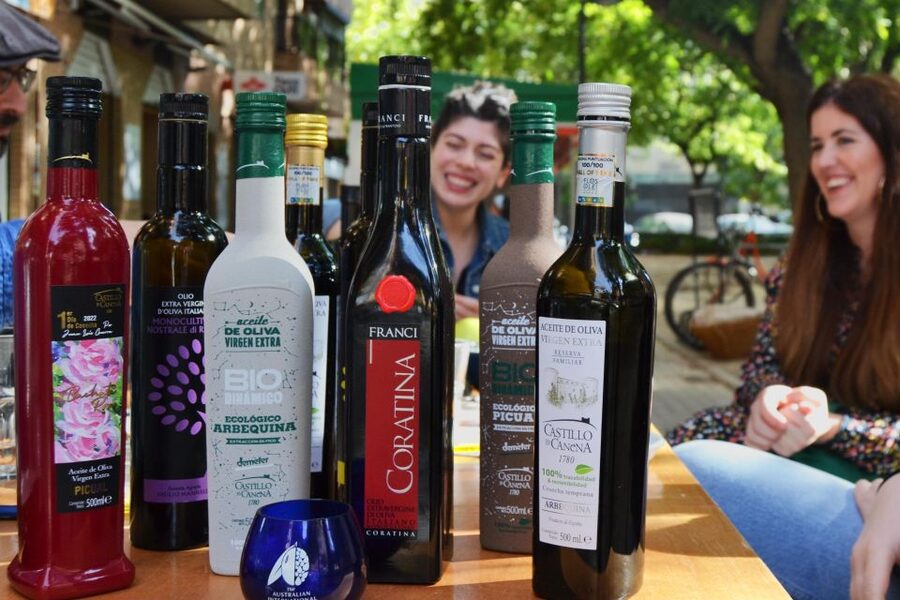
Many olive oil tastings are run by a producer who wants you to admire and buy that producer’s own bottles. That can be enjoyable, but the range is limited. Johnny Madge takes a different approach. His experience judging international competitions gives him access to oils selected for quality, not just oils made by one estate.
That matters because olive oil is not one single flavor. A good bottle can smell grassy, fruity, herbal, peppery, or gently bitter. Another may be soft and sweet. The oils can reflect different olive varieties, growing conditions, harvest timing, and milling choices. You get to compare them side by side instead of trying to remember what the last bottle tasted like.
I find that comparison is the fastest way to understand olive oil. A label may say extra virgin, but that phrase alone does not tell you how the oil will taste. At the tasting, you learn to pay attention to aroma, bitterness, and the peppery sensation that can appear at the back of your throat.
The experience also cuts through some common label confusion. Johnny explains what extra virgin actually means and why first cold pressed can be misleading. These are useful lessons for anyone who cooks with olive oil, not just food specialists.
Other Valencia tours people book alongside this one:
- Valencia: Oceanogràfic Entry Ticket
★ 4.7 · 9,893 reviews - Valencia: 24 or 48-Hour Hop-on Hop-off Bus Ticket
★ 3.9 · 5,611 reviews - Valencia: Palosanto Flamenco Show Ticket
★ 4.8 · 3,876 reviews
Arriving at La Ola Fresca in Benimaclet
The meeting point is La Ola Fresca, a cafe on a square filled with trees. The cafe has a large, visible sign, and the square is not on a road used by cars. That makes the location fairly easy to identify, though you should still allow a little time to find your way through Benimaclet.
Benimaclet gives the tasting a local neighborhood feel rather than a grand central-Valencia backdrop. You are meeting in a cafe, not a polished museum or a rural estate. That keeps the mood informal and helps explain why the session is designed to feel more like time with a host than a formal lecture.
Water is provided during the tasting. Coffee, tea, and other drinks cost extra, so plan on the olive oil experience itself being the included food-and-drink portion. Sourdough or gluten-free bread can be offered if you prefer not to taste the oil directly.
The location is wheelchair accessible. Johnny offers the session in English, Italian, French, or Spanish, which is helpful for mixed-language groups.
The first step: learning to smell the oil
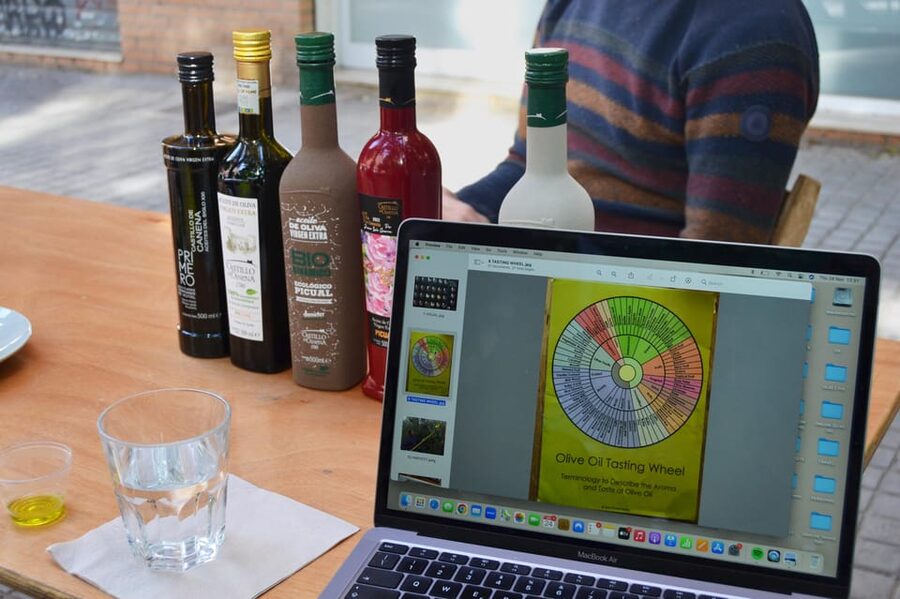
The session begins with the professional method used in international olive oil competitions. Rather than immediately spreading oil on bread, you first smell it. The oils are served in special tasting cups made from biodegradable corn.
Smell is a large part of judging olive oil. Before tasting, you look for the character of the oil through its aroma. Johnny guides you through this process and explains what the judges are seeking when they assess an oil.
This can be a useful surprise for people who think olive oil is mainly about texture. You may notice fresh, green, fruity, or peppery notes before the oil reaches your mouth. The point is not to guess the correct answer like a wine exam. It is to train your senses to notice differences.
The cups also make sense for the format. They are designed for tasting rather than serving, and the biodegradable material fits the practical, low-fuss nature of the session. You are there to focus on the oil, not on elaborate table service.
Johnny’s 20 years of holding tastings help here. He knows how to explain the process without making beginners feel awkward. You can ask basic questions, and you can also ask for the more technical explanation of how judges work.
Tasting at least three of the world’s best oils
After smelling, you can taste the oils. At least three are included, and Johnny’s selection may include outstanding oils from Spain as well as other countries. The central pleasure is comparison. You are not trying one oil in isolation and being told that it is excellent. You are learning how several excellent oils differ.
For those who want to follow the competition method, Johnny explains how to taste the oil directly. If that sounds too intense, or if you simply prefer a familiar approach, you can use bread. Locally made sourdough is normally available, and gluten-free bread can be provided.
Bread makes the experience more accessible, but direct tasting can reveal more of the oil’s character. The choice is yours. This flexibility is important because some people arrive eager to learn every sensory detail, while others simply want a delicious introduction.
As you taste, Johnny links flavor to use. A strong, peppery oil may work differently with food than a gentler, fruitier one. The aim is not to give you a rigid list of rules. It is to help you understand why you might choose one oil for a particular dish and another for a different meal.
You may leave with a new appreciation for olive oil as an ingredient rather than a background liquid. That is the practical payoff. The lesson can change what you buy and how you use it at home.
A different way to spend a day in Valencia:
- Valencia: Catamaran Cruise with Sunset Option
★ 4.0 · 3,566 reviews - Valencia Old Town Tour with Wine & Tapas in 11th Century Historic Monument
★ 5.0 · 3,234 reviews - Valencia: Oceanogràfic, Hemisfèric & Science Museum Combo
★ 4.4 · 2,959 reviews - Valencia: City Highlights Guided Bike Tour
★ 4.7 · 2,373 reviews
The useful olive oil lessons packed into one hour
Johnny can answer questions about several parts of olive oil production and use. He explains how the best oils are made and how poor oils are produced, giving you a clearer sense of what happens between the olive grove and your kitchen.
The phrase extra virgin receives careful attention. It is not simply a fancy marketing term. The oil must meet standards relating to production and quality, and Johnny explains how an oil earns that classification in plain language.
The phrase first cold pressed is another topic worth hearing about. It sounds reassuring, but modern production methods make the wording confusing. Johnny explains why you should not treat it as a simple guarantee of better oil.
Cooking is also covered. If you have ever heard that extra virgin olive oil should not be used for cooking, this is the place to ask. The supplied information is clear on Johnny’s view: you can cook with olive oil. He can also discuss health and the practical use of oil with food.
For visitors who enjoy technical subjects, the session can go further. Johnny can explain milling technology and how oil mills operate, using photographs to make the process easier to understand. You do not need to know industry terms before arriving. You can simply ask questions as they come up.
A relaxed host with room for serious oil fans
The tone is one of the strongest parts of this experience. Johnny describes his tastings as fun, clear, and friendly, and the structure allows him to adjust the level of detail to the people in front of him.
If you want a relaxed hour, you can focus on aroma, flavor, and food pairings. If you want the technical side, ask about milling, judging standards, production faults, or how competition oils are assessed. The same tasting can work for a curious first-timer and for someone who already owns several bottles of specialty oil.
That flexibility has real value. A fixed lecture can lose beginners, while a very basic introduction can frustrate food enthusiasts. Here, your questions help shape the conversation.
The atmosphere is also likely to suit people who dislike formal group activities. The setting is a cafe, the session lasts only an hour, and bread is available if direct tasting feels unfamiliar. You can take part without pretending to be an expert.
The strongest praise associated with this experience focuses on Johnny himself: warm, courteous, welcoming, and able to tailor the discussion to what people want to know. That personal approach is more important than it may sound. Olive oil tasting can feel intimidating if you worry about using the wrong words. A good host keeps the lesson open and enjoyable.
What the $23 price gets you
At $23 per person, this is a reasonably priced specialist activity in Valencia. You receive at least three selected oils, a guided tasting, explanations of professional judging methods, bread if desired, and the chance to ask detailed questions about production and cooking.
The value is especially strong if you want more than a quick sample. You are paying for Johnny’s judgment and 20 years of tasting experience, not just for the amount of oil in the cups. The session gives you a framework for evaluating bottles after you return home.
It is less useful if you mainly want a full meal or a long food tour. Coffee, tea, and other drinks are not included, and the activity lasts one hour. This is a compact lesson with food to taste, not a restaurant lunch.
I would see it as a good addition to a Valencia day. It is short enough to fit between other plans, yet substantial enough to give you a new way to think about a common Spanish ingredient. If you enjoy bringing home edible souvenirs, the information can also help you choose a better bottle.
Who will enjoy this most
I would recommend the tasting to:
- Curious cooks who want to use olive oil with more confidence.
- Food-focused visitors looking for a small, specialist experience in Valencia.
- Beginners who want clear explanations without a stiff classroom feel.
- Experienced food fans who want to ask about milling and competition standards.
- People with dietary needs who appreciate the availability of gluten-free bread.
- Small groups with mixed interests because Johnny can keep the session light or technical.
It may not suit you if you are expecting a countryside excursion, a grove walk, or a full meal. None of those are part of the stated format. The setting is a cafe in Benimaclet, and the focus stays on tasting and discussion.
It is also worth noting that the session is centered on olive oil itself. If you dislike strong flavors or bitter, peppery sensations, you may prefer using bread rather than tasting the oil directly. Johnny offers that choice, so the experience does not depend on enjoying the most intense tasting method.
Timing, languages, and booking flexibility
The experience lasts one hour, with start times depending on availability. That makes it easy to fit into a Valencia itinerary, though you should check the exact starting time before planning another activity immediately afterward.
The tour is offered in English, Italian, French, and Spanish. This is useful if members of your group are more comfortable in different languages, though you should select or confirm your preferred language when booking.
You can cancel up to 24 hours in advance for a full refund. The reserve-now, pay-later option also keeps your schedule flexible, which is useful when you are arranging several Valencia activities.
The activity is wheelchair accessible. La Ola Fresca is on a pedestrian-friendly tree-filled square, not beside a busy car road, which should make arrival more comfortable for many visitors.
Is Johnny Madge’s olive oil tasting worth booking?
Yes, if you want a friendly, useful introduction to extra virgin olive oil rather than a simple snack. The best reasons to book are the range of oils, the international judging perspective, and Johnny’s ability to answer both everyday and technical questions.
At $23, the hour offers good value, particularly for cooks and food lovers who will use the lessons after the trip. You will leave with more than a favorite flavor. You will have a better idea of how to smell, taste, compare, and buy olive oil.
Skip it if you need a full meal, an olive grove visit, or a tour of a working mill. But if you are curious about what makes one bottle better than another, La Ola Fresca in Benimaclet is an easy place to spend an hour and come away with a sharper palate.
FAQ
Where does Johnny Madge’s olive oil tasting take place?
The tasting takes place at La Ola Fresca, a cafe in Benimaclet, Valencia. The cafe is on a square full of trees, away from a road used by cars, and has a large visible sign outside.
How long does the olive oil tasting last?
The experience lasts one hour. Starting times vary, so you should check availability when choosing your date.
How much does the tasting cost?
The listed price is $23 per person.
How many olive oils will I taste?
The experience includes a tasting of at least three of the world’s best olive oils. The selection may include oils from Spain and other countries.
Is bread included?
Bread is available for people who prefer to taste the oil that way. The options can include locally made sourdough and gluten-free bread.
Can I taste the oil directly?
Yes. Johnny teaches those who want to taste the oils directly using the method applied in international olive oil competitions. Bread is also available if you prefer.
What languages are offered?
The tasting is available in English, Italian, French, and Spanish.
Is the activity wheelchair accessible?
Yes, the activity is wheelchair accessible.
Can I cancel or pay later?
You can cancel up to 24 hours in advance for a full refund. The reserve-now, pay-later option lets you book without paying immediately.
Just added around Valencia
- e-Bike Rental in Valencia★ 3.5 · 3 reviews
- Valencia: Tuk Tuk Historical Tour★ 5.0 · 3 reviews
- Authentic Paella Dinner in Valencia★ 5.0 · 3 reviews
- Valencia: Horchata Bike Tour★ 4.8 · 3 reviews
- Valencia: Guided City Walking Tour with Tapas Tastings★ 3.8 · 3 reviews
- One-way Valencia Airport To/From Benicàssim (FIB)★ 5.0 · 3 reviews
- Rent Boat Valencia Yatch Polonova with capitan and drinks★ 4.0 · 3 reviews
- In Love with Valencia: A Self-Guided Tour of its Landmarks★ 5.0 · 3 reviews