
Reviewed · WALKING TOURS
Small-Group Medieval Valencia Walking Tour – Licensed Guide
Valencia’s old center reads like a history book with the pages left open: Roman foundations, Muslim walls, Christian churches, printing presses, and silk workshops all appear within a compact walk. This two-hour small-group tour gives that long story a clear order, beginning at Plaça de la Verge and ending at the Llotja de la Seda.
I like the calm pace and the fact that a licensed local guide leads it, rather than a tip-based host rushing through a set speech. I also like the practical storytelling, including local sayings and the use of an iPad to show maps when Valencia’s complicated past gets hard to picture. The main consideration is simple: this is a history-first walk, so it may feel slow if you want lots of interior visits, food stops, or free time for photographs.
In This Review
- Key points about the medieval Valencia walk
- Starting beside the Basilica at Plaça de la Verge
- From Roman decline to Muslim Valencia
- Portal de Valldigna and the city’s layered past
- A short walk to the Serranos Towers
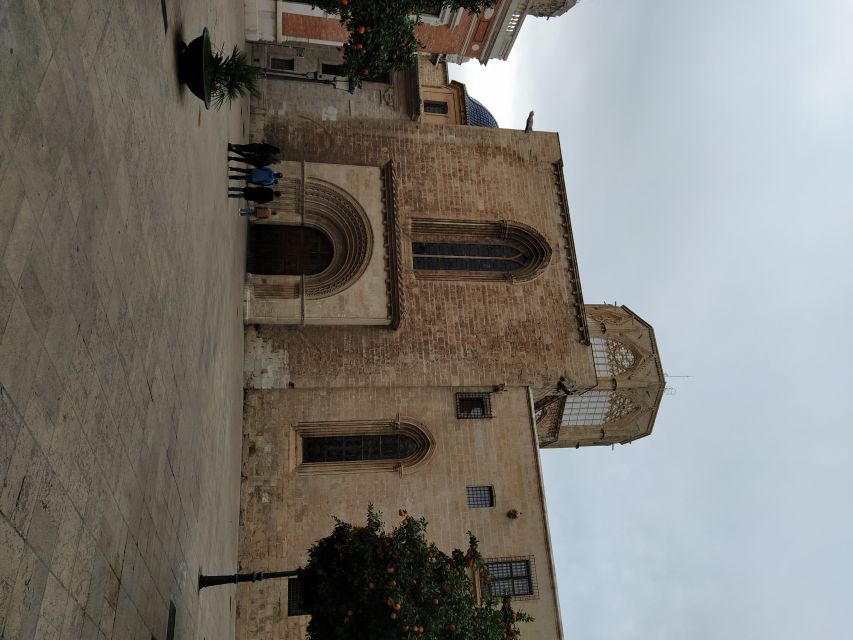
- Valencia Cathedral and the Christian Reconquest
- Printing, Valencian culture, and a new period of prosperity
- Finishing at the Llotja de la Seda
- Why the $14 price makes sense
- The guide can shape the whole experience
- Who should book this Valencia walk?
- Should you book the Medieval Valencia Walking Tour?
- FAQ
- How long does the tour last?
- Where does the tour begin?
- Where does the tour finish?
- Which languages are available?
- Is this a small-group tour?
- Is the tour wheelchair accessible?
- What does the price include?
Key points about the medieval Valencia walk
- A compact route through several civilizations: Connect Roman, Muslim, and Christian Valencia in the old town.
- A licensed guide, not a tip-based tour: The format suits you if you want a planned explanation at a fixed $14 price.
- David has earned especially strong praise: His clear, friendly style and answers to questions are a major part of the experience when he leads.
- The route ends at the Silk Exchange: Llotja de la Seda gives the walk a fitting finish, with Valencia’s silk trade at the center.
- Helpful visual aids: Maps on an iPad can make the city’s changing borders and buildings easier to understand.
- English or Spanish: You can choose between the two listed tour languages, with wheelchair access available.
Starting beside the Basilica at Plaça de la Verge
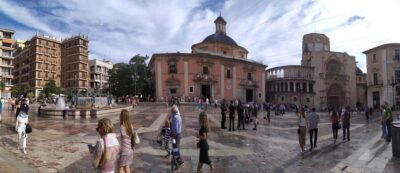
Meet at Plaça de la Verge, number 6, between the fountain and the Basilica, the pink church. Look for an Integra-T Experience guide carrying a tablet marked Medieval Tour. That detail matters because this busy square has several possible meeting spots, and the sign should save you from wandering around looking for a flag.
The square is a fitting beginning. From here, you are already surrounded by Valencia’s religious and civic center, so the guide can start with the city as it appears today before explaining the older layers below it. The walk focuses on the old town, and the route stays on foot for the full two hours.
The group is described as small, though the exact maximum size is not given. That means you should expect a more personal setting than a large city tour, but you should not assume a private tour. The guide speaks English or Spanish, and the activity is listed as wheelchair accessible.
More walking tours in Valencia:
- Valencia: Essentials and World Heritages Sites Walking Tour
★ 4.7 · 684 reviews - Valencia: Historical Walking Tour
★ 4.6 · 390 reviews - Valencia: City Walking Tour with Top Attractions – ITALIAN
★ 4.9 · 242 reviews
From Roman decline to Muslim Valencia
The opening story begins after the fall of the Roman Empire, when Valencia changed sharply under Muslim rule. This is not just a parade of dates. The guide connects political change with practical changes in agriculture, defensive building, and urban life.
I find that approach useful because Valencia’s old center can otherwise seem like a jumble of attractive buildings. The point is to see why the city developed as it did. Muslim rule affected farming and water use, while defensive architecture reflected the city’s need for protection. Christian Valencia later added its own buildings, institutions, and symbols.
The guide may use maps on a tablet to show how the city changed over time. That is a small but valuable feature. Medieval city boundaries are difficult to picture when all you can see is the modern street plan, and a map can turn an abstract explanation into something you can follow.
Portal de Valldigna and the city’s layered past
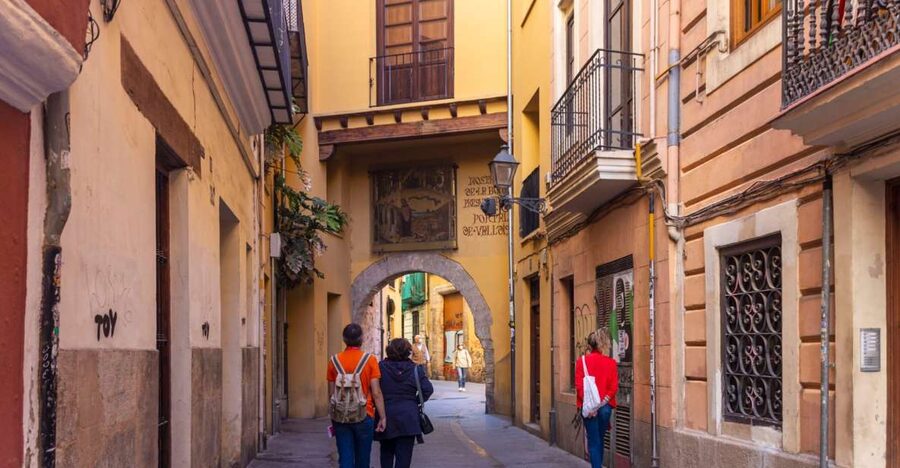
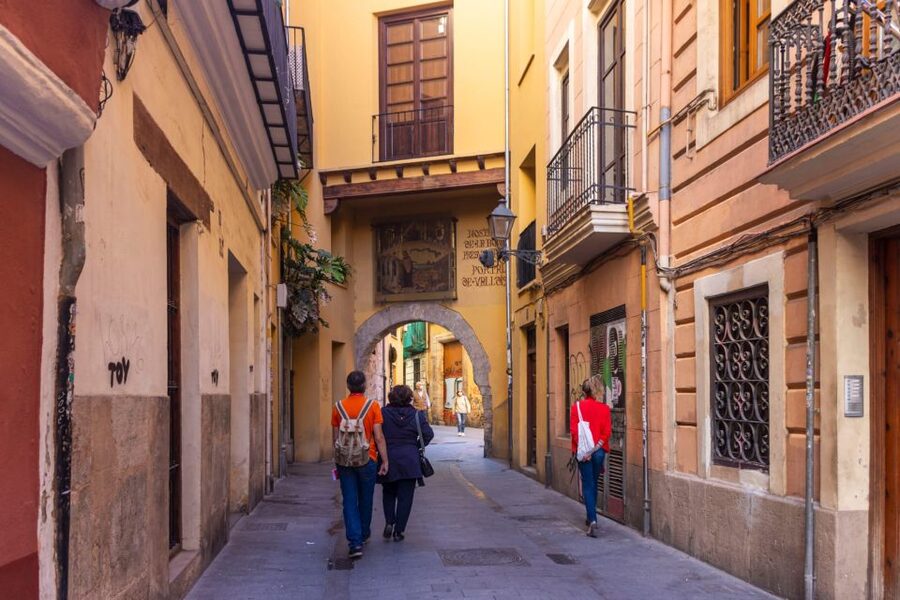
The route reaches Portal de Valldigna for a guided stop of about 20 minutes. This is one of the longer stops, which tells you something about the tour’s priorities: the guide is expected to pause and explain rather than simply point and move on.
The portal helps bring Valencia’s mixed past into view. You will hear about the Muslim period, the Christian Reconquest, and the way communities and institutions shaped the old city. The experience is less about checking off a monument and more about linking places to the people and power systems behind them.
This is also where a calm guide makes a difference. David, when leading, has been praised for explaining Valencian history in a way that is both funny and careful. That combination is useful on a subject that can become a blur of dynasties, dates, and religious change. Humor keeps the walk human, while the structured explanation keeps it from becoming loose storytelling.
A short walk to the Serranos Towers
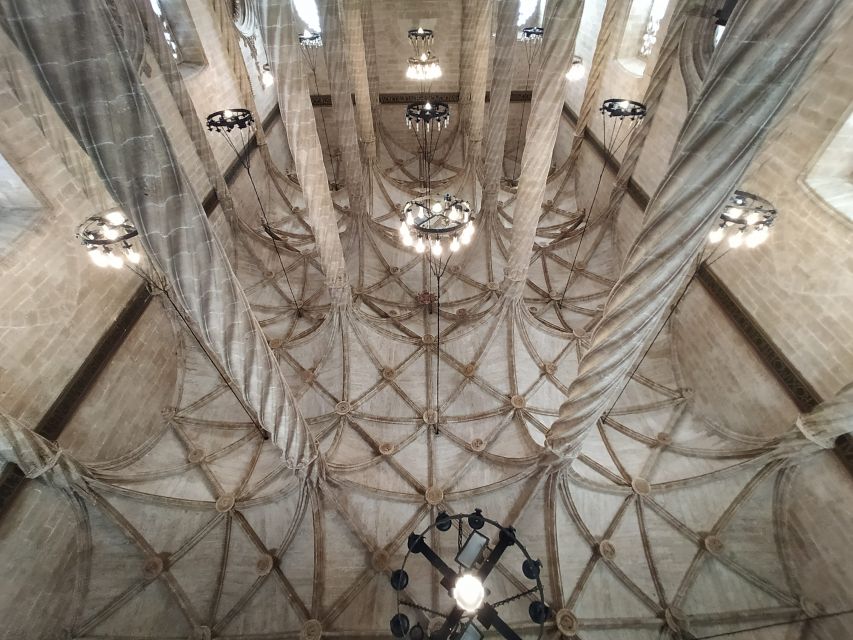
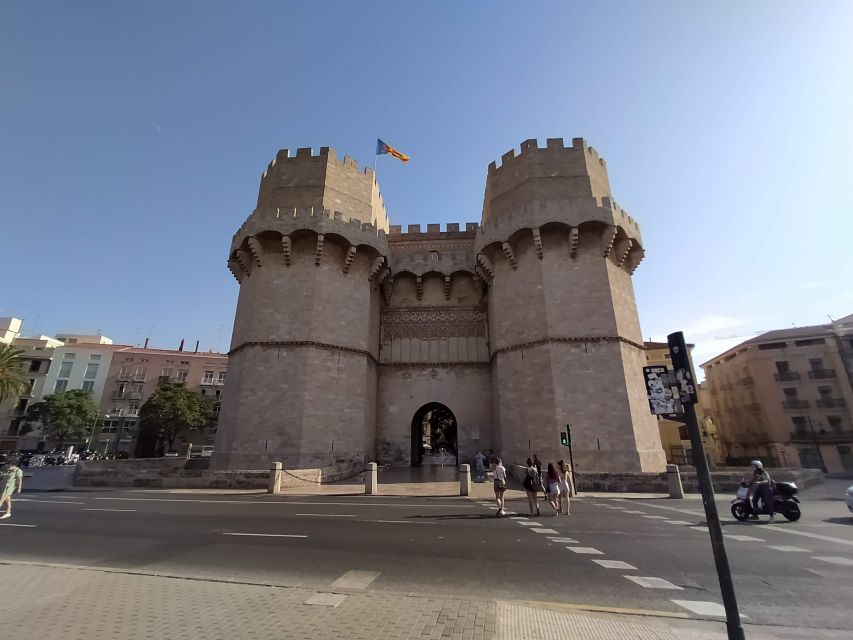
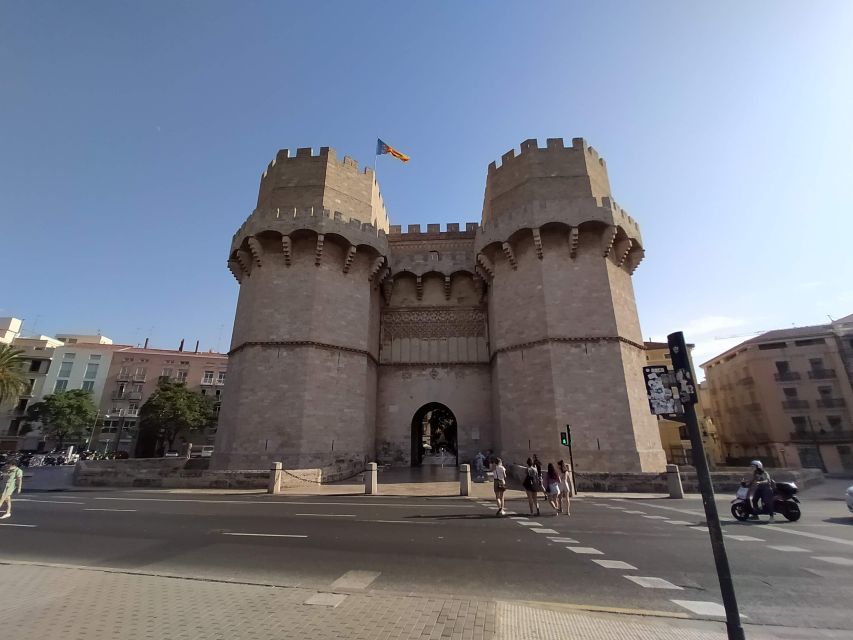
After the Portal de Valldigna, the group spends about 10 minutes walking to the Torres de Serranos. The itinerary calls this portion a hidden gem, but the more useful way to think of it is as a transition between the old city’s internal history and its defensive edge.
At the towers, you receive another guided stop of roughly 10 minutes. The focus is defensive architecture, one of the themes that runs through the whole experience. Valencia’s walls were not merely decoration. They marked the city’s limits and helped protect its wealth, population, and trade.
The stop is fairly short, so do not expect a long examination of every feature. Still, the towers give the history a strong visual anchor. You can see why gates mattered in a medieval city, and you can better understand how the old center related to the area beyond its walls.
The route includes a viewpoint stop of about 15 minutes after this section. The exact viewpoint is not named in the available details, so I would treat it as a chance to look around and orient yourself rather than plan your visit around a specific panorama. The guide leads the sightseeing, and the setting gives you a break from the denser historical explanation.
A few more Valencia tours worth weighing up
- Valencia: City Highlights Guided Bike Tour
★ 4.7 · 2,373 reviews - From Valencia: Montanejos Guided Hike with Natural Pools
★ 4.5 · 1,741 reviews - From Valencia: Caves of San José Guided Excursion and Ticket
★ 4.6 · 1,717 reviews - San Jose Caves Guided Tour from Valencia
★ 4.5 · 732 reviews
Valencia Cathedral and the Christian Reconquest
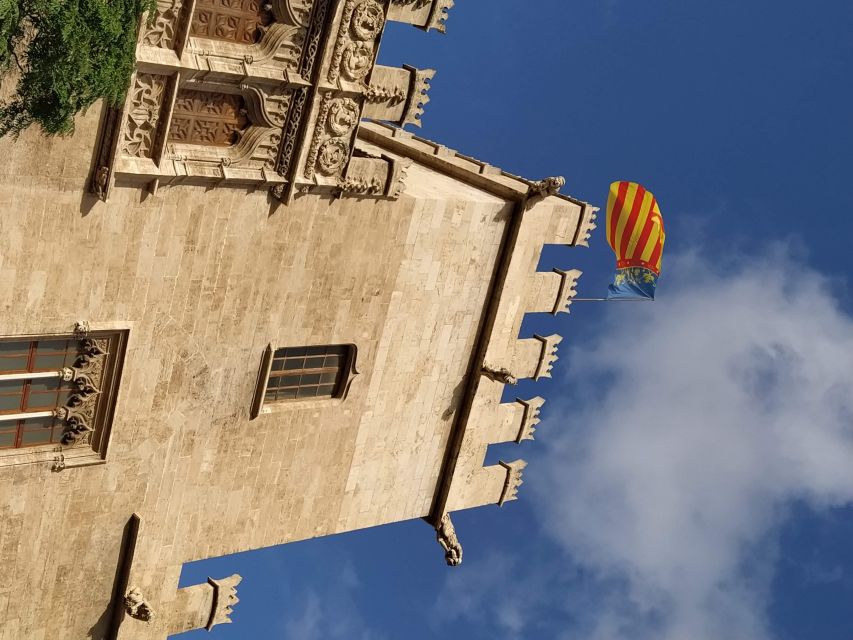
Valencia Cathedral receives about 15 minutes of guided attention. The cathedral is an important point in the story because the Christian Reconquest brought another period of change to the city. Here, the guide can connect religion, architecture, political power, and the rise of important local families.
The tour also reaches beyond buildings. It discusses authors, great families, and the Kingdom of Valencia, giving you a sense of the people and institutions that shaped the city after Christian rule returned. That wider frame is one of the tour’s strongest features. You are not only being told what a building is called. You are being shown why it mattered.
The cathedral stop is guided sightseeing, not a promised interior visit. The supplied details do not state that entrance tickets are included, so you should not book this walk expecting admission to every site. The value here is the explanation and the place in the larger route.
For a first look at Valencia, that can be enough. You learn which buildings deserve a later, slower visit, then return on your own if you want more time inside. Since the tour does not include food, drinks, or pickup, you also keep control of the rest of your afternoon.
Printing, Valencian culture, and a new period of prosperity
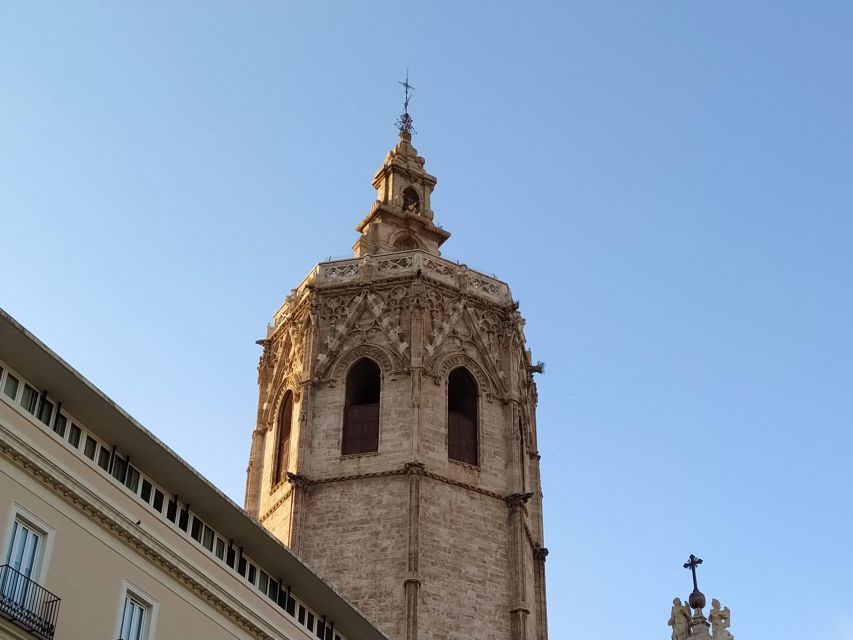
The story moves beyond conquest and churches to another period of growth: the arrival of printing. Valencia is presented as the place where the first book in the Iberian Peninsula was published, and it was published in Valencian.
That detail gives the tour a cultural turn. The city’s importance was not based only on walls, churches, or commercial wealth. Books, language, and authors helped shape Valencian identity and influence. If you enjoy history told through ideas as well as monuments, this part should add welcome depth.
You will also hear local anecdotes and Valencian sayings. These details can be more memorable than another list of rulers because they show how a place expresses itself in ordinary speech. The exact sayings are not specified in advance, so consider them part of the live nature of the tour rather than something you can preview.
Finishing at the Llotja de la Seda
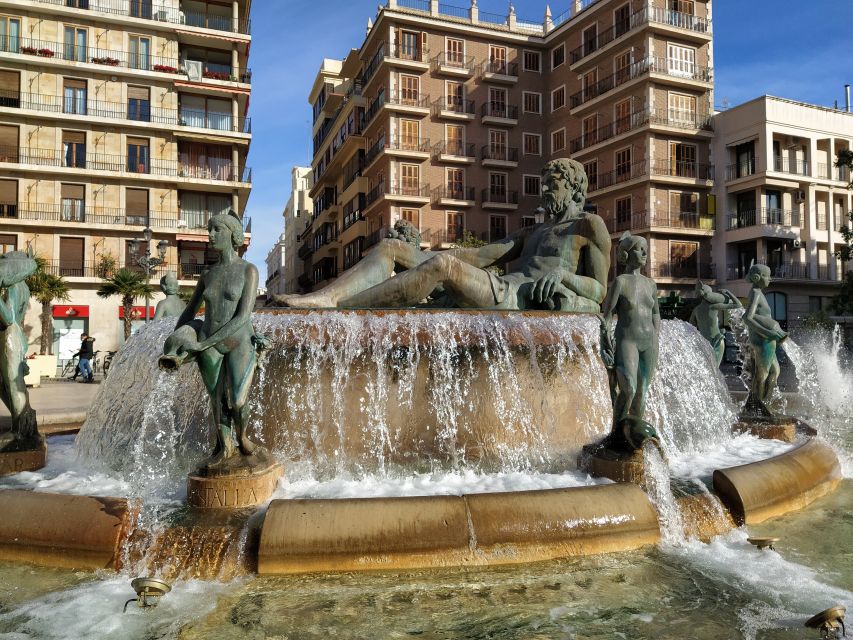
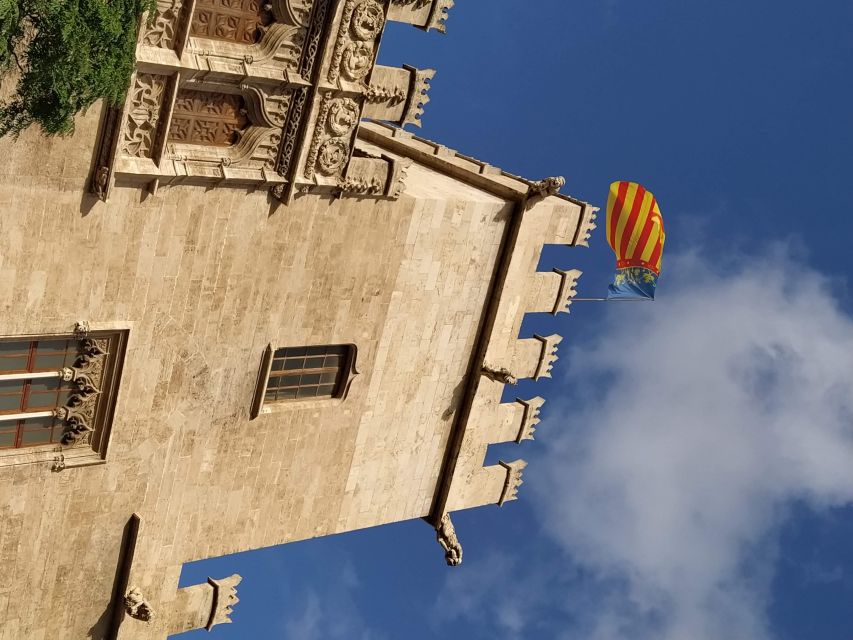
The walk ends at Llotja de la Seda, commonly called the Silk Exchange Market building, after about 20 minutes of guided attention. This is a well-chosen finish because Valencia’s silk industry represents the city’s commercial power and its connection to wider markets.
The tour highlights a past with more than 5,000 silk workshops. That figure helps you imagine an industry much larger than a few luxury goods in a museum case. Silk affected work, trade, wealth, and the buildings that merchants and civic leaders created.
Ending here also gives the two-hour route a clear shape. You begin with the city’s oldest layers and finish with an age of commercial strength. Roman decline, Muslim agriculture and defense, Christian rule, printing, and silk all become parts of one connected story.
The final stop is especially useful if you want to return later for a closer look. The tour provides context first, then leaves you at one of Valencia’s major historic buildings. Since the activity does not promise admission, check separately if you want to go inside after the walk.
Why the $14 price makes sense
At $14 per person, this is an inexpensive way to get a structured introduction to Valencia’s old town. The price includes a licensed local guide and a history and culture tour, but not food, drinks, pickup, or entrance fees.
I see the value in the organization. You are paying for a coherent route and a guide who can explain how separate sites connect. A self-guided walk costs less, but you would need to build the route, sort out the historical sequence, and decide which details matter. A casual free-style tour may also be less focused.
The tradeoff is that the low price does not buy a full-day experience. Two hours gives you an overview, not an exhaustive study of the cathedral, towers, or Silk Exchange. If you want long interior visits or a food-focused introduction, you will need another activity.
The flexible booking terms help if your schedule is still moving. You can reserve and pay later, and cancellation is free up to 24 hours before the tour for a full refund. Starting times vary, so check availability before you plan lunch or another timed visit.
The guide can shape the whole experience
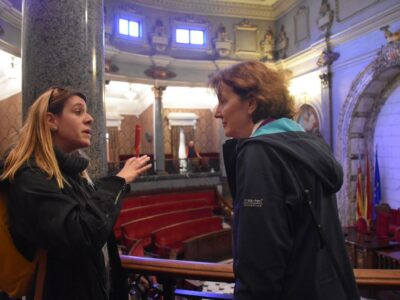
The guide matters more here than on a simple orientation walk because the route covers a large span of history. David has received particularly strong praise for being friendly, clear, funny, and rigorous. He also responds to questions instead of treating the group as a silent audience.
One useful sign of a good city guide is practical advice beyond the official route. David recommended Pelayo Gastro Trinquet to one couple for Valencian paella, a suggestion that led them to a place they would not have found alone. Advice like that can turn a history walk into a better first day in town, though restaurant recommendations are not a formal inclusion.
David may not lead every departure, so do not assume his presence unless the booking details confirm it. The listed provider is Integra-T Experience, and the tour is conducted in English or Spanish by a licensed local guide.
Who should book this Valencia walk?
I would choose this tour if you want a clear first introduction to Valencia and enjoy listening to stories while walking. It fits visitors who like architecture, art, political change, local language, and the way trade shapes a city.
It is also a good match if you dislike the rush and loose structure of tip-based tours. The route has a set starting point, a defined finish, and planned stops. At the same time, it remains short enough to fit into a morning or afternoon.
You may want something else if your priority is food, shopping, nightlife, or a long visit inside each monument. The tour is mainly outside, and its purpose is explanation. You should also allow for normal walking between stops, even though the route is listed as wheelchair accessible.
Should you book the Medieval Valencia Walking Tour?
Book it if you want history with a clear storyline at a modest price. The best parts are the links between different periods, the local sayings and anecdotes, the visual maps, and the finish at the Silk Exchange.
I would place it early in a Valencia visit. It can help you understand the old center before you return to the cathedral, Serranos Towers, or Llotja de la Seda on your own. Skip it only if you want a food tour, extensive interior access, or a very fast list of photo stops.
FAQ
How long does the tour last?
The walking tour lasts two hours.
Where does the tour begin?
It begins at Plaça de la Verge, 6, between the fountain and the Basilica, the pink church. Look for an Integra-T Experience guide with a tablet marked Medieval Tour.
Where does the tour finish?
The tour finishes at Llotja de la Seda, also known as the Silk Exchange Market building.
Which languages are available?
The live guide is available in English or Spanish.
Is this a small-group tour?
Yes. Small groups are available, and the experience is designed as a calm alternative to a tip-based free tour.
Is the tour wheelchair accessible?
Yes, the activity is listed as wheelchair accessible.
What does the price include?
The $14 price includes a guided walking tour of Valencia’s old town, a licensed local guide, and the history and culture experience. Food, drinks, and pickup are not included.
Just added around Valencia
- e-Bike Rental in Valencia★ 3.5 · 3 reviews
- Valencia: Tuk Tuk Historical Tour★ 5.0 · 3 reviews
- Authentic Paella Dinner in Valencia★ 5.0 · 3 reviews
- Valencia: Horchata Bike Tour★ 4.8 · 3 reviews
- Valencia: Guided City Walking Tour with Tapas Tastings★ 3.8 · 3 reviews
- One-way Valencia Airport To/From Benicàssim (FIB)★ 5.0 · 3 reviews
- Rent Boat Valencia Yatch Polonova with capitan and drinks★ 4.0 · 3 reviews
- In Love with Valencia: A Self-Guided Tour of its Landmarks★ 5.0 · 3 reviews
Walking Tours, compared.
Essentials and World Heritages Sites Walking Tour
Read our review →
City Walking Tour with Top Attractions – ITALIAN
Read our review →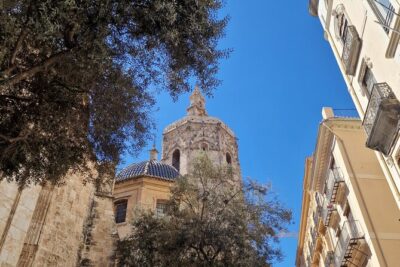
Valencia Private Walking Tour with Official Valencian Guide
Read our review →
The 10 Tastings of Valencia With Locals: Private Food Walking Tour
Read our review →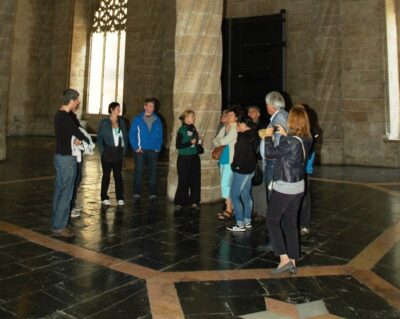
Browse the lists this tour appears in