
Reviewed · WALKING TOURS
Valencia: Essentials and World Heritages Sites Walking Tour
Valencia’s old town packs more than 2,000 years of stories into a compact walking route. This two-hour tour links the city’s grandest civic buildings with two living traditions: the Water Tribunal, an ancient irrigation court, and Fallas, Valencia’s fire-filled festival of giant temporary art.
I like two things right away. First, you enter the Lonja de la Seda, a remarkable Gothic trading hall where Valencia’s silk merchants once did business. Second, the tour is a useful first look at the city, with guides such as Gabor, Maria, Sara, Sofi, and Eugenia praised for clear explanations, local tips, and a friendly pace.
The main consideration is time. Two hours gives you a smart introduction, not a full visit to every monument. The City Hall tour also depends on the day and official events, and the Silk Exchange can close for special functions.
In This Review
- Key points to know before you book
- Starting beside Valencia’s North Station
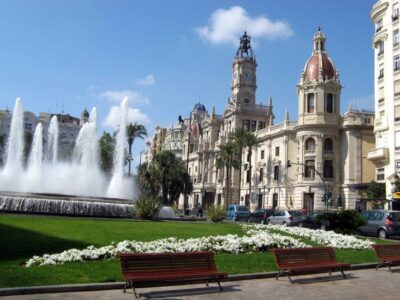
- Valencia’s City Hall and the shape of modern civic life
- The Central Market and the city’s daily rhythm
- Entering the Lonja de la Seda
- The Water Tribunal, an unusual UNESCO tradition
- Fallas, fire, fireworks, and temporary art
- How much walking and how well paced is it?
- What the $21 price really covers
- The guide makes the difference
- Who should book this Valencia walking tour?
- Should you book it?
- FAQ
- How long does the Valencia Essentials and World Heritage Sites Walking Tour last?
- What language is the tour offered in?
- Where does the tour meet?
- Which metro station is closest to the meeting point?
- Is admission to the Silk Exchange included?
- Is City Hall admission included?
- Is the City Hall visit available every day?
- What happens if the Silk Exchange closes for an event?
- Is the walking tour wheelchair accessible?
- Can I change to another language group?
Key points to know before you book
- Three UNESCO connections: Learn about the Silk Exchange, the Water Tribunal, and the Fallas festival.
- A real interior visit: The Lonja de la Seda entrance is included when the monument is open.
- City Hall access varies: The guided City Hall visit takes place on working days unless an official event is scheduled.
- A useful first-morning plan: The route helps you get your bearings before exploring Valencia on your own.
- Short, central walking route: The stops are close enough for a steady two-hour visit, with little long-distance walking.
- English and wheelchair accessible: The activity is listed with an English-speaking live guide and wheelchair access.
Starting beside Valencia’s North Station
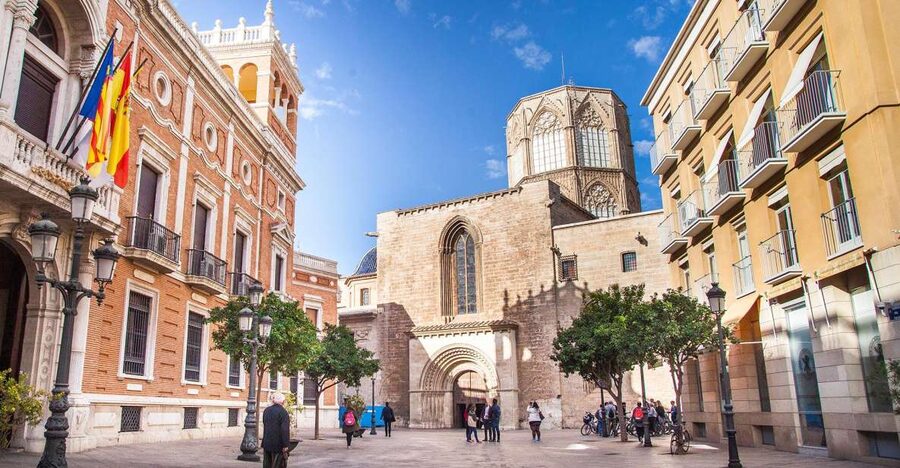
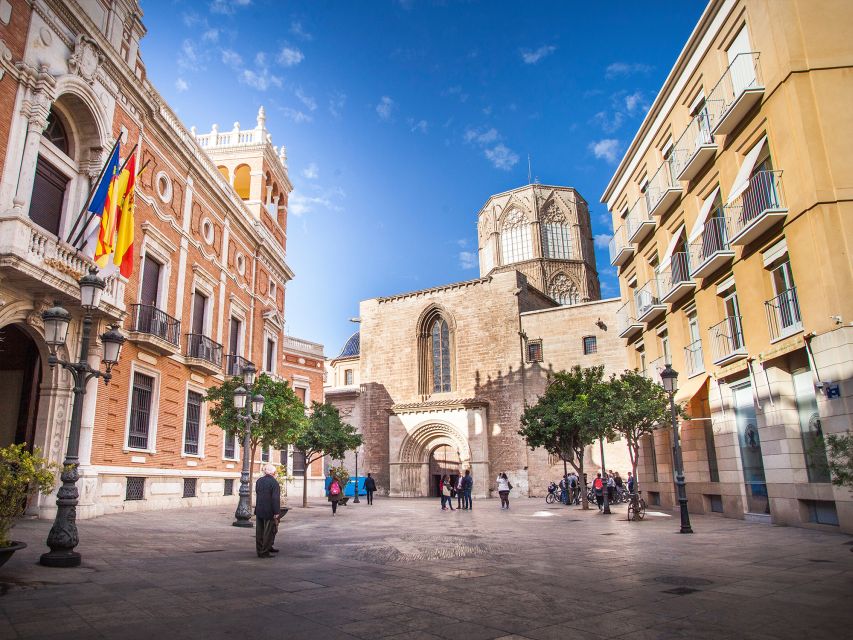
The meeting point is the Tourism Hub inside Estación del Norte, Valencia’s main railway station. Look for the West Tower, the one on the right when you face the station, on the ground floor at Carrer de Xàtiva, 24. The nearest metro stop is Xàtiva.
This is a practical place to begin. The station is central, easy to reach by metro, and close to the historic center. I would arrive with enough time to identify the correct tower, since a large railway station can be confusing when you are watching the clock.
The tour then moves into the old city on foot. The route is designed as an overview, so you should expect frequent stops for stories and explanation rather than a long, detailed visit inside each building. That works well if you are new to Valencia and want a clear map in your head.
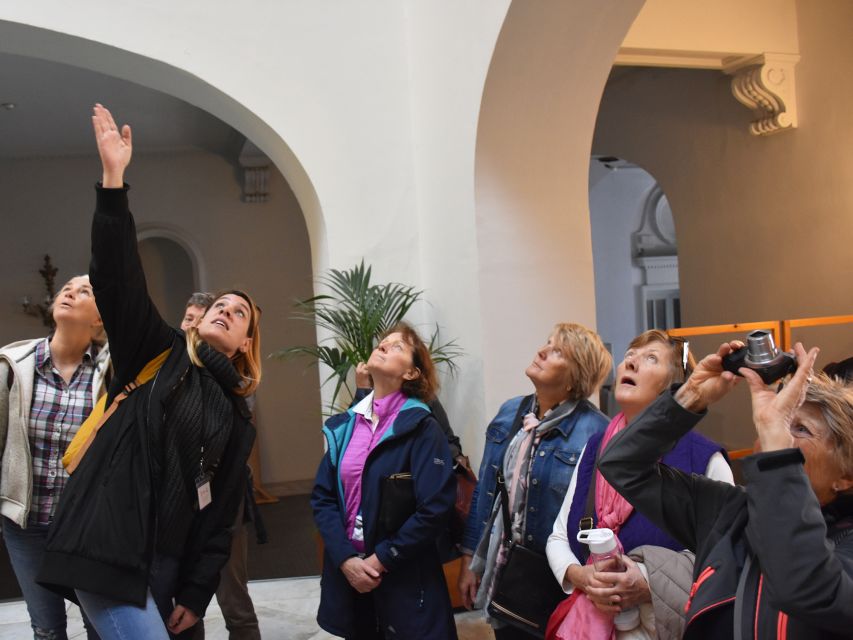
Several guides have led this experience, including Gabor, Maria, Sara, Sofi, Belén, Eugenia, and Carlos. The strongest pattern in the feedback is not one particular guide, but the way the guides explain the city in clear English, answer questions, and offer practical suggestions for the rest of your stay.
More walking tours in Valencia:
- Valencia: Historical Walking Tour
★ 4.6 · 390 reviews - Valencia: City Walking Tour with Top Attractions – ITALIAN
★ 4.9 · 242 reviews - Valencia Private Walking Tour with Official Valencian Guide
★ 5.0 · 176 reviews
Valencia’s City Hall and the shape of modern civic life
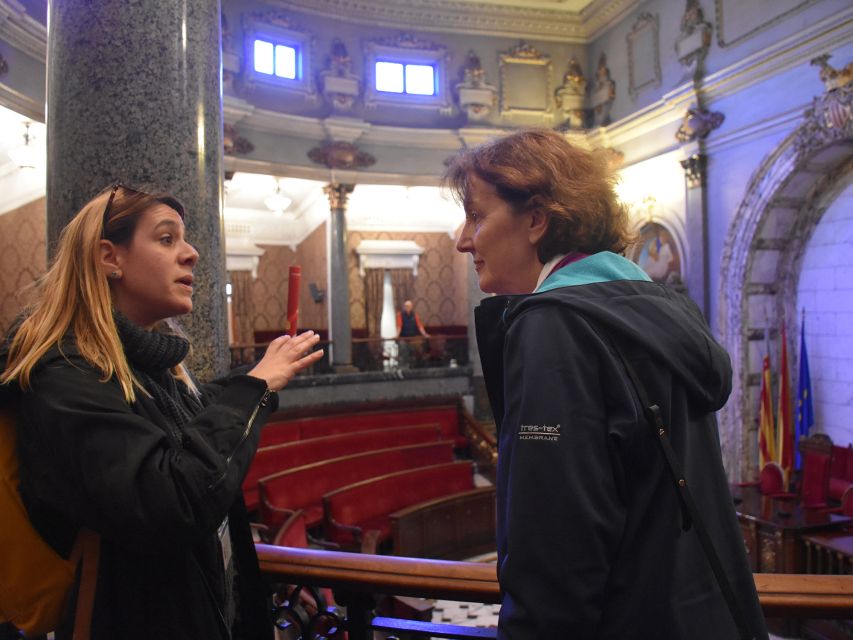
The City Hall is one of the important stops on the route. When it is open for guided visits, your entrance is included, and the guide places the building within Valencia’s wider story of civic and urban change.
The access rule matters. The guided City Hall visit is available on working days, except when an official event is taking place. If your tour date falls outside those conditions, you may see the building from outside or spend more time on other parts of the route. I would treat this as a useful bonus rather than the sole reason to book.
The City Hall stop helps balance the older monuments. Valencia is not only a medieval city preserved behind museum doors. It is also a working regional capital, and this stop gives you a look at the public side of the city.
The guides are also good at connecting the sights to everyday Valencia. You may hear suggestions for places to eat or for sights to visit after the walk. One guide recommended Armonia to a family, which they found particularly good for paella. That sort of advice can be useful, but the main value here is the historical and cultural setting rather than a restaurant list.
The Central Market and the city’s daily rhythm
The route commonly includes the Central Market, one of the city center’s essential reference points. Even if you do not spend long inside, it gives you a useful contrast with the formal buildings nearby.
This is where the old town feels less like a set of monuments and more like a place people use every day. The tour’s mix of civic buildings, plazas, market life, and religious architecture helps you understand how Valencia developed as a city, not just as a sightseeing checklist.
I like this part because a guide can point out details you might pass without noticing. One of the tour’s strongest qualities is its attention to the link between the past and present. You get the broad story, then see how that story still shapes the streets around you.
Do not expect a long shopping break or time to sample everything at the market. The tour is moving toward the major heritage sites, and the market is part of the route rather than a dedicated food tour.
Entering the Lonja de la Seda
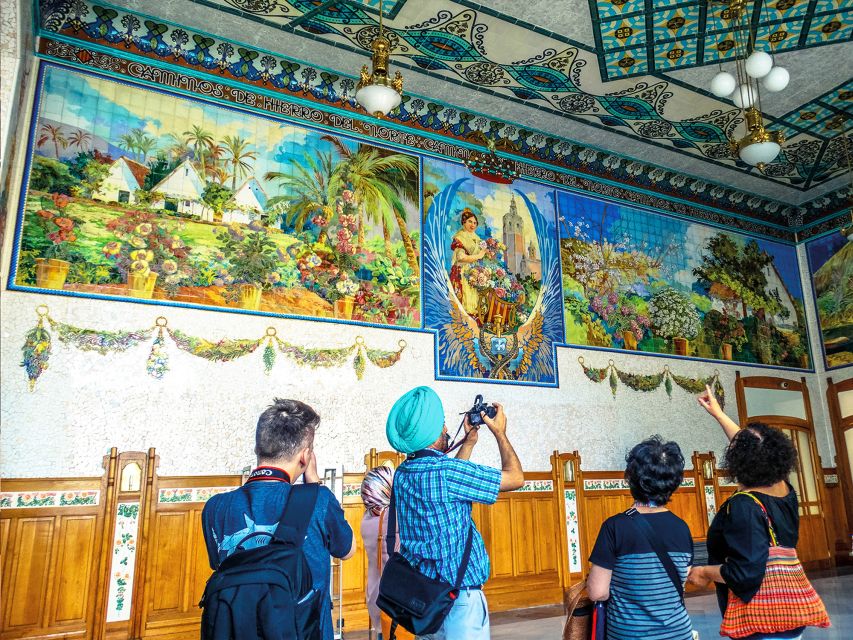
The Silk Exchange is the centerpiece. Your entrance fee is included according to the monument’s opening schedule, and this is the stop that gives the tour its clearest UNESCO focus.
The Lonja de la Seda was built for commerce, especially the silk trade. Its Gothic design shows how important Valencia was as a trading city. Inside, the tall twisted columns and stonework make the building feel both practical and ceremonial. A guide can explain why a place built for contracts and business received such an elaborate design.
This is more rewarding with context than as a quick photograph. On your own, you might admire the columns and leave. With the guide, you get a clearer sense of the building’s role in Valencia’s economic life and the city’s place in wider Mediterranean trade.
The visit can be affected by private events or other closures. If the Silk Exchange shuts during your scheduled visit, the operator may send you the ticket so you can enter independently in the afternoon, or try to exchange it for admission to another museum or monument of equal value. That is a fair solution, but it changes the experience: you may lose the guided explanation inside the building.
If the Lonja is especially important to you, check the opening conditions when you book and confirm the day’s arrangements with the operator. The tour still has value without it, but the Silk Exchange is the most distinctive included interior.
A different way to spend a day in Valencia:
- Valencia: Oceanogràfic Entry Ticket
★ 4.7 · 9,893 reviews - Valencia: 24 or 48-Hour Hop-on Hop-off Bus Ticket
★ 3.9 · 5,611 reviews - Valencia: Palosanto Flamenco Show Ticket
★ 4.8 · 3,876 reviews - Valencia: Catamaran Cruise with Sunset Option
★ 4.0 · 3,566 reviews
The Water Tribunal, an unusual UNESCO tradition
Valencia’s second cultural subject is the Water Tribunal, or Tribunal de las Aguas. This is not simply another old building. It is an irrigation court connected to the farming communities around Valencia and to the management of water.
The guide explains why this institution is unusual and why it matters to the city’s identity. Its importance comes from a tradition of local water administration and public judgment, not from grand architecture. That makes it a useful reminder that UNESCO recognition can apply to customs and institutions as well as monuments.
You should understand the format correctly. The tour introduces you to the Water Tribunal as part of the city’s heritage story. The supplied information does not promise attendance at a live tribunal session, so do not book this expecting a scheduled courtroom event.
This part adds welcome variety. After the stonework of the Lonja and the formal setting of City Hall, the Water Tribunal turns the focus toward community practice and the practical problem of sharing a limited resource.
Fallas, fire, fireworks, and temporary art
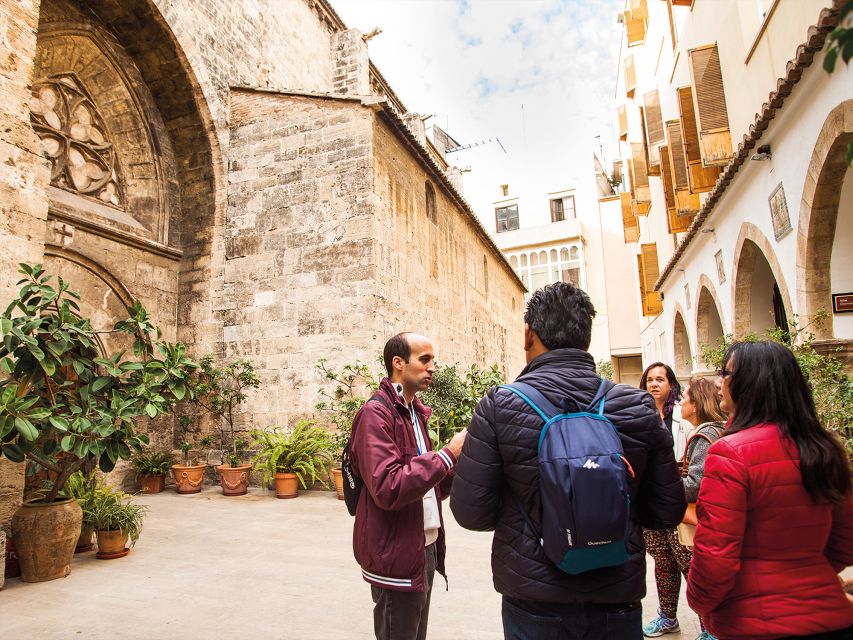
The third UNESCO subject is Fallas, Valencia’s famous annual festival. The event combines giant ephemeral sculptures, fire, fireworks, and neighborhood celebration. The temporary nature of the art is central to its character: the creations are made to be admired, then destroyed by flames.
That idea gives the tour a strong connection to Valencia today. You are not only hearing about medieval trade or old institutions. You are also learning about a festival that uses art, public space, satire, and fire to express local culture.
The tour does not promise festival attendance or a live Fallas program. Instead, the guide explains the tradition and its place on UNESCO’s list. If you visit outside the festival period, this context helps you understand references, monuments, and local customs you may encounter elsewhere in the city.
I find this one of the most useful parts for a short introduction. Many city walks focus only on architecture. Here, you get an explanation of a major Valencian tradition that cannot be understood from a single building.
How much walking and how well paced is it?
The duration is two hours, and the route stays within central Valencia. Several people found the distances manageable, with one describing minimal walking between stops. That makes the tour a reasonable option for many ages, and the activity is listed as wheelchair accessible.
Still, this is a walking tour, not a seated sightseeing ride. You will spend time outdoors and may stand while the guide talks. In hot weather, shade matters. One guide made a point of finding shady places for the group, which is a thoughtful touch in Valencia’s strong summer sun.
Rain can also affect your comfort. The route does not become less interesting in wet weather, but standing outside between monuments is less pleasant. Wear sensible shoes and check the forecast before you set out.
The pace appears to be steady rather than rushed. Guides such as Maria, Sara, and Gabor were praised for explaining things clearly and keeping the walk moving. A small group can make a major difference because you can ask questions without slowing a large crowd.
Group size is not fixed in the information provided. Some departures may be small, and a few people ended up with what felt like a private visit when only two or three participants attended. That is a pleasant possibility, not something to assume when booking.
What the $21 price really covers
At $21 per person, this is a fairly easy value call if you want a guided introduction. The price includes the guide and entrance fees for the Silk Exchange and City Hall when those buildings are open for the scheduled visit.
The value is not just the admission ticket. A guide helps you connect several different parts of Valencia: commerce at the Lonja, public life at City Hall, the market, the Water Tribunal, and Fallas. You could walk past many of these places for free, but you would miss much of the reason they matter.
The price is less compelling if you already know Valencia well or prefer to explore at your own speed. You will not have time to linger in every plaza, spend a long period in the market, or inspect the Silk Exchange at museum pace.
For a first visit, I think the cost is sensible, especially if you take the tour early in your stay. Several people used it to get their bearings on the first morning, then followed the guide’s suggestions for later sightseeing.
There is also a reserve-now, pay-later option, and cancellation is free up to 24 hours before the start for a full refund. If you need to switch language groups, that change depends on availability and carries an extra €5 per person.
The guide makes the difference

The route itself is strong, but the guide determines how much you take away. This experience has used bilingual local guides, with English listed as the available language for this activity.
The most praised qualities are clear English, a friendly manner, good pacing, and strong command of local history and architecture. Gabor was repeatedly singled out for useful recommendations, patience, and warmth. Maria was praised for explaining information at the right speed, while Sara was often described as engaging, articulate, and full of local insight.
That does not mean you can request a specific guide and expect to receive them. Guide assignment depends on the departure. The practical point is that the company has several guides who seem comfortable adapting the walk to questions and different interests.
A good guide also knows when two hours is not enough. One guide made clear that Valencia has far more to explain than could fit into the route. I appreciate that honesty. You should leave with a framework for the city, not the idea that you have finished seeing it.
Who should book this Valencia walking tour?
I would choose this tour if you are visiting Valencia for the first time, have limited time, or want the main old-town sights explained in plain English. It also suits you if UNESCO-listed places matter, especially because the tour ties a building, a civic tradition, and a modern festival into one story.
Families and mixed-age groups may find the modest distances helpful. The wheelchair-accessible listing is encouraging, though you should still confirm the exact route and current access conditions if you need specific assistance.
I would be more cautious if you want long interior visits, a food-focused walk, or a deep study of one monument. Two hours moves quickly, and City Hall access is not guaranteed on every departure.
Should you book it?
Book it if you want a well-priced first look at Valencia with the Silk Exchange entrance included and a guide who can explain more than dates and building names. Start early in your stay, ask for restaurant and follow-up sightseeing advice, and use the walk to decide where you want to return.
Skip it if you already know the old town or prefer a slow, self-guided day. The main risk is the short format and possible closure of the Lonja or City Hall. For most first-time visitors, though, the combination of central sights, UNESCO context, and helpful local guidance makes $21 a sound introduction.
FAQ
How long does the Valencia Essentials and World Heritage Sites Walking Tour last?
The tour lasts two hours.
What language is the tour offered in?
The activity is offered with a live English-speaking guide.
Where does the tour meet?
It meets at the Tourism Hub in Estación del Norte, Valencia’s main railway station. The meeting point is in the West Tower, on the right when facing the station, on the ground floor at Carrer de Xàtiva, 24.
Which metro station is closest to the meeting point?
The nearest metro station is Xàtiva.
Is admission to the Silk Exchange included?
Yes. The entrance fee to the Silk Exchange is included according to the monument’s opening schedule.
Is City Hall admission included?
Yes, when the City Hall is open for the guided visit.
Is the City Hall visit available every day?
The guided City Hall visit is on working days, except when an official event is taking place.
What happens if the Silk Exchange closes for an event?
You may be sent the ticket so you can enter independently in the afternoon, or the operator may try to exchange it for a ticket of the same value to another museum or monument.
Is the walking tour wheelchair accessible?
Yes, the activity is listed as wheelchair accessible.
Can I change to another language group?
A language-group change depends on availability and costs an additional €5 per person.
Just added around Valencia
- e-Bike Rental in Valencia★ 3.5 · 3 reviews
- Valencia: Tuk Tuk Historical Tour★ 5.0 · 3 reviews
- Authentic Paella Dinner in Valencia★ 5.0 · 3 reviews
- Valencia: Horchata Bike Tour★ 4.8 · 3 reviews
- Valencia: Guided City Walking Tour with Tapas Tastings★ 3.8 · 3 reviews
- One-way Valencia Airport To/From Benicàssim (FIB)★ 5.0 · 3 reviews
- Rent Boat Valencia Yatch Polonova with capitan and drinks★ 4.0 · 3 reviews
- In Love with Valencia: A Self-Guided Tour of its Landmarks★ 5.0 · 3 reviews
Walking Tours, compared.
City Walking Tour with Top Attractions – ITALIAN
Read our review →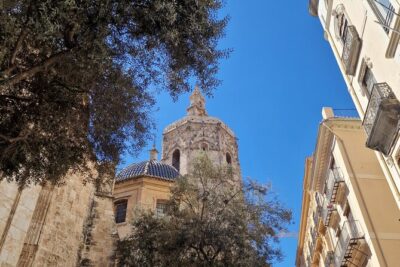
Valencia Private Walking Tour with Official Valencian Guide
Read our review →
The 10 Tastings of Valencia With Locals: Private Food Walking Tour
Read our review →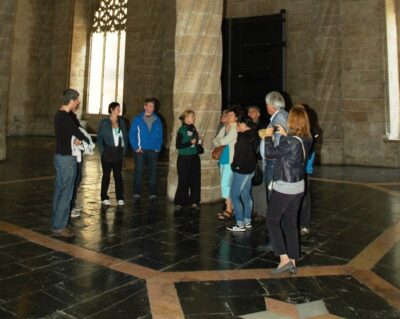
Browse the lists this tour appears in