
Reviewed · CITY OF ARTS AND SCIENCES TOURS
The City of Arts and Sciences in Valencia
The City of Arts and Sciences is Valencia’s great visual shock: a sweep of white curves, pointed arches, reflective pools, and futuristic halls that look part opera set, part spaceship. This walking tour helps you read the complex instead of simply photographing it. Enrique and Miguel are praised for clear explanations, patience, and a real feel for the architecture.
I like two things here. First, you get the story behind Santiago Calatrava’s designs and how the buildings work as one project. Second, the route continues to La Marina de Valencia, linking the modern complex with the city’s America’s Cup waterfront. The main caution is that this is an architectural and historical walk, not an inside tour of the opera house, aquarium, or science museum. It is also a long walk, and bilingual commentary can slow the pace.
In This Review
- Key points before you book
- Seeing Valencia through Calatrava’s buildings
- Stop 1: Museo de las Ciencias Príncipe Felipe
- Stop 2: Hemisfèric and the water views
- Stop 3: Palau de les Arts Reina Sofía
- Stop 4: L’Umbracle Terraza
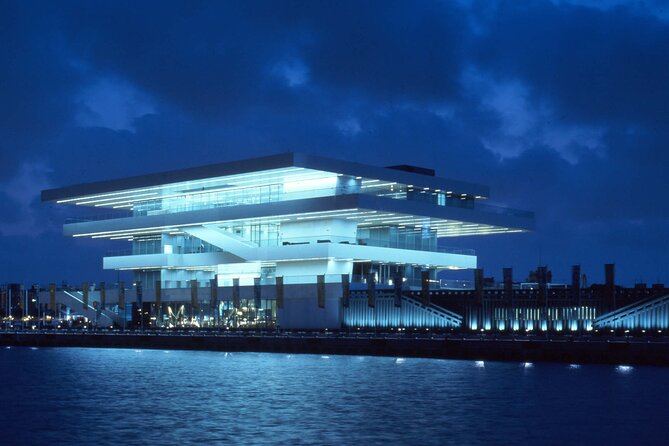
- Stop 5: La Marina de Valencia and the America’s Cup port
- What the guide adds to the visit
- How much time and energy should you allow?
- Who gets the best value from this tour?
- Value, timing, and cancellation
- Should you book the City of Arts and Sciences walk?
- FAQ
- Where does the tour begin?
- What time does the tour start?
- Where does the tour end?
- How long does the tour last?
- Is this a private tour?
- What language is offered?
- Does the tour include entry to the aquarium or opera house?
- Is the tour suitable for people with mobility concerns?
- Can I cancel for a full refund?
Key points before you book
- Calatrava’s Valencia in one walk: See the major buildings of the City of Arts and Sciences and learn how their forms and functions connect.
- An outdoor architecture tour: The focus is on the buildings, design, setting, and history, rather than admission to the interiors.
- A private experience: Only your group participates, making it easier to ask questions and request a slower pace.
- A useful second half: The route continues to La Marina de Valencia, the former America’s Cup port area.
- Plan for a long walk: The route lasts about 2 hours and 40 minutes and includes several large sites.
- Check the meeting point carefully: The listed start is beside a Tesla Destination Charger, and the exact spot can be hard to identify without clear contact.
Seeing Valencia through Calatrava’s buildings
You do not need to be an architecture specialist to enjoy this tour. The City of Arts and Sciences works best when someone points out the connections between the buildings, the pools, the open spaces, and the unusual structural details.
A guide can help you notice things that are easy to miss when you are busy taking photographs. You learn about the architect, the building methods, and the way this enormous project changed a former riverbed area of Valencia.
That context gives the visit more weight. On your own, you may see a collection of striking white structures. With a good explanation, you begin to understand why the buildings were placed together and how Valencia used this project to create a new public face for the city.
The strongest part of the experience is the guide’s interpretation. Enrique is repeatedly praised for detailed explanations, strong English, patience, and humor. Miguel is also singled out for choosing good viewing points and keeping the walk well paced. The quality of your outing will depend heavily on which guide leads it, but the available feedback points to a personal, well-prepared approach.
More of the City of Arts and Sciences:
- Valencia: Oceanogràfic Entry Ticket
★ 4.7 · 9,893 reviews - Valencia: Oceanogràfic, Hemisfèric & Science Museum Combo
★ 4.4 · 2,959 reviews - Valencia: City of Arts and Science 3D Movie at Hemisfèric
★ 4.1 · 455 reviews
Stop 1: Museo de las Ciencias Príncipe Felipe
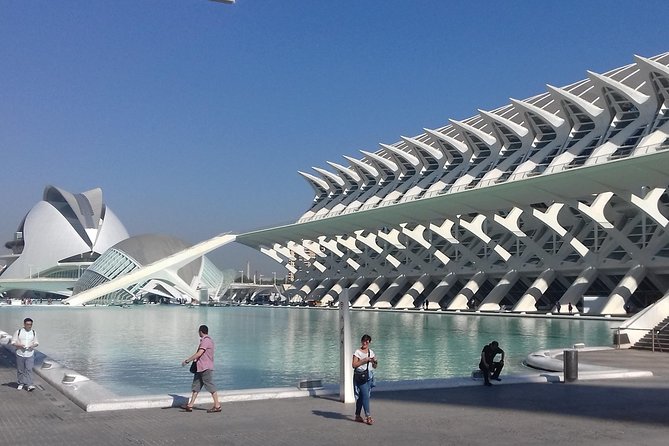
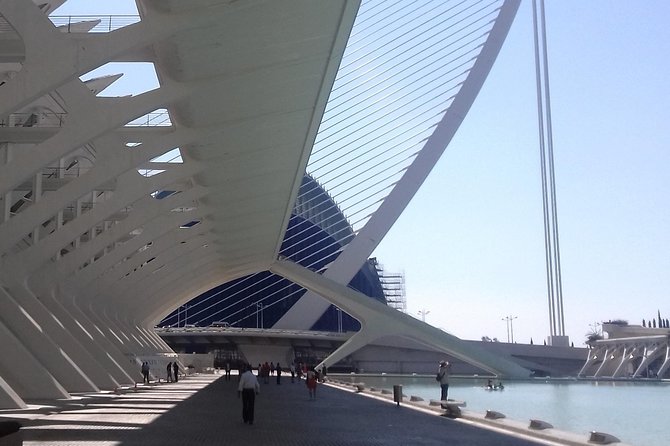
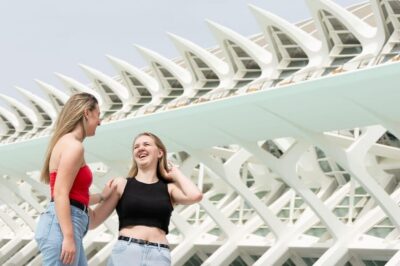
The Museo de las Ciencias Príncipe Felipe is one of the complex’s most recognizable buildings. Its long, ribbed shape gives the impression of a giant skeleton or a ship pulled onto dry land.
From the outside, you get the full impact of its scale. The building is not just a box for exhibits. Its structure, repeated supports, and bright surfaces are part of the visual experience.
Your guide explains how the science museum fits into the larger design scheme. This is useful because the building can appear overwhelming at first. You are shown the relationship between its roofline, the surrounding water, and the open walkways.
The important limitation is simple: the tour does not include a visit inside the museum. If you want the exhibitions, hands-on displays, or a longer look at the interior, you will need to arrange that separately. Think of this stop as an architectural visit, not a museum admission.
That distinction matters for families. The science museum and aquarium may be major reasons for coming to the City of Arts and Sciences, but this particular activity is designed to explain the setting and buildings. You can use the tour to decide which interiors deserve another visit.
Stop 2: Hemisfèric and the water views
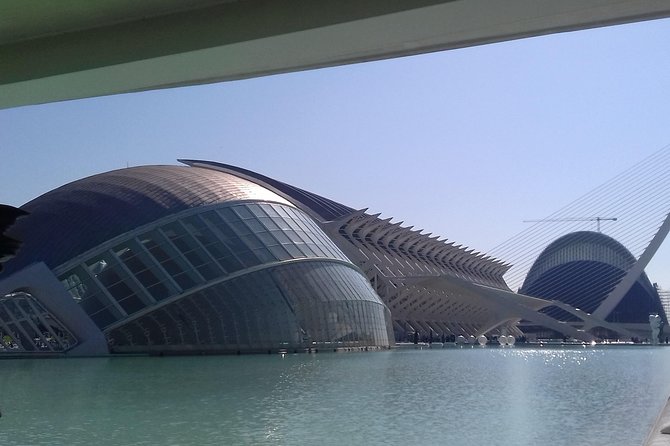
The Hemisfèric is the most theatrical building on the route. Its large, curved form reflects in the surrounding water, creating the familiar eye-like image used in photographs of Valencia.
This is one of the best places to appreciate how the complex was designed for views from many angles. The building changes as you walk around it. Reflections, shadows, and the long pool make the site feel different from one side to the next.
The guide adds value by explaining the design rather than merely naming the building. You can ask questions, stop for photographs, and take time to look at details in the structure.
The Hemisfèric is also a good example of the tour’s general format. You are not simply being led from one building to another. You are given a framework for seeing how architecture, water, and public space work together.
Again, the visit is primarily outside. A film or show inside the Hemisfèric is not part of the stated activity, so do not book this walk if your main goal is a screening.
Stop 3: Palau de les Arts Reina Sofía
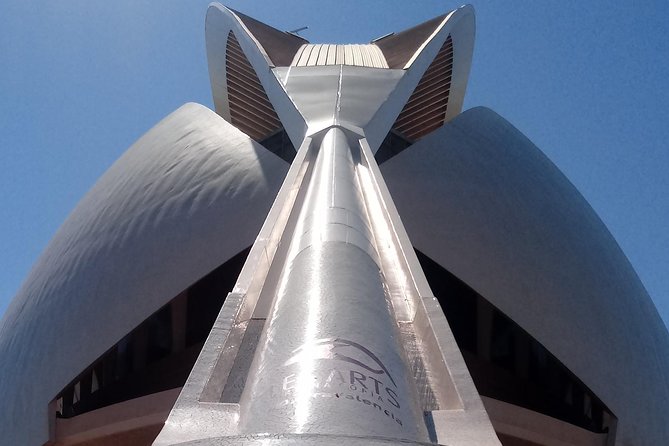
The Palau de les Arts Reina Sofía is the opera house and one of the most dramatic buildings in the complex. Its sweeping shell, high curves, and long white surfaces give it a powerful presence even when viewed from a distance.
This is where the guide’s knowledge of construction and design becomes especially useful. The building is visually complicated, and a short explanation helps you understand what you are looking at instead of treating it as a giant sculpture.
You may also get views of performance activity around the arts center, but the tour does not promise entry into the opera house. That is an important point for anyone expecting an interior theater visit.
I would use this stop to study the contrast between the building’s enormous exterior and its role as a working arts venue. The tour connects the image of the opera house with its place in Valencia’s modern cultural project.
Some outings have included both English and another language. That can be helpful for a mixed-language private group, but it can also mean the guide repeats each explanation and you spend more time waiting. If you book an English tour, confirm the language arrangement ahead of time.
More city tours in Valencia:
- Valencia: City Highlights Guided Bike Tour
★ 4.7 · 2,373 reviews - Valencia Bike Tour from the City to the Beach, plus Bike Guy App!
★ 5.0 · 1,187 reviews - Valencia: Complete Tuk-Tuk Tour Around the City
★ 4.8 · 793 reviews - Valencia Bike Tours: City Highlights
★ 4.9 · 450 reviews
Stop 4: L’Umbracle Terraza
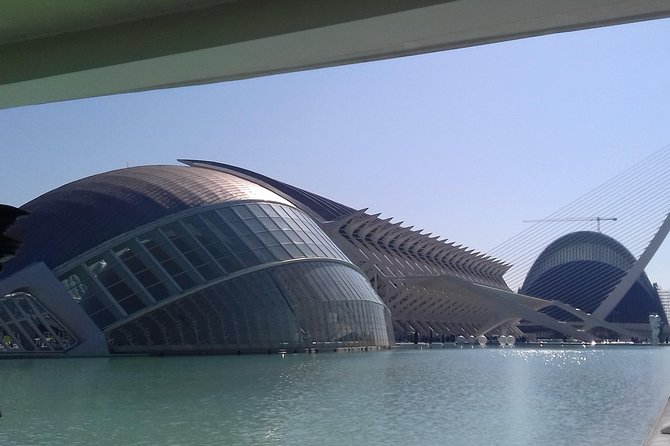
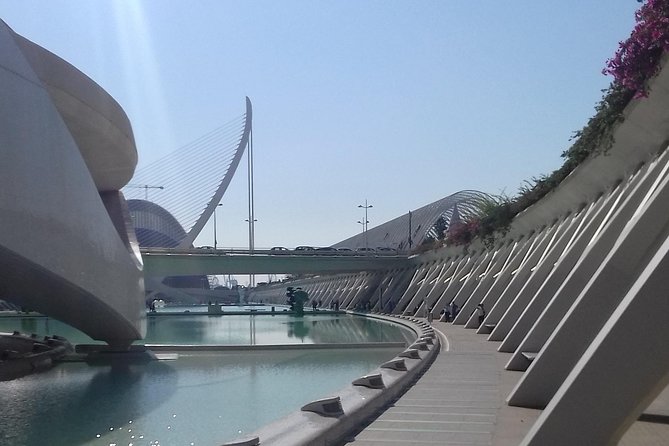
L’Umbracle Terraza gives you a different view of the complex. Rather than focusing on one enclosed building, this part of the route highlights an open architectural structure and the way the public spaces frame the surrounding buildings.
Its arches create repeated patterns and strong lines for photographs. It is also a useful pause in the route because you can look back toward the science museum, Hemisfèric, and the opera house from a wider angle.
The guide can help you see the complex as a planned sequence rather than a set of separate landmarks. That is one of the main reasons to choose a guided walk here. The individual buildings are easy to find, but their shared design language is less obvious without explanation.
The route is not rushed, according to the details provided, but it is still a substantial walk. One person using a cane reported that Enrique found shaded places to sit and used elevators when possible. That suggests some flexibility, but you should tell the operator about mobility needs before the start.
The activity is described as suitable for most participants, and service animals are allowed. Still, the large distances between sites and the outdoor nature of the walk mean you should wear comfortable shoes and prepare for Valencia’s weather.
Stop 5: La Marina de Valencia and the America’s Cup port
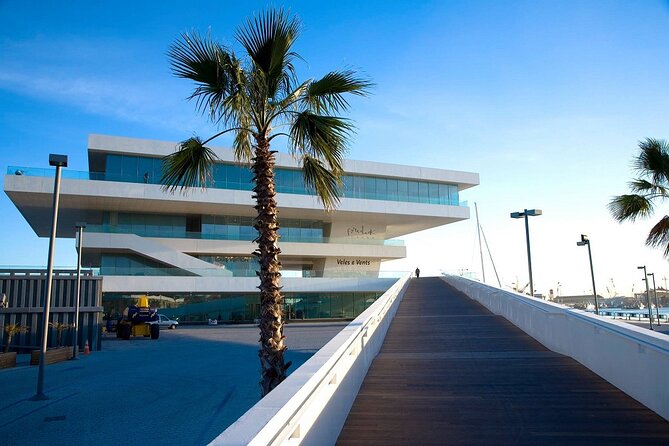
The final stop moves beyond the central cluster to La Marina de Valencia. This area is linked to the America’s Cup and gives the tour a change of mood after the concentrated architectural sequence.
Here, you can place the City of Arts and Sciences within Valencia’s wider relationship with the water. The route ends back at the original meeting point, but the America’s Cup port portion adds a useful final chapter instead of ending after the last futuristic building.
This stop also helps explain why the tour is longer than a simple circuit of the science museum and Hemisfèric. You are seeing both the modern cultural complex and a major waterfront area.
The end point is not a separate hotel drop-off or city-center destination. You return to the meeting point, so allow a little extra time before your next reservation.
What the guide adds to the visit
The best reason to book this experience is the human explanation. The architecture is impressive on its own, but the scale can make it hard to know what deserves your attention.
Enrique is described as especially strong in English and Spanish, with some experience giving slower explanations when needed. He has also sent photographs of the meeting place to help with arrival. Miguel is praised for his command of the site and for selecting good places to view the buildings.
A private format gives you more freedom than a large group outing. You can ask about Calatrava, building techniques, the project’s effect on Valencia, or the purpose of a particular structure without worrying about holding up a crowd.
There is one clear concern. A private group may still include people with different language needs. When explanations alternate between English, Spanish, Italian, German, or another language, the experience can lose momentum. If language clarity matters to you, contact the operator before booking and ask for a single-language tour.
The meeting point also needs care. The official location is Tesla Destination Charger, Carrer del Pintor Maella, 37, in the Camins al Grau district. Some people have found the spot difficult to identify because there is no obvious tour sign. Ask for a precise landmark or a photograph, and make sure your phone can receive messages while you are in Spain.
How much time and energy should you allow?
The stated duration is about 2 hours and 40 minutes. That sounds manageable, but the route covers multiple large architectural sites and continues to La Marina.
You will be walking outdoors for much of the time. The route can take longer if your group moves slowly, stops often for photos, or needs explanations in more than one language.
I would avoid placing a tight lunch reservation immediately afterward. The tour ends back at its starting point, and the return walk may take longer for people who need regular rests.
Comfortable footwear is more important here than formal clothing. Bring water and consider sun protection, especially if the day is warm. The route includes open areas, though the guide may identify shaded places to pause.
This is not the right activity for someone who wants a quick photo stop. It suits you better if you enjoy walking, asking questions, and looking closely at modern design.
Who gets the best value from this tour?
I see good value here for first-time visitors who want orientation before exploring the complex on their own. A guide can explain the buildings in one continuous story, saving you from piecing together information from separate signs or websites.
It also suits anyone with an interest in architecture, urban design, or Valencia’s recent development. You do not need prior knowledge. The tour is built around the idea that the more you understand about the forms and setting, the more details you notice.
Families may find it useful as an introduction, especially if they plan to return to the science museum or aquarium afterward. The tour itself does not include those interiors, so you can choose later how much time to spend inside.
Older visitors and anyone with limited walking ability should ask about the route before committing. The guide may adjust the pace, find seating, and use elevators when available, but the distance remains significant.
This is less useful for you if you have already studied the complex and only want admission to its attractions. In that case, a guided exterior walk may duplicate what you already know.
Value, timing, and cancellation
The financial value depends on how much you want interpretation. You are paying for a private guide and a structured route, not for admission to the opera house, Hemisfèric, science museum, or aquarium.
That can be good value if you would otherwise spend several hours wandering without understanding the buildings. It is weaker value if your priority is entering the attractions, since those visits require separate plans.
The 10:30 am start gives you a practical morning option. You can see the complex before the hottest part of the day, then continue with lunch or an indoor attraction afterward, though the exact pace may vary.
You receive confirmation when booking, and the ticket is mobile. Free cancellation is available up to 24 hours before the local start time. Within 24 hours, changes and refunds are not accepted.
The activity requires good weather. If poor weather causes cancellation, you are offered another date or a full refund. Since so much of the route is outside, this policy is sensible, but check the forecast before making other fixed plans.
Should you book the City of Arts and Sciences walk?
Book it if you want the buildings to make sense, not just appear in your camera roll. The strongest features are the guide’s detailed architectural explanation, the private format, the chances to stop for photos, and the added visit to La Marina.
Before paying, confirm three points: the exact meeting location, the language of the tour, and the fact that the experience focuses on exterior architecture rather than interior admissions. If you need frequent rests, mention that in advance.
For most first visits, I think the guided format is worthwhile. Valencia’s futuristic complex is easy to admire, but a good guide helps you see why its parts belong together. Just bring comfortable shoes, allow extra time, and treat the tour as an architectural walk with waterfront context, not as a ticket to the city’s museums and performance venues.
FAQ
Where does the tour begin?
The tour begins at Tesla Destination Charger, Carrer del Pintor Maella, 37, Camins al Grau, 46023 València, Valencia, Spain.
What time does the tour start?
The scheduled start time is 10:30 am.
Where does the tour end?
The activity ends back at the meeting point.
How long does the tour last?
The stated duration is approximately 2 hours and 40 minutes.
Is this a private tour?
Yes. Only your group participates in the activity.
What language is offered?
The tour is offered in English. Since the guide may also speak with people in other languages, confirm the language arrangement if you want commentary in English only.
Does the tour include entry to the aquarium or opera house?
No interior admission is stated. The experience focuses on the architecture, history, and exterior areas of the City of Arts and Sciences.
Is the tour suitable for people with mobility concerns?
Most participants can take part, and service animals are allowed. The route is a long walk, so tell the operator about mobility needs in advance. The guide may adjust the pace and look for seating or elevators when possible.
Can I cancel for a full refund?
You can cancel at least 24 hours before the local start time for a full refund. Cancellations or changes made within 24 hours are not refunded or accepted. If poor weather cancels the activity, you are offered another date or a full refund.
Just added around Valencia
- e-Bike Rental in Valencia★ 3.5 · 3 reviews
- Valencia: Horchata Bike Tour★ 4.8 · 3 reviews
- Valencia: Tuk Tuk Historical Tour★ 5.0 · 3 reviews
- Authentic Paella Dinner in Valencia★ 5.0 · 3 reviews
- Valencia: Guided City Walking Tour with Tapas Tastings★ 3.8 · 3 reviews
- One-way Valencia Airport To/From Benicàssim (FIB)★ 5.0 · 3 reviews
- Rent Boat Valencia Yatch Polonova with capitan and drinks★ 4.0 · 3 reviews
- In Love with Valencia: A Self-Guided Tour of its Landmarks★ 5.0 · 3 reviews
City of Arts and Sciences Tours, compared.
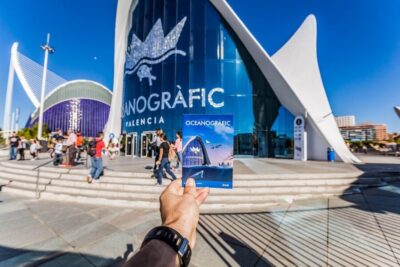
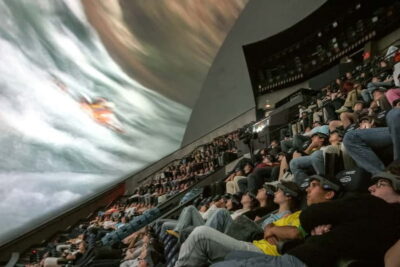
Oceanogràfic, Hemisfèric & Science Museum Combo
Read our review →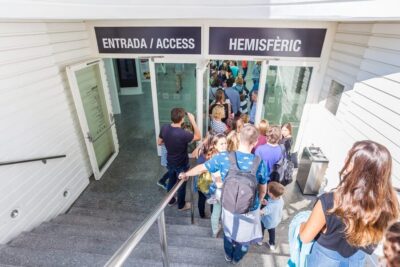
City of Arts and Science 3D Movie at Hemisfèric
Read our review →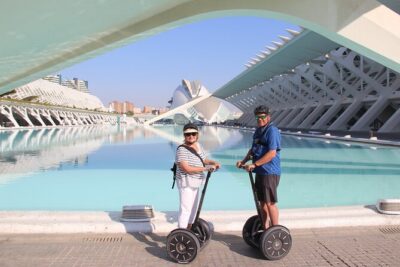
City of Arts & Sciences Tour with Rooftop Tapas & Wine
Read our review →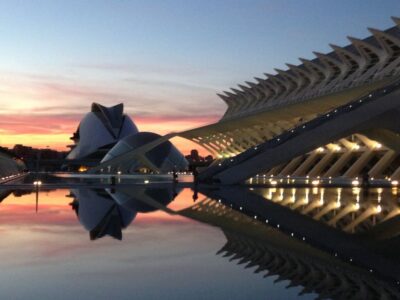
City of Arts and Sciences & Oceanografic 2-Hour Guided Tour
Read our review →Browse the lists this tour appears in