Reviewed · TOURS
Valencia: Cathedral, St Nicholas, and Lonja de la Seda Tour
The most striking part of this Valencia tour is the contrast between its three main interiors. You move from the Cathedral, with its claimed Holy Grail, to St Nicholas Church and its vast Baroque ceiling paintings, then to the severe Gothic lines of the Lonja de la Seda. Outside, the route ties those sights to Roman remains, medieval walls, and Valencia’s most important squares.
I like the way the tour gets you inside three major monuments, rather than leaving you to admire their doors from the street. I also like the strong local storytelling, especially with guides such as Ferran, Paolino, Benito, and Marcela, who are praised for explaining art, architecture, traditions, and city history in clear, engaging ways.
The main consideration is stamina. This is a 3 to 4 hour walk through narrow streets, with time spent standing inside historic buildings. One participant also had trouble with cigarette smoke from other members of the group, so this may matter if you are sensitive to smoke. At $53, the price is fair for the admissions and guide, but it is more than a basic city walk.
In This Review
- Key points at a glance
- Why these three buildings make a strong Valencia introduction
- St Nicholas Church and its ceiling of Baroque frescoes
- Lonja de la Seda and Valencia’s trading past
- Valencia Cathedral and the Holy Grail tradition
- Almoina ruins and the city beneath your feet
- Plaza de la Reina and Plaza de la Virgen
- The guide can make or break the experience
- Is $53 a fair price?
- Practical advice before you book
- Should you book this Valencia old town tour?
- FAQ
- How long does the Valencia Cathedral, St Nicholas, and Lonja de la Seda Tour last?
- What is included in the tour price?
- Is hotel pickup included?
- Which languages are available?
- Does the Cathedral contain the Holy Grail?
- Is the tour available as a private experience?
- What happens if it rains?
Key points at a glance
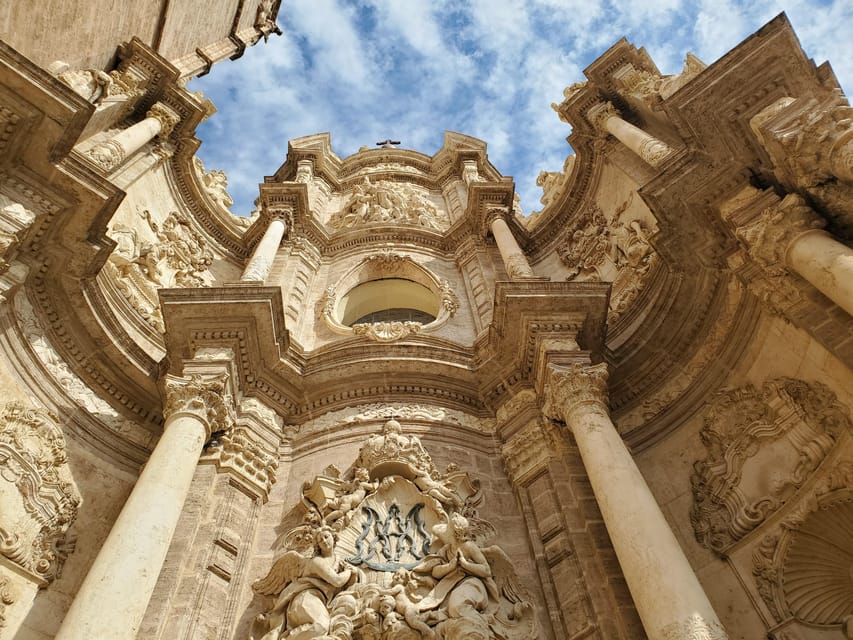
- See Valencia’s three essential historic interiors: Entry to the Cathedral, Church of Saint Nicholas, and Lonja de la Seda is included.
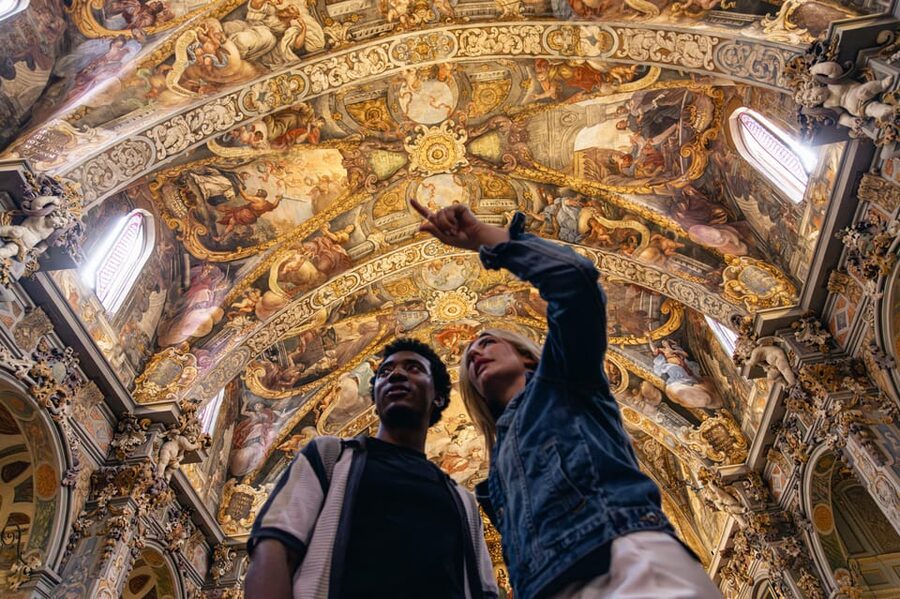
- Look up at 2,000 square meters of frescoes: St Nicholas Church is the visual high point, with Baroque paintings by Dionís Vidal.
- Hear the Holy Grail story in the Cathedral: The Metropolitan Cathedral of the Assumption of the Virgin Mary is said to hold the relic.
- Walk across Valencia’s key public spaces: The route includes Plaza de la Reina, Plaza de la Virgen, the Central Market area, and the Almoina ruins.
- Learn from guides with different strengths: Ferran is praised for historical depth, Paolino for pacing and anecdotes, and Benito for detailed, friendly explanations.
- Plan for a walking tour, not a quick attraction visit: Comfortable shoes, water, and weather-appropriate clothing will make the 3 to 4 hours easier.
Why these three buildings make a strong Valencia introduction
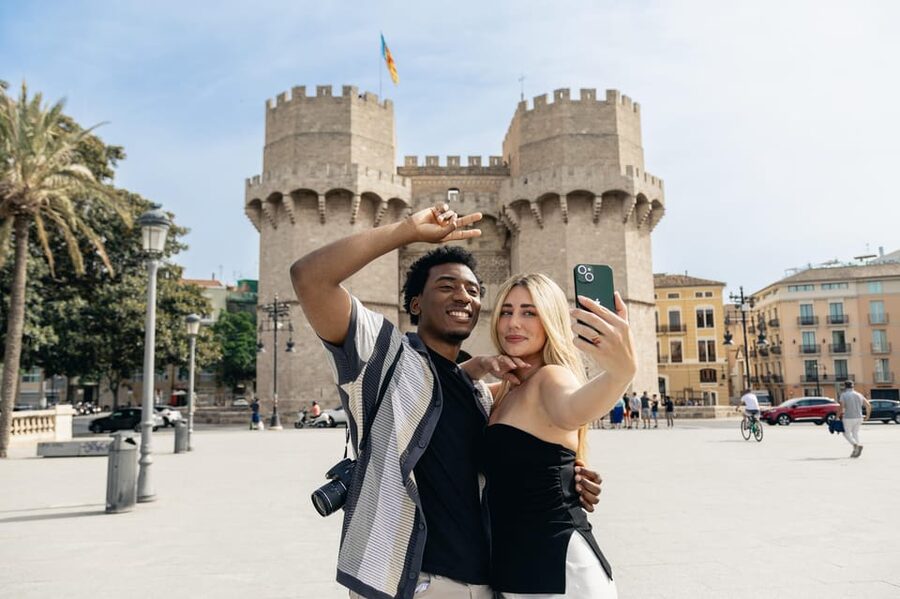
Valencia’s old quarter is easier to understand when you connect its monuments instead of visiting them as isolated sights. This tour does that work for you. The guide explains how the city changed over roughly 2,500 years, then links the major buildings to the streets, squares, walls, and archaeological remains around them.
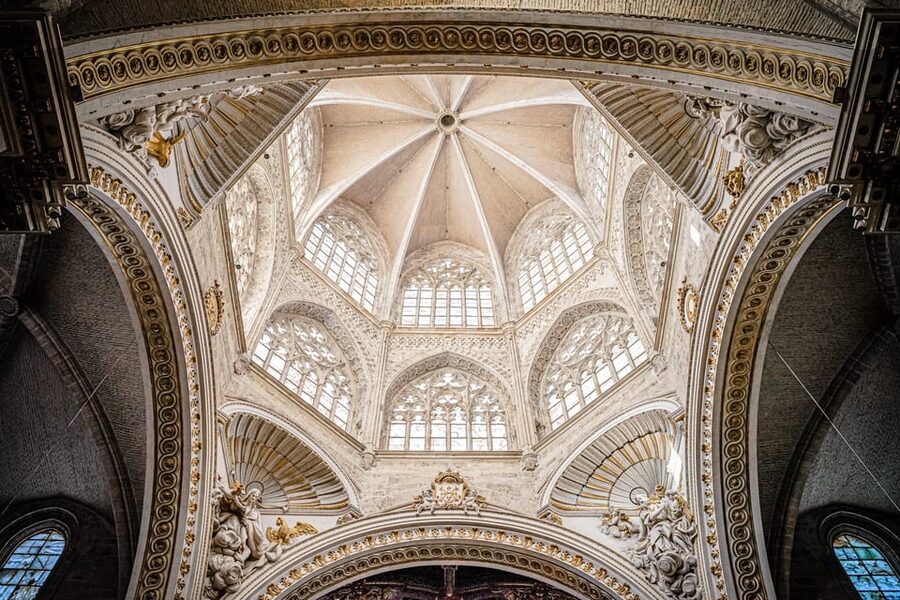
That broad setting is useful because Valencia can initially feel like a collection of separate attractions. The Cathedral has Roman, Gothic, Renaissance, and Baroque elements. The Lonja de la Seda reflects the city’s medieval trading power. St Nicholas Church brings religious art and dramatic decoration into the picture. Together, they give you a solid first look at the old city.
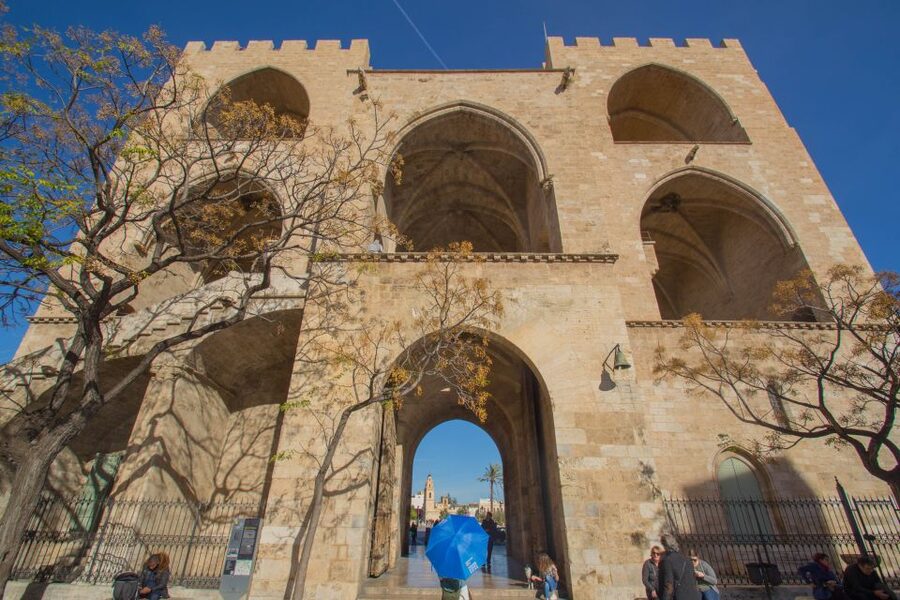
The tour begins at the imposing Torres de Serranos, a medieval gate connected with the old defensive walls. The meeting point can vary with the option you book, so check your confirmation carefully rather than assuming every departure begins at the towers.
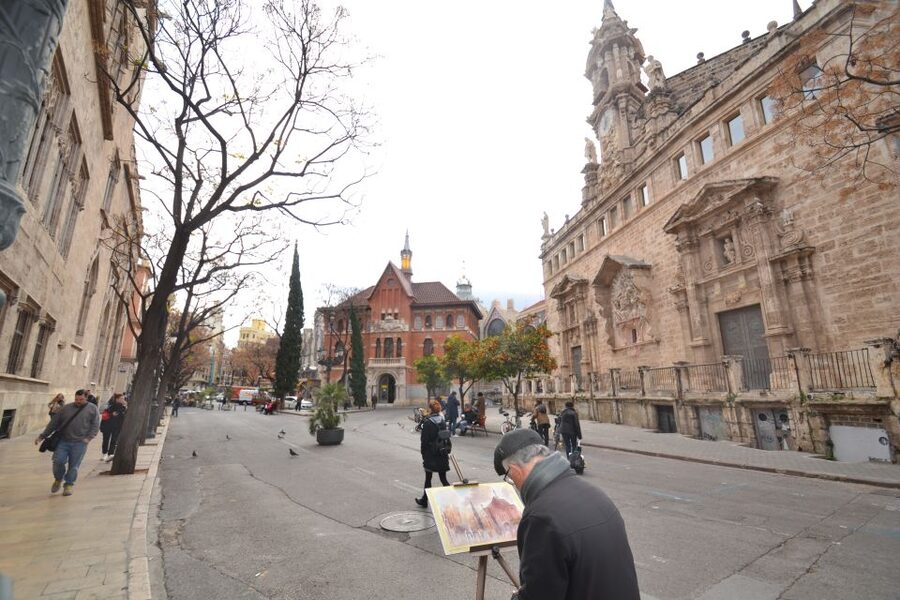
From there, you walk toward the center through the historic district. The route uses narrow roads, so you get a sense of the old city’s scale and layout rather than simply crossing between large avenues. A guide is especially useful here because the story continues while you walk, not just during the ticketed visits.
Other Valencia tours people book alongside this one:
- Valencia: Oceanogràfic Entry Ticket
★ 4.7 · 9,893 reviews - Valencia: 24 or 48-Hour Hop-on Hop-off Bus Ticket
★ 3.9 · 5,611 reviews - Valencia: Palosanto Flamenco Show Ticket
★ 4.8 · 3,876 reviews
St Nicholas Church and its ceiling of Baroque frescoes
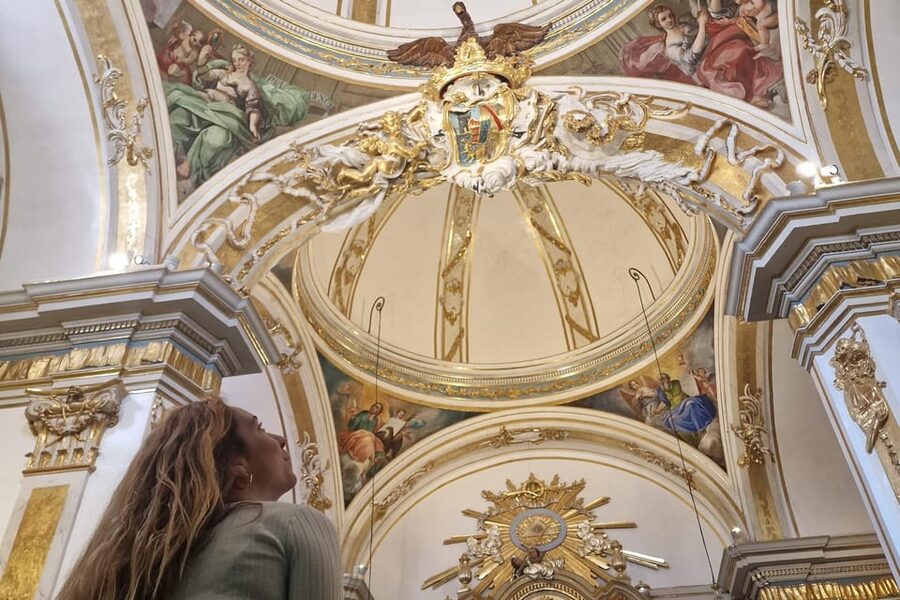
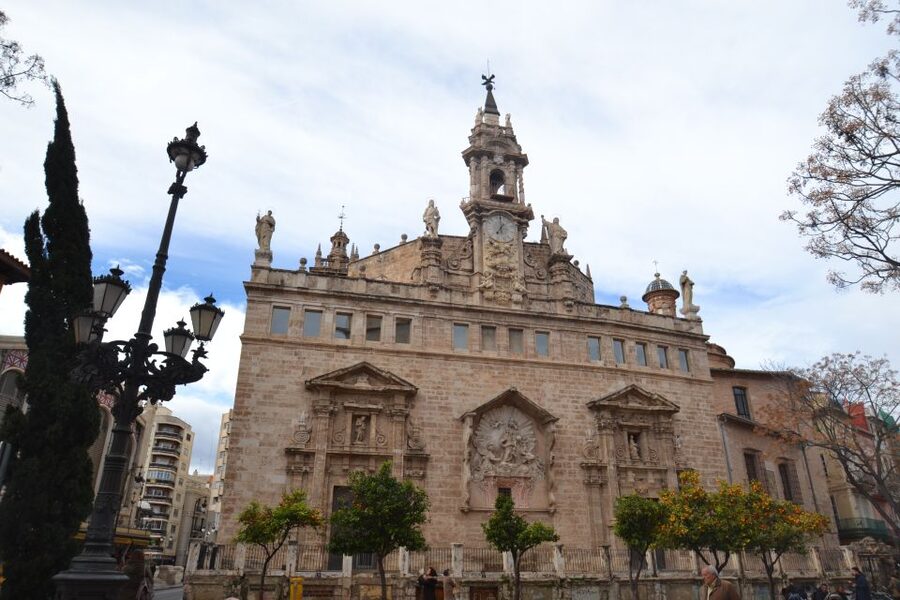
Church of Saint Nicholas is likely to be the tour’s visual surprise. Its interior contains about 2,000 square meters of Baroque frescoes, painted by Dionís Vidal. The scale is hard to take in quickly, so the guide’s explanation adds real value. You need help reading the scenes, spotting architectural details, and understanding how the painted ceiling changes the feel of the church.
The church is often presented as Valencia’s answer to the Sistine Chapel, though that comparison can set expectations too high. Still, the fresco-covered interior is a powerful sight, especially if you have mostly seen Valencia through its streets and modern buildings.
The visit can include more than a silent look around. The church sometimes has a projection light show on the ceiling and walls every half hour, according to the experience details shared by participants. Timing can work in your favor, though it may also stretch the tour beyond its planned length. Paolino was praised for arranging the visit so a group could be seated promptly for the show, while other guides have stayed longer so the group could see it.
That light show is not guaranteed as a separate feature of every departure, so treat it as a possible bonus rather than the reason to book. The frescoes themselves are the main event.
The church also gives the guide room to explain Valencia’s religious traditions and the stories connected with the building. One especially memorable theme is the link to the story of Father Christmas, which adds a lighter note to an otherwise serious art and architecture stop.
Lonja de la Seda and Valencia’s trading past
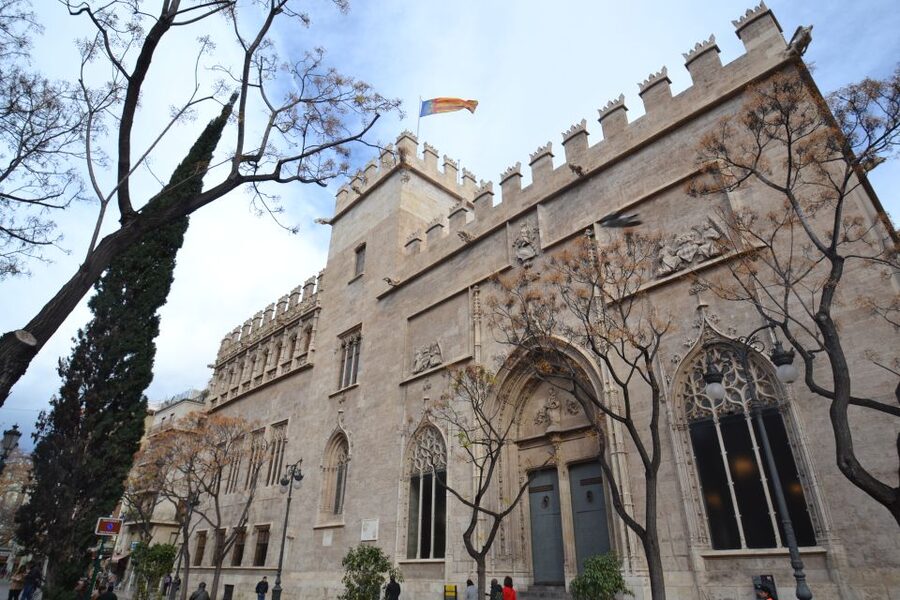
The next major stop is the Lonja de la Seda, or Silk Exchange, a UNESCO World Heritage site. Its appeal is different from St Nicholas Church. Instead of color and painted decoration, you get Gothic architecture, tall sturdy columns, and a geometric roof that reveal the confidence of medieval Valencia’s merchants.
This is where the tour’s city story becomes practical. The building was not simply designed to look grand. It reflects the importance of commerce and the city’s role in Mediterranean trade. A good guide can help you see how the layout and scale served business as well as civic pride.
Across the road is the Central Market, one of the most useful visual references on the route. You may not enter the market as part of the listed tour, but seeing it beside the Lonja makes the area’s trading purpose easier to grasp. The lively market setting also provides a sharp contrast with the quiet stone interior of the exchange.
The Lonja is a good reason to choose this tour over a general old town stroll. You receive entry and a proper explanation of the building rather than only a photograph from outside. Fast access past crowded ticket lines is also part of the experience, which matters during busy periods.
The drawback is that the tour does not leave much time for shopping or eating at the Central Market. If you want to browse food stalls, schedule a separate visit before or after the walk.
Valencia Cathedral and the Holy Grail tradition
The route continues to Plaza de la Reina and then into the Metropolitan Cathedral of the Assumption of the Virgin Mary. The Cathedral is one of the most layered stops because its appearance reflects several periods of construction and decoration.
The main story for many people is the Holy Grail, said to be held inside the Cathedral. The tour presents the claim and its religious and historical setting. You should approach it as an important tradition and object of belief, not as a fact that can be proved in the same way as the building’s architecture.
The guide’s role here is particularly valuable. Without context, a cathedral can become a blur of chapels, altars, paintings, carvings, and side rooms. Guides including Marcela, Ferran, and Paolino have been praised for pointing out small details and explaining what the artwork means, rather than rushing everyone through.
The Cathedral is also where the long time span of the tour comes together. You have already passed Roman remains and medieval structures, and now you see how Valencia’s religious center developed across centuries. The result is not a single clean architectural style, but a building shaped by changing tastes, faith, wealth, and politics.
Allow yourself some patience here. The tour ends in the Cathedral area, and one participant wished there had been more time to continue exploring after the formal visit. That is a fair point. The guided explanation gives you a useful framework, but you may want to return later if you are keen on art or church interiors.
A different way to spend a day in Valencia:
- Valencia: Catamaran Cruise with Sunset Option
★ 4.0 · 3,566 reviews - Valencia Old Town Tour with Wine & Tapas in 11th Century Historic Monument
★ 5.0 · 3,234 reviews - Valencia: Oceanogràfic, Hemisfèric & Science Museum Combo
★ 4.4 · 2,959 reviews - Valencia: City Highlights Guided Bike Tour
★ 4.7 · 2,373 reviews
Almoina ruins and the city beneath your feet
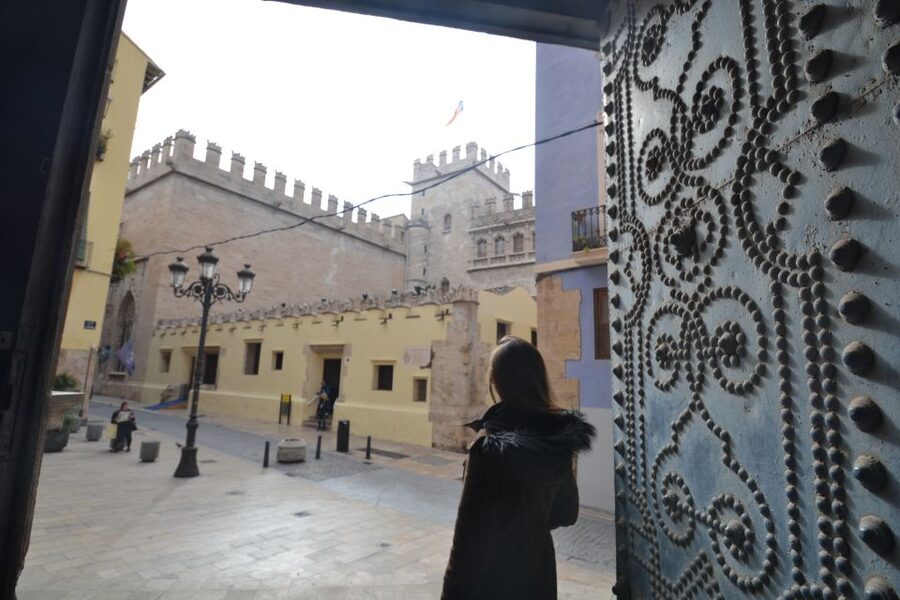
The Roman ruins of the Almoina add an archaeological layer to the walk. They are described as the most important archaeological remains in Valencia, and they help establish that the city’s story began long before its medieval churches and trading halls.
This stop is valuable because it changes the way you see the streets above. Instead of thinking only about old buildings, you get a glimpse of earlier settlement and the physical remains beneath the modern city. The guide can connect this evidence to the wider 2,500 year story introduced at the beginning.
The Almoina is not treated as a long museum visit in the way the Cathedral, St Nicholas, and Lonja are. It works more as a focused historical pause along the walking route. If you want a detailed archaeological study, you would need more time elsewhere, but for a first visit it gives useful scale and context.
Plaza de la Reina and Plaza de la Virgen
Public squares are not filler on this tour. Plaza de la Reina helps you understand the Cathedral’s place in the center of Valencia, while Plaza de la Virgen provides the setting for the final part of the walk.
The route ends in or near Plaza de la Virgen, where the guide explains the Basilica of the Virgin Mary of the Forsaken. You do not receive an entry ticket for the basilica as part of the listed inclusions, so the stop is mainly about the building, its setting, and its place in Valencia’s religious life.
Ending here is practical. The square is a natural place to pause after several hours on foot, and you can decide what to do next without being taken back to a hotel. The tour does not include hotel pickup or drop-off, food, or drinks, so you should plan your own break afterward.
The squares also give you room to hear the city’s wider traditions. The guides are not limited to dates and construction details. Several have been praised for explaining Valencia’s geography, customs, civil war history, religious stories, and the way the old town developed.
The guide can make or break the experience
The strongest pattern across the feedback is the quality of the guiding. Ferran is repeatedly praised for his local feeling, clear historical explanations, and ability to keep the material entertaining. He has also handled route changes during the opening ceremony for the Fallas Festival, which shows why local flexibility matters during major city events.
Paolino is praised for timing, anecdotes, and his careful explanations inside the buildings. Benito receives high marks for answering questions and providing detailed context. Marcela, Jorge, Manuel, Anais, Rosa, Carmen, and other guides are also described as friendly, passionate, and easy to follow.
That list is useful, but you cannot usually choose a particular guide when booking. The experience is offered in English, Spanish, French, German, Italian, Portuguese, and Polish, so confirm your selected language before paying.
A private group is available. If you choose that option, you may get a more personal pace and more freedom to ask questions, but the price and exact format can vary by booking choice. The standard experience is still designed to keep a group moving through narrow streets and busy attractions.
The walking pace appears moderate rather than athletic. One participant said the group did not walk too far or too fast, while another found three hours tiring and wanted a seat and tea afterward. Both points can be true. You may not cover huge distances, but historic interiors involve standing, and Valencia’s summer heat can add strain.
Is $53 a fair price?
At $53 per person, this is not the cheapest way to see Valencia’s old quarter. A self-guided walk costs little beyond your own admissions, and you can visit the squares for free.
The value comes from the combination. You receive a live guide, entry to the Cathedral, St Nicholas Church, and Lonja de la Seda, plus the historical links between them. You also have the advantage of ticket-line access, which can save time when the monuments are crowded.
I consider the price reasonable if you care about art, architecture, or history and would otherwise pay for the three admissions separately. It is less compelling if you mainly want a casual orientation walk or prefer to explore interiors at your own speed.
The tour’s strongest value is not simply getting through the doors. It is learning how to look once you are inside. St Nicholas becomes more than a pretty ceiling, the Lonja becomes more than a Gothic hall, and the Cathedral becomes more than a famous relic story.
Practical advice before you book
Wear comfortable shoes. The route lasts 3 to 4 hours, and you will walk through narrow historic streets while spending time inside the main buildings.
Bring water and consider sun protection in warm weather. Anais has been praised for gathering the group in shaded places when possible, but shade cannot be guaranteed at every outdoor stop.
The tour normally runs rain or shine. It may be canceled during a heavy storm, so check the weather if you are visiting during a wet spell.
If cigarette smoke bothers you, make your preference clear to the guide at the start. One group had several smokers who smoked at outdoor stops, making it difficult for another participant to remain nearby and hear the commentary. This is not a stated rule of the tour, but it is a sensible comfort issue to raise early.
The route is best for adults and older children who can manage a long walking visit. It suits people who want a structured introduction to Valencia’s old quarter, especially on a first visit. It is less suited to anyone who needs frequent seated breaks or wants a slow, independent visit inside each monument.
Free cancellation up to 24 hours before the tour and the option to reserve now and pay later make planning easier. Still, your meeting point may vary by booking option, so read the final confirmation closely.
Should you book this Valencia old town tour?
I would book it if you want Valencia’s major historic sights explained in one well-planned half day. The three ticketed buildings give the tour real substance, and the route adds Roman archaeology, medieval walls, central markets, and important squares instead of treating each monument as a separate photo stop.
The best match is an art and history enthusiast, a first-time visitor, or anyone who prefers an informed walk to studying guidebooks alone. Book it early in your stay, then use what you learn to choose places for a second visit.
Skip it if you dislike group schedules, tire easily after several hours, or want extended time at the Central Market and Cathedral. At $53, it asks you to value explanation and included entry. For that audience, the dramatic St Nicholas ceiling, the Lonja’s Gothic trading hall, and the Cathedral’s Holy Grail tradition make it a strong introduction to old Valencia.
FAQ
How long does the Valencia Cathedral, St Nicholas, and Lonja de la Seda Tour last?
The tour lasts approximately 3 to 4 hours. Starting times vary, so check availability for the date you want.
What is included in the tour price?
The price includes a tour guide and entry tickets to Valencia Cathedral, the Church of Saint Nicholas, and Lonja de la Seda.
Is hotel pickup included?
No. Hotel pickup and drop-off are not included. The meeting point can vary depending on the booking option.
Which languages are available?
The tour is available in Polish, Italian, Portuguese, French, Spanish, English, and German.
Does the Cathedral contain the Holy Grail?
The Cathedral is said to hold the Holy Grail inside. The tour explains the tradition and its historical and religious setting.
Is the tour available as a private experience?
Yes. A private group option is available, depending on the booking choice.
What happens if it rains?
The tour usually operates rain or shine, but it may be canceled in the event of a heavy storm.
Just added around Valencia
- e-Bike Rental in Valencia★ 3.5 · 3 reviews
- Valencia: Tuk Tuk Historical Tour★ 5.0 · 3 reviews
- Authentic Paella Dinner in Valencia★ 5.0 · 3 reviews
- Valencia: Horchata Bike Tour★ 4.8 · 3 reviews
- Valencia: Guided City Walking Tour with Tapas Tastings★ 3.8 · 3 reviews
- One-way Valencia Airport To/From Benicàssim (FIB)★ 5.0 · 3 reviews
- Rent Boat Valencia Yatch Polonova with capitan and drinks★ 4.0 · 3 reviews
- In Love with Valencia: A Self-Guided Tour of its Landmarks★ 5.0 · 3 reviews
Tours, compared.
Valencia Old Town Tour with Wine & Tapas in 11th Century Historic Monument
Read our review →
Old Town Tour, Wine & Tapas in an 11th c. Monument
Read our review →
Caves of San José Guided Excursion and Ticket
Read our review →
Valencia Bike Tour from the City to the Beach, plus Bike Guy App!
Read our review →