Reviewed · TICKETS
Valencia: Hortensia Herrero Art Center Ticket or Guided Tour
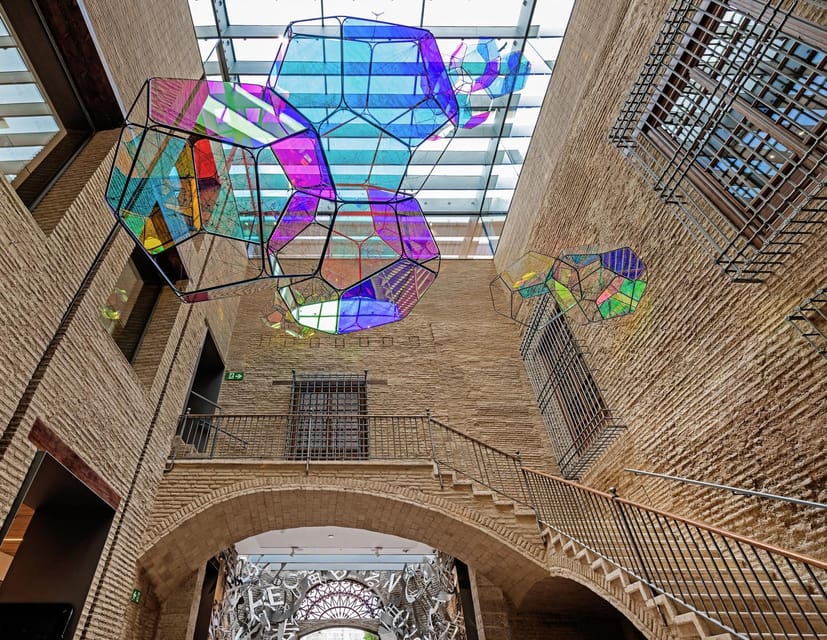
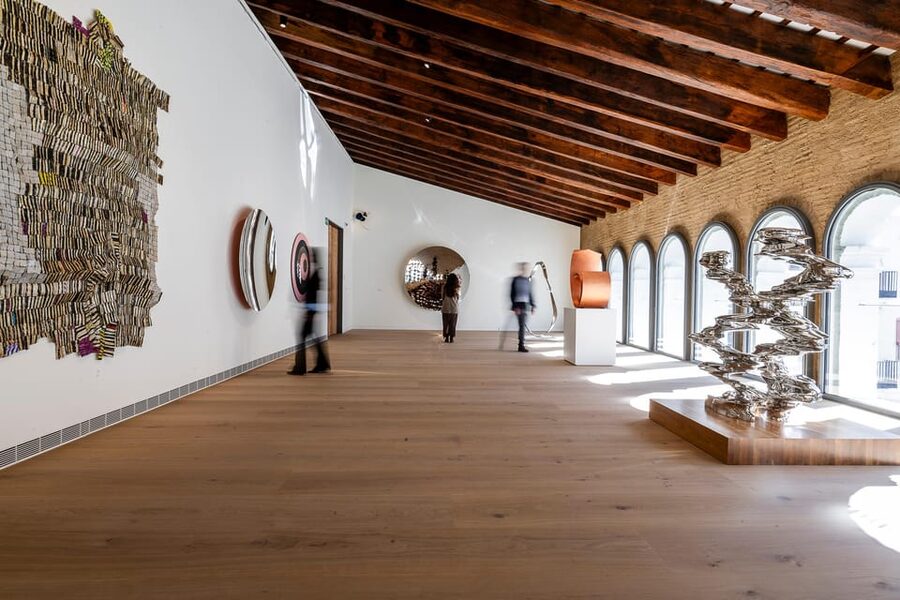
The most unusual thing about the Hortensia Herrero Art Center is the collision of old and new. You move through a 17th-century palace while encountering video pieces, interactive installations, large-scale paintings, and art made for the rooms themselves. Beneath that polished contemporary setting sit traces of Valencia’s Roman circus, Jewish quarter, Islamic, and medieval past.
I especially like the original wooden beams and ceramic masonry in the main hall, and I like that the building itself is part of the visit rather than a plain box for displaying art. The collection also brings together major names such as Andreas Gursky, Anselm Kiefer, Olafur Eliasson, Jaume Plensa, and Cristina Iglesias. The main drawback is that the art may feel uneven if you prefer a clear story or traditional painting. Some visitors have found the visit interesting but less exciting than expected.
In This Review
- Key points to know before you go
- Entering a 17th-century palace in central Valencia
- The main hall and the palace details
- Roman circus ruins and the former Jewish quarter
- Contemporary art from Gursky to Eliasson
- Multimedia works and interactive rooms
- Choosing the guided tour or the ticket only
- Is $14 a fair price in Valencia?
- Who will enjoy this art center most
- Practical advice for making the most of 90 minutes
- Should you book the Hortensia Herrero Art Center?
- FAQ
- Where is the Hortensia Herrero Art Center located?
- How long does the visit take?
- What does the ticket include?
- Can I visit without taking a guided tour?
- Which languages are available for the host or guide?
- What artists can I see at the center?
- What historic features are inside the center?
- Is the activity wheelchair accessible?
Key points to know before you go
- A palace becomes part of the artwork: The Valeriola Palace supplies beams, ceramic work, courtyards, and old walls that frame the contemporary pieces.
- Roman and Jewish quarter remains appear along the route: You can see sections linked to Valencia’s Roman circus and an alley from the former Jewish quarter.
- The collection mixes famous names with multimedia work: Expect artists including Andreas Gursky, Anselm Kiefer, Georg Baselitz, Tomás Saraceno, and Mat Collishaw.
- The visit takes about 90 minutes: That is enough time for a focused look, though serious art lovers may want longer with a ticket option if the center allows it.
- You can choose a guide or visit independently: Guided tours are offered in English, Spanish, French, Italian, and Catalan.
- The center works for visitors with limited mobility: The activity is listed as wheelchair accessible.
Entering a 17th-century palace in central Valencia
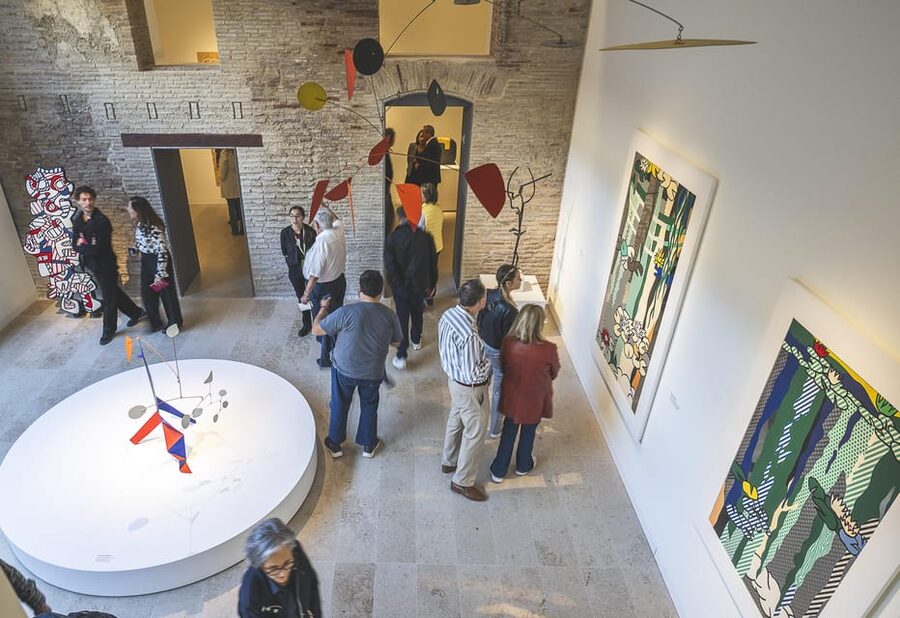
The art center occupies two four-story buildings and contains 17 exhibition spaces across about 3,500 square meters. That size matters. You are not simply entering one grand room with a few sculptures. The visit moves through a sequence of palace spaces, restored interiors, archaeological remains, and contemporary galleries.
The setting gives the art a different feel from a modern museum. A stark video installation or polished sculpture can look entirely different against old masonry than it would against a white wall. I like this kind of contrast because it asks you to pay attention to the building as well as the object in front of you.
The old Valeriola Palace is not just a backdrop. Its structure helps explain why the center feels distinctive. Look up at the original wooden beams in the main hall, and notice the ceramic masonry. These details keep the building from becoming a generic exhibition venue.
You should also expect some changes in mood as you move through the center. One room may focus on a large installation or a multimedia work, while another gives you a closer look at a painting or sculpture. The route does not depend on one single star object. Its appeal comes from the meeting of several different kinds of art.
A few more Valencia tours worth weighing up
- Valencia: Oceanogràfic Entry Ticket
★ 4.7 · 9,893 reviews - Valencia: 24 or 48-Hour Hop-on Hop-off Bus Ticket
★ 3.9 · 5,611 reviews - Valencia: Palosanto Flamenco Show Ticket
★ 4.8 · 3,876 reviews
The main hall and the palace details
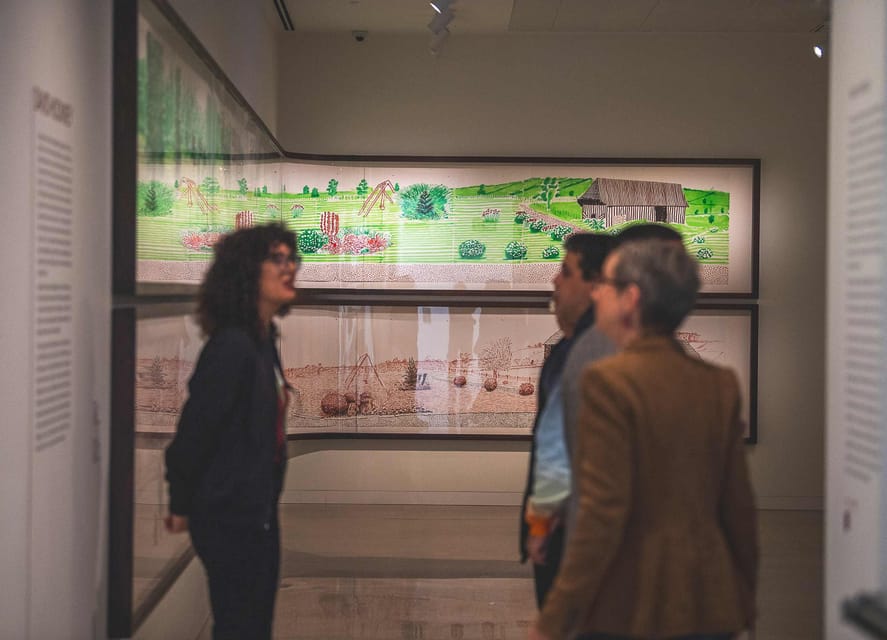
The main hall is one of the best places to slow down at the start. Its wooden beams and ceramic construction show how much of the palace’s character remains visible. They also give you a useful reminder that this building served a purpose long before it became an art center.
I would not rush straight toward the first artwork. Spend a moment looking at the ceiling, masonry, and proportions of the room. The contemporary pieces gain force because they occupy a space with age and texture.
This is also a good part of the visit for visitors who are not fully comfortable with contemporary art. You do not need to understand every installation to appreciate the architecture. The palace offers something solid and readable, even if a particular artwork leaves you cold.
The drawback is that the contrast can sometimes compete for your attention. You may find yourself studying the old walls more closely than the art. That is not necessarily a problem, but it means the center asks you to divide your attention between two subjects.
Roman circus ruins and the former Jewish quarter
The archaeological remains add weight to the visit. Within the center, you can see remains connected with Valencia’s Roman circus, an alley from the ancient Jewish quarter, a medieval oven, and an Islamic fountain.
These elements turn the visit into more than a contemporary art stop. They show that the historic center contains several layers of Valencia’s past, sometimes in the same small area. The Roman circus remains are especially useful for visitors who want a physical link to the city’s ancient period rather than only a label in a museum display.
The alley from the old Jewish quarter gives the route a more intimate scale. It is not an enormous monument, but that is part of its value. A narrow surviving passage can say a great deal about how people moved through the city and how tightly its older districts were built.
The medieval oven and Islamic fountain add further variety. You can look at them as archaeological features, but they also help you understand how daily life shaped the buildings around them. The art center brings these remains into the same visit as international contemporary art, creating a sharp time span without requiring a separate museum trip.
Keep your expectations measured. These archaeological features are parts of the larger center, not a full Roman or medieval museum. If ancient history is your main reason for visiting Valencia, you will probably want other historic sites as well. Here, the remains work best as a surprising counterpoint to the art.
Contemporary art from Gursky to Eliasson
The collection includes artists with major international reputations. You may encounter work by Andreas Gursky, Anselm Kiefer, Georg Baselitz, Tomás Saraceno, Jaume Plensa, Olafur Eliasson, Cristina Iglesias, Sean Scully, and Mat Collishaw.
That list suggests a broad mix rather than one narrow style. You can expect photography, painting, sculpture, multimedia work, and installations. Some pieces are made specifically for the palace’s rooms, which means their placement is part of their meaning.
The center also includes works from Hortensia Herrero’s private collection. A private collection can feel more personal than a survey assembled to explain a single movement. Here, that personal selection brings together well-known artists and pieces that may not fit neatly into one period or school.
I like this approach for a short visit. You can sample several directions in contemporary art without committing half a day to a single artist. A large work by Kiefer, Baselitz, or Gursky may reward a long look, while an installation by Eliasson, Saraceno, Iglesias, or Plensa may ask you to think about space and movement instead of simply examining a surface.
Still, the variety can feel disconnected. If you prefer a museum with a simple chronological route, this may seem loose. You may also find some works more engaging than others. That is normal for a personal collection, and the 4.6 rating from 151 recorded evaluations suggests that the overall experience works well for many people, though not everyone leaves thrilled.
A different way to spend a day in Valencia:
- Valencia: Catamaran Cruise with Sunset Option
★ 4.0 · 3,566 reviews - Valencia Old Town Tour with Wine & Tapas in 11th Century Historic Monument
★ 5.0 · 3,234 reviews - Valencia: Oceanogràfic, Hemisfèric & Science Museum Combo
★ 4.4 · 2,959 reviews - Valencia: City Highlights Guided Bike Tour
★ 4.7 · 2,373 reviews
Multimedia works and interactive rooms
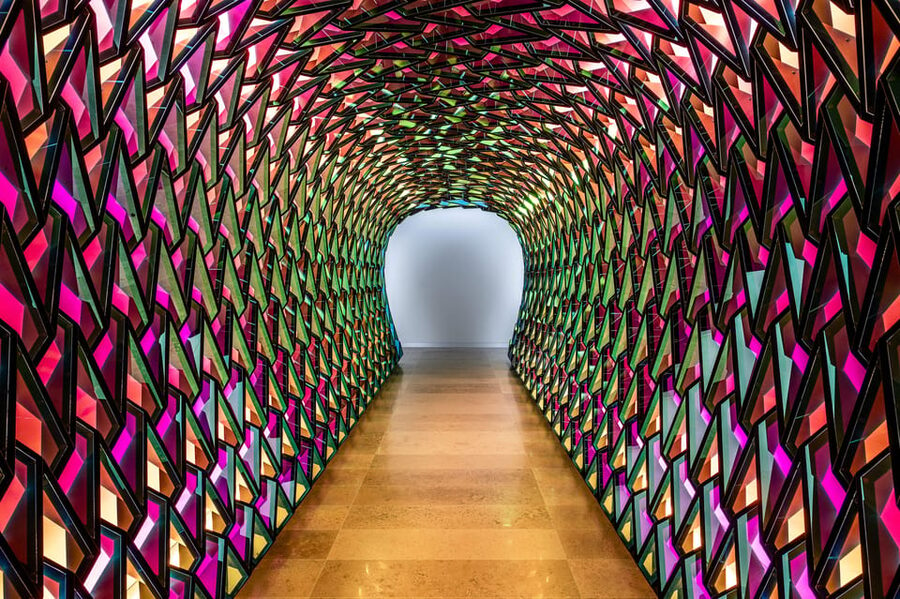
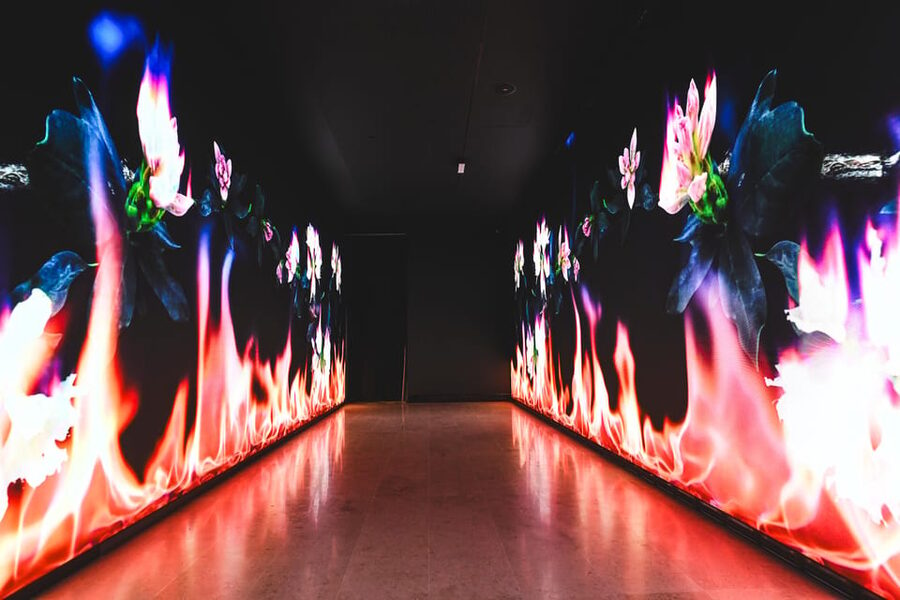
The center places particular emphasis on multimedia and interactive art. These pieces can make the visit more active than a standard sequence of framed paintings. Instead of only looking, you may find yourself watching, listening, moving around, or considering how the work changes the room.
That variety is useful if you are visiting with someone who usually loses interest in art museums. The palace remains give the history-minded visitor something to examine, while the installations offer a more immediate visual experience.
You should not assume that every piece will be hands-on. Interactive art can mean different things, and the supplied details do not specify exactly how each work operates. Think of the center as a place where art may involve space, media, and your own position in the room, not as an activity park.
Some visitors find this kind of art thrilling. Others expect more traditional masterpieces and feel disappointed. I would choose this center for its mix of ideas, materials, and setting, not because every room promises an obvious crowd-pleaser.
Choosing the guided tour or the ticket only
You have two basic ways to visit: buy entry alone or select the guided tour. The ticket-only option gives you more control. You can set your own pace, pause in front of a favorite work, and spend extra time with the palace details or archaeological remains.
The guided option should suit you if contemporary art feels hard to approach. A guide can help connect a work to its room, explain why an artist matters, and point out features you might otherwise miss. The available languages are English, Spanish, French, Italian, and Catalan.
No individual guide names are provided, so you should not book expecting a particular host. The important choice is the language and the level of structure you want. A guided visit is likely the better value for a first encounter with contemporary art, while an independent ticket makes sense if you already know what you want to see.
The visit lasts about 1.5 hours. That is a manageable length for a busy Valencia itinerary and works well before or after another central-city stop. If you are a serious collector or an art student, 90 minutes may feel short, especially with 17 exhibition spaces spread across two buildings. For most people, it is a focused introduction rather than an all-day museum session.
Is $14 a fair price in Valencia?
At about $14 per person, the ticket is reasonably priced for a 90-minute visit that combines art, architecture, and archaeological features. You are paying for more than access to a private collection. The palace buildings, the restoration work, and the remains inside make the experience broader than a normal gallery admission.
The value improves if you care about contemporary art or want a change from Valencia’s better-known historic sights. It is also a practical choice on a hot or rainy day, since the visit gives you an indoor cultural stop without demanding a full morning.
The value is less clear if you mainly want ancient ruins or classic Spanish painting. The Roman circus remains are only one part of the route, and the art collection is firmly contemporary. You may prefer another museum if you want a tightly focused historical display.
A guided visit can justify the price for first-time visitors to this type of art. If you are already comfortable reading installations and modern sculpture on your own, the entry-only option may be enough. The free cancellation up to 24 hours before the visit and reserve-now, pay-later option also make it easier to fit into a changing schedule.
Who will enjoy this art center most
I would recommend the center to several kinds of visitors:
- You like modern and contemporary art but want it in a historic setting.
- You have already seen Valencia’s major old-town sights and want something different.
- You enjoy architecture, archaeology, and art in the same stop.
- You are traveling with someone who prefers interactive or multimedia work to quiet galleries.
- You want a short cultural activity that fits into a packed day.
- You prefer an optional guide rather than a fixed tour format.
I would be more cautious if your taste runs mainly to religious art, old masters, or clearly labeled historical displays. The center is not designed to provide a simple survey of Valencia’s past. Its strongest feature is the tension between old rooms and new art.
Families and mixed-age groups may appreciate the range of spaces, though the available information does not specify children’s programming. Wheelchair users can book with the reassurance that the activity is listed as wheelchair accessible.
Practical advice for making the most of 90 minutes
If you choose the independent ticket, give yourself a few minutes at the beginning to understand the building. The route covers two four-story structures and 17 exhibition spaces, so it helps to keep track of where you are rather than treating each gallery as an isolated room.
Set aside time for the main hall. Look at the beams and ceramic masonry before focusing on the art. Later, pause at the Roman circus remains, the Jewish quarter alley, the medieval oven, and the Islamic fountain. These features are easy to pass quickly if you are concentrating only on the contemporary displays.
With the guided option, listen for connections between the artwork and its setting. The most useful explanation will likely be why a piece belongs in a particular palace room, not just the artist’s name and date. If a work does not connect with you, use that moment to examine the architecture or archaeological material nearby.
Do not measure the visit by how many works you recognize. The center includes famous artists, but its strength comes from the combination of established names, multimedia pieces, site-specific works, and old Valencian structures. Give yourself room to react honestly. One gallery may excite you, another may simply be interesting.
Should you book the Hortensia Herrero Art Center?
Book it if you want a compact, unusual cultural stop that joins contemporary art with Valencia’s older layers. The $14 price and 90-minute length make it easy to add to a day in the historic center, and the guided option is useful if modern art is not your usual territory.
Skip it if you want a museum built around one clear historical period or a guaranteed parade of traditional masterpieces. The collection is varied, and some works may not land for you.
My practical choice would be the guided option for a first visit, especially in a language you understand well. Choose the ticket-only visit if you already enjoy contemporary art and would rather move at your own pace. Either way, reserve a place if the palace setting, Roman remains, and modern installations sound more appealing than another conventional museum.
FAQ
Where is the Hortensia Herrero Art Center located?
It is in the historic center of Valencia, in Spain’s Valencian Community. The center occupies the old Valeriola Palace.
How long does the visit take?
The stated duration is 1.5 hours, or about 90 minutes.
What does the ticket include?
The ticket includes entry to the Hortensia Herrero Art Center. A guided tour is included only when you select the guided option.
Can I visit without taking a guided tour?
Yes. You can choose an entry ticket without a guide or select the guided-tour option.
Which languages are available for the host or guide?
The available languages are English, Spanish, French, Italian, and Catalan.
What artists can I see at the center?
The collection includes artists such as Andreas Gursky, Anselm Kiefer, Georg Baselitz, Tomás Saraceno, Jaume Plensa, Olafur Eliasson, Cristina Iglesias, Sean Scully, and Mat Collishaw.
What historic features are inside the center?
You can see remains of Valencia’s Roman circus, an alley from the ancient Jewish quarter, a medieval oven, an Islamic fountain, original wooden beams, and ceramic masonry in the main hall.
Is the activity wheelchair accessible?
Yes. The activity is listed as wheelchair accessible.
Just added around Valencia
- e-Bike Rental in Valencia★ 3.5 · 3 reviews
- Valencia: Tuk Tuk Historical Tour★ 5.0 · 3 reviews
- Authentic Paella Dinner in Valencia★ 5.0 · 3 reviews
- Valencia: Horchata Bike Tour★ 4.8 · 3 reviews
- Valencia: Guided City Walking Tour with Tapas Tastings★ 3.8 · 3 reviews
- One-way Valencia Airport To/From Benicàssim (FIB)★ 5.0 · 3 reviews
- Rent Boat Valencia Yatch Polonova with capitan and drinks★ 4.0 · 3 reviews
- In Love with Valencia: A Self-Guided Tour of its Landmarks★ 5.0 · 3 reviews
Tickets, compared.

Caves of San José Guided Excursion and Ticket
Read our review →


Art & Architecture Guided Tour with Monuments Tickets
Read our review →