
Reviewed · VALENCIA
Valencia: Orange Farm and Orchard Trip with Tastings
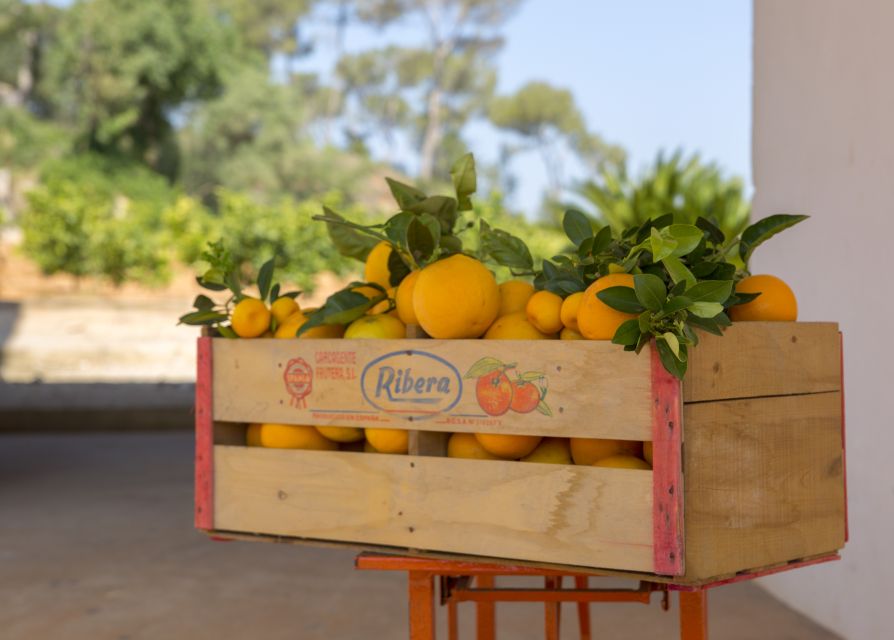
The best part of Huerto Ribera is that you do not simply look at Valencia’s orange-growing tradition from a distance. You walk among the trees, smell the blossoms when they are in flower, handle the fruit, and pick a bag of oranges for yourself. The farm has operated since 1870, and the tour connects that family story with the very practical work of pruning, grafting, grading, and shipping citrus.
I like the mix of orchard time and working warehouse. You see unusual fruit such as Buddha’s hand, yuzu, kumquats, citrus caviar, and Sanguinelli blood oranges, then taste juice, jams, honey, liqueurs, and fresh fruit. I also like the warm, personal guiding from Teresa, Ana, Claire, Luis, and other members of the team. The main drawback is getting there: the train is easy, but the walk from the station can take about 30 minutes and is not especially scenic, so a taxi may be worth arranging.
In This Review
- Key points to know before you book
- Why an orange farm makes a worthwhile Valencia outing
- Walking through Huerto Ribera’s citrus collection
- From traditional farming to the sorting warehouse
- Picking oranges and taking the crop home
- Tasting fresh juice, fruit, and farm-made products
- The old well and the water behind the orchard
- The guides make the experience personal
- Getting from Valencia to Carcaixent
- Who will enjoy this two-hour farm visit
- Is $35 good value?
- My advice for making the most of Huerto Ribera
- Should you book this orange farm tour?
- FAQ
- Where is the orange farm located?
- How long does the experience last?
- How much does the tour cost?
- Can I travel to the farm by train?
- Can I pick my own oranges?
- What products are included in the tasting?
- Is the tour conducted in English?
- What should I bring?
- Is the farm suitable for wheelchair users?
Key points to know before you book
- A real working orange farm: Learn how citrus is grown, harvested, sorted, and prepared for delivery around Europe.
- Picking is seasonal: Collect your own bag of oranges from February through June, with orchard picking generally available from October into June depending on the crop.
- More than ordinary oranges: See Sanguinelli, yuzu, Buddha’s hand, citrus caviar, kumquats, grapefruit, papayas, avocados, and other fruit.
- A tasting with local character: Try orange juice, lemonade, tangerines when available, homemade jams, orange blossom honey, Valencian liqueurs, and other citrus products.
- Good value at $35: Two hours includes the guided visit, tastings, and a bag of oranges during the picking season.
- Plan the transfer carefully: Huerto Ribera is about 35 kilometres from Valencia in Carcaixent. You are responsible for the train, taxi, or car ride.
Why an orange farm makes a worthwhile Valencia outing
Valencia is famous for oranges, but the city itself does not always show you how much work sits behind that reputation. Huerto Ribera gives you a close look at the crop that shaped the surrounding region, without asking you to commit to a full-day excursion.
The farm is in Carcaixent, often called the orange cradle, about 35 kilometres from Valencia. The visit lasts two hours, which is a useful length. You have time to walk through the grounds and ask questions, but the experience does not consume your whole day.
I would choose this trip if you have already seen Valencia’s main sights and want something tied to the local economy and countryside. It also suits families, food lovers, gardeners, and anyone who likes a hands-on activity more than another museum visit.
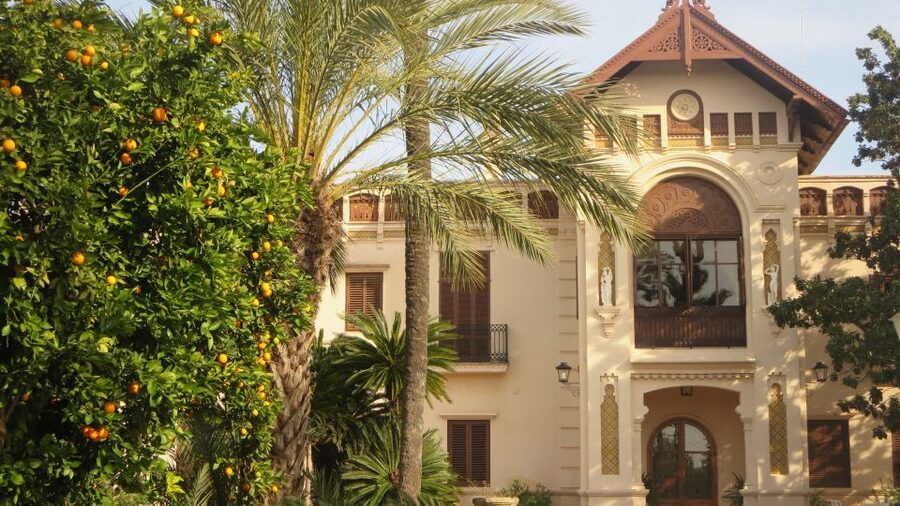
The setting begins at the exterior of an eclectic 19th-century modernist house. You do not tour the full interior, but the building, gardens, and old orchard give the visit a sense of place. This is not a polished theme park built around oranges. It is a family property with a long connection to cultivation and citrus production.
Other Valencia tours people book alongside this one:
- Valencia: Oceanogràfic Entry Ticket
★ 4.7 · 9,893 reviews - Valencia: 24 or 48-Hour Hop-on Hop-off Bus Ticket
★ 3.9 · 5,611 reviews - Valencia: Palosanto Flamenco Show Ticket
★ 4.8 · 3,876 reviews
Walking through Huerto Ribera’s citrus collection
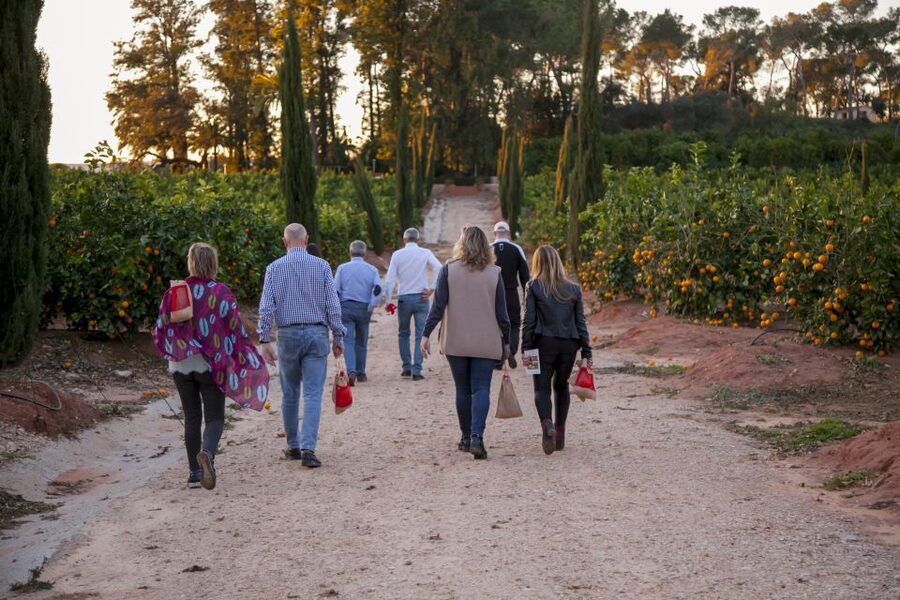
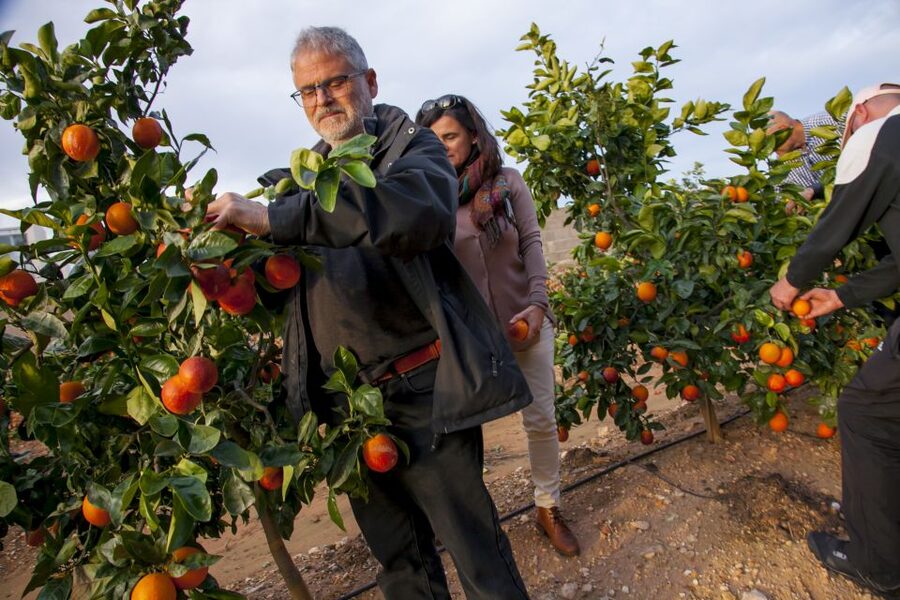
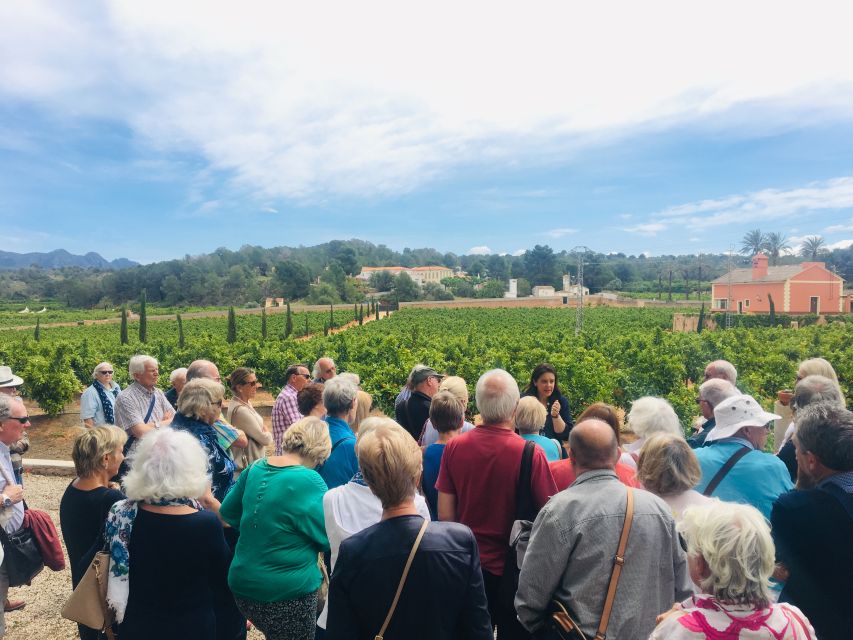
The tour starts with a walk through the gardens and orchard. Your guide explains traditional cultivation and compares it with current methods, covering topics such as pruning, grafting, flowering, and the different stages of fruit production.
This section is especially useful if you normally see fruit only in a supermarket. You begin to understand that an orange is the final step in a long process involving water, soil, seasonal work, careful cutting, and selection. The guide also explains the changing situation of Valencian citrus growing, giving the visit an economic angle rather than treating the orchard as decoration.
The variety of plants is one of the farm’s strongest features. Alongside oranges and tangerines, you may see lemons, limes, avocados, Buddha’s hand, citrus caviar, kumquats, grapefruit, pomegranates, papayas, medlars, and yuzu. Some of these are familiar; others are unusual enough to make the walk feel like a small botanical tour.
The unusual varieties matter because they show how broad the citrus family is. Buddha’s hand, with its finger-like shape, looks nothing like a standard orange. Citrus caviar offers tiny juice-filled beads, while Sanguinelli provides a vivid blood-orange variety with a distinct appearance.
Season affects what you see and taste. Tangerines and some other fruits are available only at particular times, and the orange-picking portion is not guaranteed year-round. In April, you may catch the orange trees in blossom. That is a particularly memorable time to visit, since the scent can fill the orchard.
From traditional farming to the sorting warehouse
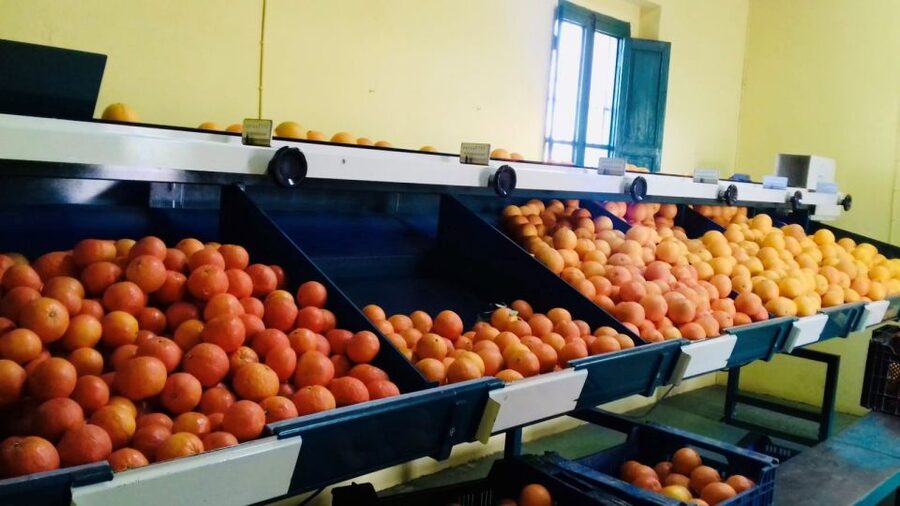
The warehouse visit adds welcome substance to the orchard walk. At Naranjas Ribera, you see how oranges are calibrated and selected before being packed into boxes for delivery across Europe.
The word calibrated refers to sorting fruit by size and quality. Watching this process helps explain why oranges that look similar on a tree may be handled differently once they reach the packing stage. It also shows that farming does not end when fruit is picked. There is still grading, packing, and distribution to manage.
You may have an opportunity to take part in the sorting demonstration. This is a small but effective touch, especially for children, because it turns an industrial step into something they can understand with their hands and eyes.
I appreciate this part because it keeps the tour honest. You are not shown only the pretty side of orange farming. You also hear about production, market pressures, and the present condition of citrus growing in Valencia. The experience remains light and friendly, but it does not pretend that agriculture is simple.
Picking oranges and taking the crop home
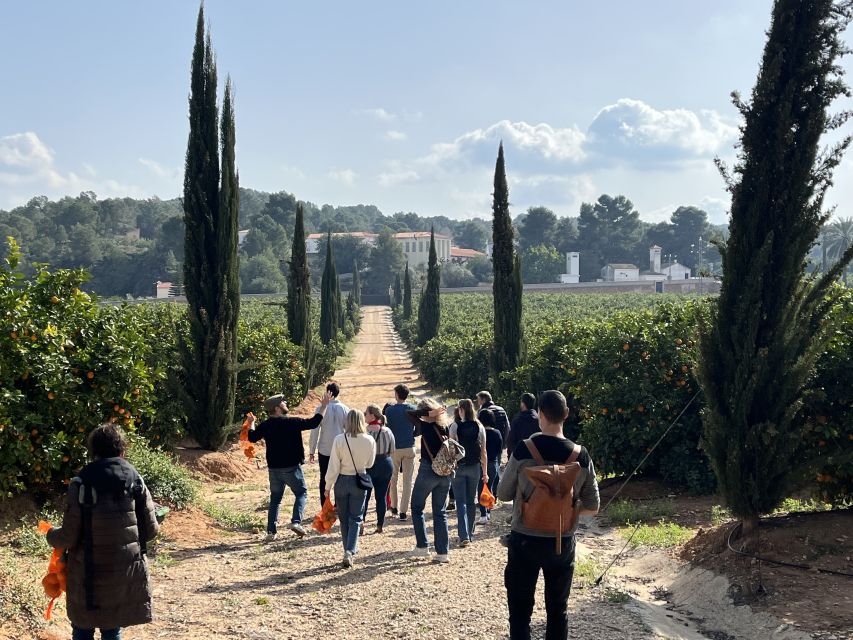
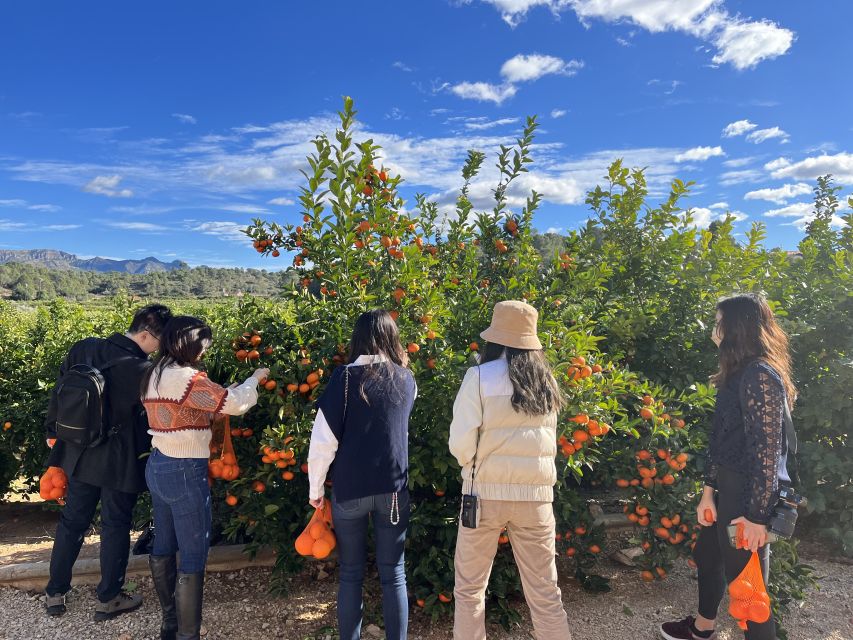
If you visit during the picking period, collecting your own oranges is the highlight for many people. The included bag is available from February through June, subject to the seasonal crop. The broader description also notes orange picking from October through June, so I would confirm the exact picking conditions for your date when booking.
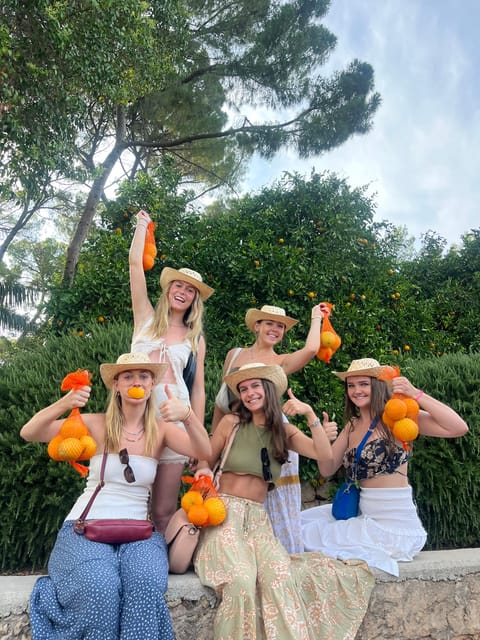
Picking fruit makes the visit feel personal. You are not merely tasting a sample prepared by someone else. You select oranges from the tree and carry them home, which gives the $35 price more weight.
The practical issue is luggage. A full bag of oranges is heavier and less convenient than a small souvenir, especially if you are traveling with hand luggage. Still, the fruit can be a useful snack for the rest of your stay, and the farm’s own produce is a better reminder of Valencia than a generic gift-shop item.
Wear comfortable shoes. The walk through the orchard and the route around the property call for sensible footwear, not city sandals with thin soles. In the hotter months, bring water and expect strong sun. Hats have been provided on some visits, but I would not rely on that alone.
A different way to spend a day in Valencia:
- Valencia: Catamaran Cruise with Sunset Option
★ 4.0 · 3,566 reviews - Valencia Old Town Tour with Wine & Tapas in 11th Century Historic Monument
★ 5.0 · 3,234 reviews - Valencia: Oceanogràfic, Hemisfèric & Science Museum Combo
★ 4.4 · 2,959 reviews - Valencia: City Highlights Guided Bike Tour
★ 4.7 · 2,373 reviews
Tasting fresh juice, fruit, and farm-made products
The tasting closes the visit and gives you a chance to compare several flavors rather than simply drink one glass of juice. Depending on the season and the day’s selection, you may try fresh orange juice, lemonade, tangerines, citrus fruit, homemade jams, orange blossom honey, Valencian liqueurs, and orange-based treats.
Some visitors have been greeted with lemonade, coffee, biscuits, or orange blossom cookies. The exact welcome appears to vary, so think of those as possible extras rather than fixed promises. The core tasting is local products and citrus-based flavors.
Fresh juice is the obvious star. Juice made from ripe Valencia oranges has a sweetness and fragrance that packaged juice cannot quite match. If blood oranges are available, the comparison is worthwhile. You may also taste citrus caviar, kumquats, grapefruit, lemon, lime, and other fruit during the walk or tasting.
The farm shop gives you a chance to buy marmalades, liqueurs, honey, and similar products. There is no pressure to purchase, which is helpful. If you want to bring something home, leave room in your bag for a jar or bottle.
The tasting is also where the tour works well for people who are not especially interested in farming. You get a pleasant food experience even if the details of grafting or irrigation are not your main reason for coming.
The old well and the water behind the orchard
Near the end, the tour visits the well used to irrigate the orange orchard. Water is easy to overlook when you admire a green farm, but it is central to citrus production in this region.
Seeing the well ties the pleasant orchard walk back to the practical question of how the trees are kept alive and productive. It also gives the tour a clear beginning-to-end shape: you see the property, the trees, the fruit, the packing work, and the irrigation source.
The visit is not a technical agricultural course, and the two-hour format limits how much detail can be covered. If you want an extended discussion of global citrus origins or every botanical variation, you may find the explanation fairly introductory. For most visitors, the amount of information is well judged: enough to make the farm meaningful, without turning a holiday outing into a lecture.
The guides make the experience personal
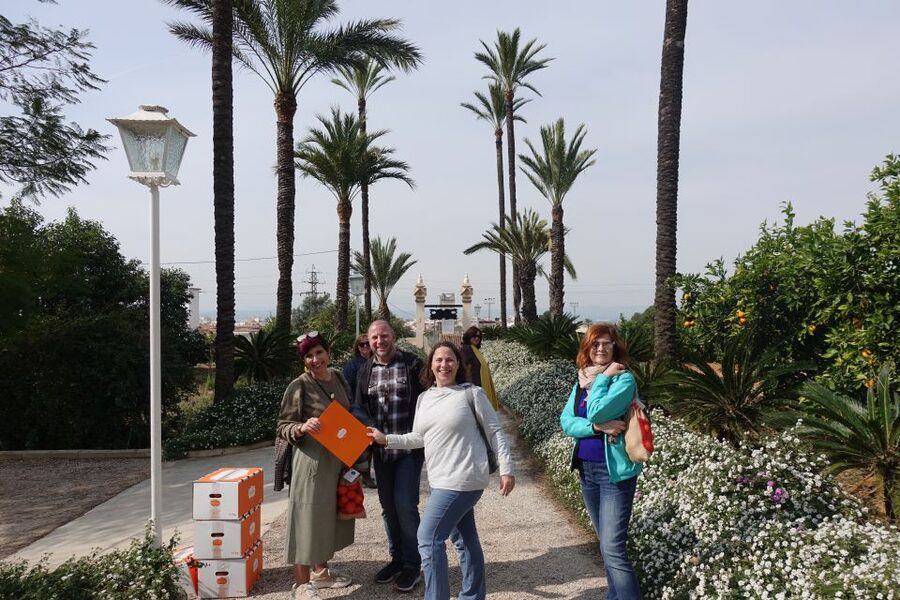
The guide can shape this tour more than any single stop. Teresa is part of the family connected with the farm and is known for explaining the property, citrus production, and local changes with humor and warmth. Ana, including Ana E., has guided groups in clear English and is especially good at combining practical information with personal hospitality.
Claire, Mylene, Luis, and other guides have also led visits. The exact guide depends on the date, but the experience is conducted in English with a live guide. The family connection matters because it gives the conversation a direct link to the farm rather than a memorized script.
You should feel free to ask questions. The guides can discuss varieties, growing methods, the local citrus economy, and the process of selecting fruit. They also tend to help with practical matters, such as local food suggestions or transport questions, although you should still arrange your return journey yourself.
For families, the guides make a real difference. Children can pick oranges, taste fruit straight from the tree, and have a look at the sorting equipment. The activity has enough movement and flavor to hold attention better than a standard talk.
Getting from Valencia to Carcaixent
By car, drive to Huerto Ribera at Polígono Nº 53, 5, 46740 Carcaixent, Valencia. This is the simplest option if you already have a vehicle, though you should use the exact address rather than assume the orchard is in central Carcaixent.
By train, start at Valencia Nord Station. The direct journey to the Carcaixent area takes about 35 minutes. Train timing is important: schedules may not match the tour start closely, and departures can be less frequent than you expect. Check the current timetable before leaving Valencia and allow room for delays.
The station-to-farm connection is the weak point. A taxi can make the transfer much easier, but availability at the station may not be dependable. Some visitors have arranged a taxi, while others have walked for roughly 30 minutes. That walk can be longer than expected and is not described as especially attractive.
If you are traveling by train, contact the farm in advance about the best final connection. One useful option is to arrange a taxi for the outward journey. Do not assume a taxi will be waiting for your return, and do not plan a tight train connection after the tour.
Buy the correct train ticket and check the departure time carefully. Some departures may require buying a ticket at the counter, and missing one train could make you late for the farm visit. This is the part of the day that rewards a little planning.
Who will enjoy this two-hour farm visit
I would recommend Huerto Ribera to:
- Families looking for a hands-on activity outside Valencia
- Food lovers who want to taste local products at their source
- Gardeners and amateur growers interested in pruning, grafting, and citrus varieties
- Visitors who want a rural break without booking a full-day tour
- Anyone who enjoys family-run places and direct contact with local producers
- People visiting between February and June who want to pick oranges
The tour is less suitable if you have limited mobility. The property is not suitable for wheelchair users, although one visit accommodated a wheelchair user with extra care. That should not be taken as a promise of full access.
Summer also requires thought. The orchard can be hot, and one family found the heat hard on their children. Wear light clothing, use sun protection, and consider an earlier or cooler time if available.
Is $35 good value?
At $35 per person, I consider this a strong value for a two-hour experience. The price includes the guide, the orchard and warehouse visit, local tastings, and a bag of oranges during the stated picking season.
The value comes from the combination. A simple farm walk would be pleasant but limited. A tasting alone would be enjoyable but brief. Here, you get a working agricultural setting, unusual fruit, a production demonstration, fresh juice, and something tangible to take home.
Transportation is not included, and that changes the real cost. Add the train fare and possibly a taxi, especially if you do not want to walk from the station. Even with that extra expense, the outing remains reasonably priced, but it is not a door-to-door tour from Valencia.
The small group feel and family involvement also help the price. You are paying for access to a place with a long farming connection, not just a scenic photo stop. If you make use of the tastings, ask questions, and pick fruit in season, the experience earns its cost.
My advice for making the most of Huerto Ribera
Check the seasonal details before you reserve. If picking oranges is your main goal, confirm that bags are available on your date. From February through June is the clearest window for the included picking activity, while October through June is given as the wider harvest period.
Plan the transport before tour day. Look up the Valencia Nord departure, allow extra time at the station, and decide if a taxi is needed for the final stretch. A 30-minute walk may be manageable for you, but it becomes less pleasant in hot weather or with young children.
Wear shoes that can handle an orchard path and clothes suited to sun. Bring space in your luggage for oranges and perhaps a jar of jam or honey. If you visit in April, orange blossom may be in flower, but bloom timing is seasonal rather than guaranteed.
The tour offers free cancellation up to 24 hours before the start, and you can reserve while paying later. Those terms are useful if your Valencia plans are still moving, but they do not remove the need to sort out transport.
Should you book this orange farm tour?
Yes, if you want a distinctive half-day break from Valencia that combines food, farming, and local culture. The orchard is attractive, the tasting is generous, and the chance to pick your own oranges gives the visit a simple pleasure that a city tour cannot match.
I would book it most confidently from February through June, when you are more likely to pick a bag of fruit. If you are visiting in spring, the scent of orange blossom can make the setting especially memorable.
Skip it if your schedule is too tight for the train connection, if you dislike rural walking, or if a 30-minute station walk would be difficult. For everyone else, Huerto Ribera offers an easy way to understand why oranges matter so much to Valencia, and it sends you home with something sweet to prove you went.
FAQ
Where is the orange farm located?
Huerto Ribera is in Carcaixent, in the Valencian Community, about 35 kilometres from Valencia. The meeting address is Polígono Nº 53, 5, 46740 Carcaixent, Valencia, Spain.
How long does the experience last?
The guided experience lasts about two hours. Check the available starting times for your chosen date.
How much does the tour cost?
The listed price is $35 per person. Transportation to and from Huerto Ribera is not included.
Can I travel to the farm by train?
Yes. You can take a direct train from Valencia Nord Station toward Carcaixent. The train journey takes about 35 minutes, followed by a taxi or walk to the property.
Can I pick my own oranges?
Yes, orange picking is included from February through June. The wider seasonal information gives October through June as the usual orange-picking period, so confirm availability for your date.
What products are included in the tasting?
The tasting can include orange juice, tangerines when in season, Valencian liqueurs, homemade jams, orange blossom honey, and other local citrus products.
Is the tour conducted in English?
Yes. The experience includes a live English-speaking guide.
What should I bring?
Bring comfortable shoes for walking around the orchard. Light clothing and sun protection are also sensible, particularly during the warmer months.
Is the farm suitable for wheelchair users?
The experience is listed as unsuitable for wheelchair users. A wheelchair user was accommodated with care on one occasion, but the tour and property are not fully accessible.
Just added around Valencia
- e-Bike Rental in Valencia★ 3.5 · 3 reviews
- Valencia: Tuk Tuk Historical Tour★ 5.0 · 3 reviews
- Authentic Paella Dinner in Valencia★ 5.0 · 3 reviews
- Valencia: Horchata Bike Tour★ 4.8 · 3 reviews
- Valencia: Guided City Walking Tour with Tapas Tastings★ 3.8 · 3 reviews
- One-way Valencia Airport To/From Benicàssim (FIB)★ 5.0 · 3 reviews
- In Love with Valencia: A Self-Guided Tour of its Landmarks★ 5.0 · 3 reviews
- Full Day Private Requena Wineries Premium Tastings★ 5.0 · 3 reviews